


.gif)
The real estate market in Ukraine in 2026: prices, demand, and rentals during the war — expert forecast

-
2025: the market revived in safer regions and became “less emotional”
- How prices grew in 2025: primary market +9–10%, secondary market +4–6% on average
- “A market of uneven prices”: demand driving up costs and regions that are exceptions
- Secondary market: price depends on rooms and geography
- Government programs: “eOselya” as a source of demand and the first ‘eVidnovlennia’ deals
- Renting in 2025: quick decisions, high mobility, and extra fees for autonomy
- Forecast for 2026: no sharp jumps, but with a high role for security

The housing market in Ukraine continues to adapt to the war: prices are rising in safe regions and the priorities of buyers and tenants are changing. Find out what trends defined 2025 and what to expect from buying and renting in 2026, according to expert estimates

For the Ukrainian real estate market, 2025 was marked by adaptation to the war: activity increased in areas where the security situation was relatively stable, and buyers' decisions became more rational and calculated. As UNIAN notes in its analysis, the war has changed the living habits of millions of people: some Ukrainians have become internally displaced persons, several million more have left the country and are now in their fourth year living far from home. All of this has a direct impact on demand, prices, and the geography of transactions.
Below is a structured overview of the key findings for 2025 and forecasts for 2026 for those planning to buy or rent a home.
2025: the market revived in safer regions and became “less emotional”
Yuriy Pita, former president of the Association of Real Estate Specialists of Ukraine, assesses 2025 as significantly more active than 2024 in the home purchase segment. According to him, most transactions were concluded in regions with a relatively stable security situation, particularly in rear regional centers. As the expert explains, in safer areas, the market was more active and generally more dynamic than last year.
One of the reasons for this activity was deferred demand: some people expect prices to rise after the war ends and therefore decide not to postpone their purchase any longer. The second important factor is internally displaced persons, who are increasingly moving from renting to buying, especially in cities where they have been living and working for several years.
Realtor Oleksandr Boiko calls 2025 the period of final adaptation of the market to wartime conditions. While in 2022 and early 2023, decisions were often made under the pressure of fear and the need to sell assets quickly, in 2024–2025, demand became more balanced: buyers enter into transactions with a clear goal in mind — their own residence, relocation, or long-term preservation and appreciation of value.
According to Boiko, the most active cities in terms of buying and renting remain Kyiv, Lviv, Uzhhorod, Lutsk, Ternopil, and Ivano-Frankivsk — it is here that the dynamics are more predictable. He emphasizes that information waves have less influence than real economic factors — the population's purchasing power, the availability of credit, the state of the labor market, and the resumption of business activity in cities that accept internally displaced persons.
Vitaliy Poberizky, Head of Product Development at DIM.RIA, confirms this picture: despite martial law, rocket attacks, and the difficult situation in the energy system, the industry grew in 2025, especially in the western regions and the capital.
How prices grew in 2025: primary market +9–10%, secondary market +4–6% on average
According to Vitaliy Poberizky, in 2025, there was moderate but stable price growth in dollar terms. In the primary market, housing prices rose by approximately 9–10%.
In the secondary market, growth was more moderate — 4–6% on average, although in some regions (particularly Kyiv and the western regions) the rates were significantly higher.
A separate trend that intensified against the backdrop of a new strategy of attacks on energy infrastructure: energy independence has become the new standard. Buyers and tenants are more likely to choose housing with autonomous power and gas supply.
Also, due to dense development, high prices, and security risks in megacities, Ukrainians are more actively looking at satellite cities of large centers. For Kyiv, such areas include Irpin, Bucha, Sofiivska Borshchahivka, Vyshhorod, and others.
“A market of uneven prices”: demand driving up costs and regions that are exceptions
In 2025, according to observations, secondary housing was in the highest demand, especially in the central and western regions. Vitaliy Poberizkyi cites a telling figure: the highest growth in demand was recorded in the Zakarpattia region — +83% compared to December 2024. The average percentage growth in demand across Ukraine is approximately 29%. The capital and the Kyiv region remain the most popular for purchases; secondary housing is also actively sought after in large cities such as Odesa, Vinnytsia, Lviv, and Dnipro.
Prices rose along with demand. According to Poberizky's estimates, in December 2025, the average price per square meter in new buildings was almost 10% higher than a year ago.
Kyiv remains the leader in terms of price: about $1,445 per m², which is almost 8% more than last year. Next is the Lviv region: $1,188 per m² (+9%). In the Kirovohrad region, the average price is $1,156, and it is here that housing has risen in price the most over the year — by 12%. The Dnipropetrovsk region maintains an average price of $1,122 per square meter with a moderate increase of 4%. The Zakarpattia region was an exception: demand was high, but the average cost per square meter in the region was about $1,114, which is 5% less than a year ago.
Secondary market: price depends on rooms and geography
DIM.RIA analytics, quoted by UNIAN, shows a clear dependence of cost on the number of rooms and region.
One-room apartments (highest average prices):
● Kyiv — $98,000 (+12%)
● Lviv region — $74,000 (+6%)
● Ivano-Frankivsk region — $68,000 (+29%)
● Zakarpattia region — $68,000 (+9%)
● Rivne region — $64,900 (+28%)
Two-room apartments (highest average prices):
● Kyiv — $144,000 (+35%)
● Lviv region — $99,000 (+7%)
● Zakarpattia region — $92,000 (+12%)
● Ivano-Frankivsk region — $80,000 (+15%)
● Vinnytsia region — $73,900 (+5%)
Three-room apartments (highest average prices):
● Kyiv — $195,000 (+53%)
● Lviv region — $110,000 (+8%)
● Chernivtsi region — $93,000 (+1%)
● Ivano-Frankivsk region — $88,600 (+18%)
● Vinnytsia region — $81,500 (+6%)
Yuriy Pita confirms that Kyiv and Lviv are the leaders in terms of absolute prices, but in terms of growth rates, Zakarpattia has become the favorite of the year — demand exceeds supply, which puts pressure on the market. He also names western cities (Chernivtsi, Ivano-Frankivsk, Ternopil, Lutsk, Rivne) and central regions (Vinnytsia, Zhytomyr, Khmelnytskyi) as active — that is, cities with a “growth market.”
According to Pita's estimates, prices in 2025 will have risen in almost all regions, but at different rates: overall — from 5% to 20%, Kyiv — about 10%, Chernivtsi — plus or minus 10%, Zakarpattia — over 20%.
Eastern and frontline regions are a separate category. There is almost no price growth there, but deals are being made, in particular thanks to the “eRecovery” program. Pita mentions the program's activity in Kharkiv, Sumy, and Zaporizhzhia. Realtor Oleksandr Boiko adds that in frontline regions, the risk factor is holding back demand and preventing prices from rising, while in cities under regular shelling, some owners are selling at a discount, fixing prices below pre-war levels.
Government programs: “eOselya” as a source of demand and the first ‘eVidnovlennia’ deals
Market activity in 2025 was supported by government programs. Vitaliy Poberizky notes that “eOselya” directly supports demand and the construction industry. Since the beginning of 2025, more than 7,200 Ukrainians have taken advantage of the program, receiving preferential mortgages totaling almost UAH 14 billion. Most of the loans under the program were provided in the Kyiv region (62), Kyiv (53), and the Lviv and Volyn regions (10 each).
At the same time, according to Poberizky, “eVidnovlennia” has had a less noticeable impact on the market as a whole so far, but in 2025, the first successful deals under this program were already concluded, which gives reason to predict more such transactions in 2026.
Boiko emphasizes: “eOselya” actually serves as one of the key sources of demand in the primary market in cities with an acceptable level of security, as preferential lending allows for the implementation of deferred decisions.
It was also reported that the government allowed military personnel mobilized during martial law to obtain preferential mortgages at 3% instead of the previous 7%.
Tip: if you are planning to buy an apartment, it is worth taking care of property insurance in advance. On the Visit Ukraine platform, you can take out express home insurance online — it is fast, official, and will help protect your investment in case of unforeseen events such as fire, flooding, natural disasters, or military risks.

Don't want to miss important updates and useful articles? Subscribe to our weekly newsletter!
Renting in 2025: quick decisions, high mobility, and extra fees for autonomy
Renting turned out to be a more sensitive segment than buying: changes in the security and economic situation quickly affected demand and prices.
Yuriy Pita notes a 10-15% increase in rental costs in Kyiv, especially in the popular budget segment. According to him, Kyiv and Lviv remain among the leaders in terms of rental prices, while fluctuations in other regions did not exceed 10%. He adds that Odesa was active in both rentals and purchases, but due to shelling, a temporary “lull” is possible — and activity will return when the security situation improves.
Oleksandr Boiko emphasizes that renting is now more mobile than buying. Frequent changes of residence, dependence on security, and work have made long-term rentals the main model for many families. Tenants are willing to pay more for basic comfort and safety: a generator, shelter, stable communications, and high-quality internet. Contracts for 3–6 months and short-term rentals with the possibility of revising the terms have become the standard.
DIM.RIA provides statistics on rental costs depending on the number of rooms.
1-room apartments (highest average prices):
● Zakarpattia region — UAH 18,450/month (+13%)
● Lviv region — UAH 14,350/month (+2%)
● Kyiv — UAH 14,000/month (no significant change recorded)
● Kyiv region — UAH 14,000/month (+27%)
● Volyn region — UAH 14,000/month (no significant change recorded)
2-room apartments (highest average prices):
● Zakarpattia region — 19,680 UAH/month (+26%)
● Kyiv — 16,500 UAH/month (+3%)
● Ivano-Frankivsk region — 16,400 UAH/month (+9%)
● Lviv region — 16,000 UAH/month (no significant change recorded)
● Kyiv region — 16,000 UAH/month (+14%)
3-room apartments (highest average prices):
● Kyiv — 28,700 UAH/month (no significant change recorded)
● Lviv region — 21,000 UAH/month (+5%)
● Ivano-Frankivsk region — 18,450 UAH/month (+23%)
● Kyiv region — 18,000 UAH/month (+17%)
● Zakarpattia region — UAH 17,000/month (+36%)
According to Poberizkyi, the highest demand for rentals is in Kyiv and large cities with better employment opportunities (Lviv, Vinnytsia, Odesa, Dnipro).
The highest growth in demand in 2025 was recorded in the Vinnytsia region — +48%. Steadily low interest in buying or renting remains in the frontline regions — Kherson, Sumy, and Chernihiv.
The expert also describes the competition in the market: in Kyiv, there were an average of 5–7 inquiries per ad, and in cities with a shortage of supply, up to 20 seekers could compete for one property.
Separately, regarding the difference in factors: in renting, pricing depends more on hryvnia inflation, security, and seasonality; in buying and selling, the dollar exchange rate remains the decisive factor, especially for new buildings, where the cost of construction plays a significant role.
Forecast for 2026: no sharp jumps, but with a high role for security
Experts largely agree: sharp price jumps are not to be expected in 2026. Yuriy Pita explains this by the nature of the asset: real estate is an expensive and “heavy” resource that cannot react instantly with massive growth. Even in the event of a truce, people will not rush to make a purchase decision right away: in his opinion, displaced persons will observe for some time — about three months, or even six months.
At the same time, the return of some IDPs may first be felt in the rental market: if people start to return, some rented apartments may become vacant, supply will increase, and the market balance will temporarily change.
Pita also admits the opposite effect for buying and selling: if there are signs of stabilization, owners who planned to sell their homes to move abroad may change their minds — this will reduce supply and create conditions for price growth with unchanged demand. He separately mentions the factor of Ukrainians abroad: if active hostilities cease, some of the displaced persons may lose their social support, and those who have not had time to integrate will begin to return. This could trigger reverse migration, which will affect both purchases and rentals.
Oleksandr Boiko predicts that current trends will continue. In 2026, the primary market may see moderate price growth due to increased costs for developers, while the secondary market will remain relatively stable thanks to balanced demand. If the fighting stops or there is a significant de-escalation, there may be a sharp surge in pent-up demand and a 15-20% increase in housing prices during the first six months after stabilization, but only if security is guaranteed.
Vitaliy Poberizky describes the baseline scenario as moderate growth or stabilization of prices, a high role for rentals, and a gradual revival of purchases without sharp jumps in activity. He predicts that tenants will continue to choose flexibility and short-term contracts, while buyers will carefully weigh the risks and liquidity of the property. There may be potential growth in demand for housing with autonomous engineering solutions, energy-efficient buildings, and properties with the potential for further rental.
Investing in housing during the war: “a buyer's market with cash”
Despite the risks of war, real estate remains one of the most understandable tools for Ukrainians to preserve their funds. Yuriy Pita calls the current prices “comfortable” — not inflated and in line with today's realities. He believes that in the long term, especially in Kyiv, in 2–3 years, and even more so in 5 years, provided that the economy recovers and international support continues, prices may rise significantly.
The expert points out that objectively, less construction is taking place in Kyiv, and few new projects are being implemented. When the current supply is sold out, a shortage may arise and, as a result, prices may rise. At the same time, for western regions where construction activity has remained high (for example, Lviv or Ivano-Frankivsk), the shortage may be less noticeable. However, in Kyiv, Odesa, Vinnytsia, and a number of other cities where construction has slowed down, a “vacuum” of new properties may occur over time.
Pita explains that developers are not willing to take risks with large projects, and investors are cautious about primary properties due to unpredictable construction deadlines. In the secondary market, he says, investors are more likely to buy “for rent” — small one- or two-room properties: you buy it and almost immediately rent it out, earning approximately 15-20 thousand hryvnia per month.
Oleksandr Boiko also emphasizes that buying a home today is a high-risk investment, and the classic “foundation pit — resale” strategy hardly works due to unpredictable construction times. Investors' interest is concentrated in two segments: ready or almost ready housing in relatively safe regions (to be rented out immediately) and properties with a large discount from owners that can be sold quickly.
He concludes that the market has transformed into a “cash buyer's market” — the buyer dictates the terms, but the requirements are high: maximum readiness for occupancy and legal clarity of the transaction. Apartments in cities with lower security risks and stable rental demand (in particular, Kyiv, Lviv, and some western regional centers), as well as properties with rental potential, remain attractive for investment.
We remind you! The residential real estate market in Ukraine in 2025 showed active price growth in most regions. Read where apartments have risen in price the most in the primary and secondary markets and which regions remain the most expensive and affordable.
Photo: shutterstock
Want to know more? Read the latest news and useful materials about Ukraine and the world in the News section.
We recommend purchasing it for a safe and comfortable trip to Ukraine:
Visit Ukraine Insurance – insurance covering military risks for entry and travel in Ukraine;
Visit Ukraine Car Insurance – car insurance with extended coverage in Ukraine;
Visit Ukraine Legal Advice – comprehensive legal support on entry to Ukraine;
Visit Ukraine Tickets – bus and train tickets to/from Ukraine;
Visit Ukraine Tours – the largest online database of tours to Ukraine for every taste;
Visit Ukraine Hotels – hotels for a comfortable stay in Ukraine;
Visit Ukraine Merch – patriotic clothing and accessories with worldwide delivery.
© 2018-2026, Visit Ukraine. Use, copying or reprinting of materials on this site is permitted only with a link (hyperlink for online publications) to Visit Ukraine.
All rights reserved.
Recommended articles
1 min
Real estate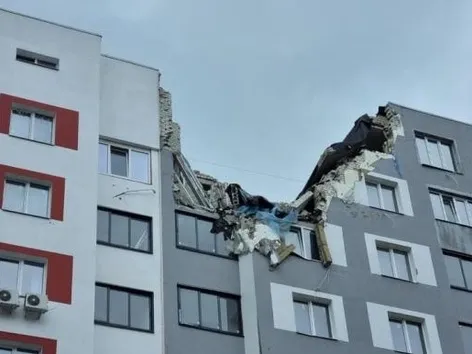
13% of housing destroyed: how many Ukrainians have lost their homes due to the war?
The war has caused massive destruction to Ukraine's housing stock. Find out how much housing has been destroyed due to russian aggression, how many Ukrainians have lost their homes, and how the state plans to comprehensively rebuild the country
Yuliia Dyka
27 Dec. 2025
More details2 min
Real estate
The sale of real estate in Ukraine is subject to clear tax rules. Find out whether you need to notify the tax authorities about the sale of your home, how data is transferred to the State Tax Service, when information needs to be verified, and what to do in case of discrepancies
Yuliia Dyka
26 Dec. 2025
More details1 min
Finance
Average salary in Ukraine at the end of 2025: where do they pay the most?
The average salary in Ukraine increased to UAH 26,913 at the end of 2025. Find out which regions and industries pay the most, where the incomes are the lowest, and how much people receive in cash
Yuliia Dyka
05 Jan. 2026
More details1 min
Travel
How much money to take abroad: cash, cards, and currency
Financial mistakes abroad can ruin your trip and increase your expenses. It is important to know how to prepare cash, cards, and online payments. Learn more about how to avoid unnecessary expenses and not be left without money abroad
Yuliia Dyka
05 Jan. 2026
More details