


.gif)
Beglaubigte Übersetzung in der EU: Wann wird sie benötigt und wie funktioniert es?

Eine beglaubigte Übersetzung ist eine Voraussetzung für die Anerkennung von Dokumenten im Ausland. Erfahren Sie, wann sie benötigt wird, wie das Verfahren funktioniert und wie Sie den Service einfach über Visit Ukraine bestellen können.

When moving, studying, working or applying for a residence permit in the countries of the European Union, there is often a need for an official translation of documents. In most cases, a regular translation is not enough - the receiving institutions require a sworn translation, as it guarantees the accuracy and legal force of the document in the territory of another country. Errors or the absence of a properly executed translation may lead to a refusal to consider the documents.
In this article, we will consider what a sworn translation is, for which documents it is needed, how it is done, and where to get help with a sworn translation.

What is a sworn translation and how does it differ from others?
A sworn translation is a translation performed and certified by an officially authorized translator who has the appropriate status in an EU country. Its task is not only to accurately convey the content of the text, but also to ensure the legal force of the document for its acceptance abroad.
Sworn translation is performed by a separate group of certified translators who have the appropriate official permission of the country for which the translation is being made. These specialists have a high level of proficiency in the language, take an oath and are officially registered with the Ministry of Justice of the relevant state.
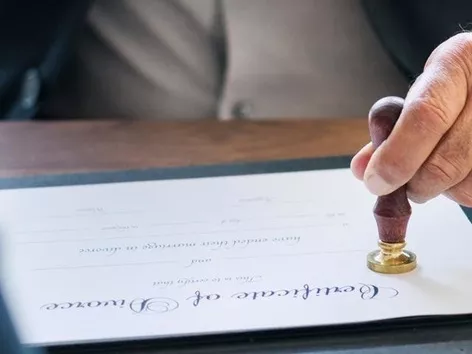
At the same time, the translation procedure itself is quite simple: after completing the work, the translator puts a special seal that confirms the authenticity of the translation. In addition, the translator enters the document into his own register, similar to the register used by Ukrainian notaries. Such a translation has legal force equivalent to the original document.
What documents usually require a sworn translation?
Sworn translation is usually required to legalize documents in the following situations:
- Registration of documents for residence abroad (obtaining a visa, residence permit, citizenship, etc.);
- Admission to a foreign educational institution;
- Official employment.
Most often, the services of a sworn translator are ordered for the translation and legalization of the following documents:
- Birth, marriage, divorce, death certificates;
- Educational documents (certificate or diploma);
- Court verdicts, rulings or decisions;
- Purchase and sale contracts;
- Notarized powers of attorney;
- Medical certificates;
- Certificates of no criminal record;
- Employment records;
- Insurance policies;
- Financial reports.
Peculiarities of sworn translation in different EU countries
Not all EU countries directly require certified translations for all official documents, and the rules may vary depending on the context and the receiving authority. Below is a list of countries where certified translations are usually required (especially for official/legal documents):
- Austria - certified translations are required for many official purposes (courts, authorities).
- Belgium – certified translations are required for official/legal use.
- Germany – certified translations are required for many official structures (court, migration service, authorities).
- Hungary – certified translations are required for official/legal documents. Only translations made by the National Translation Office (OFFI) or by certified translators are accepted.
- Italy – official documents must be translated by sworn translators.
- Netherlands – for official/legal use, sworn translators with state accreditation are required.
- Poland – sworn translations are required for legal and administrative documents. Must be made by translators who have passed the state exam and are on the official lists.
- Spain – sworn translations (traductor-intérprete jurado) are required for official/legal documents submitted to authorities or courts.
- Sweden – many official purposes require certified translations.
How does a sworn translation work?
In general, the sworn translation procedure includes the following stages:
Step 1 – Preparation of documents
The customer provides the translator or translation agency with the originals or certified copies of the documents that need to be translated.
Step 2 – Translation performance
A sworn translator who has the appropriate certification or official status translates documents from one language to another. The translation is carried out in compliance with all norms, standards and requirements established by law.
Step 3 – Translation certification
After the translation, the translator puts his official seal and signature on the document, certifying the authenticity and completeness of the translation. This step makes the translation legally recognized.
Step 4 – Additional notarization (if necessary)
In some countries or cases, for additional legalization, the translation may require notarization or apostille, but in most cases, a sworn translator already has the authority to confirm the translation without additional actions.
In order for your documents to be officially recognized in EU countries, it is important to make a high-quality sworn translation. The Visit Ukraine team provides full legal support - quickly, conveniently and in accordance with the requirements of each country. We understand how important time and convenience are for our clients, which is why the process of ordering services is optimized as much as possible and available online. Just fill out the online form yourself or leave a request by phone number +380-93-83-92-984 (Viber, WhatsApp, Telegram).
Do I need to make an apostille before translation?
An apostille is a special stamp that confirms the authenticity of a document for submission to foreign institutions. It is affixed to official documents (certificates, certificates, extracts, diplomas, etc.) issued in a country that is a party to the 1961 Hague Convention. An apostille is required if you:
- Apply for a residence permit/permanent residence permit in the EU;
- Get married, or enroll in an educational institution or plan to work abroad;
- Register a birth, death or other civil status acts abroad;
- Plan to have a diploma or other educational document recognized.
In most cases, an apostille is applied to a translation, that is, the original or copy of the document is first certified, and only then a sworn translation is performed.
Important! If you first make a translation and then an apostille, foreign authorities may not accept the documents. Therefore, following the correct sequence is critically important.
If you need help with legalizing Ukrainian documents abroad, contact Visit Ukraine specialists, as we provide a full range of services:
- Order a sworn translation online with delivery.
- Assistance with apostille and legalization of documents for submission in EU countries.
- Comprehensive support: translation + certification + registration.
We take on all bureaucratic difficulties so that you receive officially recognized documents without unnecessary hassle. We work with most countries of the world quickly, accurately and taking into account the requirements of the state to which you are submitting documents.
Order an apostille and sworn translation service online at Visit Ukraine and get rid of bureaucratic difficulties during migration abroad.

Reminder! Foreigners do not have to come to Ukraine to receive documents. We have already told you how to remotely issue certificates, diplomas or archival certificates and how to ensure the legal force of documents for submission abroad.
Want to know more? Read the latest news and useful materials about Ukraine and the world in the News section.
Our recommendation for a safe and comfortable trip:
Visit Ukraine Insurance - insurance for a safe stay abroad without unnecessary expenses;
Green Card - compulsory car insurance for traveling abroad;
Visit Ukraine Tickets - book tickets for buses, trains, and airplanes to/from Ukraine and between cities around the world;
Private Lawyer service - professional legal support on visa and migration issues;
Visit Ukraine Merch - buy patriotic clothing and accessories with worldwide delivery.
© 2018-2025, Visit Ukraine. Use, copying or reprinting of materials on this site is permitted only with a link (hyperlink for online publications) to Visit Ukraine.
All rights reserved.
Recommended articles
2 min
VU-Anwälte erklären
Planen Sie den Kauf von Immobilien in Schweden, haben aber keine Koordinationsnummer? Erfahren Sie, wie Ukrainer eine samordningsnummer erhalten können, welche Dokumente erforderlich sind und wie man ein Schreiben an Skatteverket richtig vorbereitet – anhand einer echten Anfrage an das Anwaltsteam von Visit Ukraine als Beispiel
Yuliia Dyka
06 Mai. 2025
More details2 min
Dokumente
Apostille-Verweigerung: Gründe, häufige Fehler und wie man Dokumente erfolgreich erneut einreicht
Was sollten Sie tun, wenn Ihr Antrag auf eine Apostille abgelehnt wurde? In diesem Artikel haben wir die Hauptgründe für die Ablehnung sowie Anweisungen zusammengestellt, wie Sie vorgehen sollten, um eine Apostille zu erhalten. Erfahren Sie mehr über häufige Gründe für die Ablehnung und wie Sie Dokumente richtig für die Apostille vorbereiten.
Yuliia Dyka
15 Mai. 2025
More details1 min
Dokumente
Reformiertes MSEC: wie man die Funktionsbewertung im Ausland besteht
Die MSEC-Reform hat den Ansatz zur Feststellung von Behinderungen geändert. Erfahren Sie, wie Sie eine Funktionsbewertung im Ausland bestehen, welche Dokumente benötigt werden, was zu tun ist, wenn es an zwischenstaatlichen Vereinbarungen fehlt, und wie Sie sich aus der Ferne bewerben können
Yuliia Dyka
17 Mai. 2025
More details1 min
Dokumente
Welche Dokumente sind erforderlich, um mit dem Auto ins Ausland zu reisen?
Bevor Sie mit dem Auto ins Ausland reisen, ist es wichtig, sich mit den Einreisebestimmungen und Dokumentenanforderungen des jeweiligen Ziellandes vertraut zu machen. Besonderes Augenmerk sollte auf die Gültigkeit aller Dokumente und die Verfügbarkeit von Originalen gelegt werden. Erfahren Sie, welche Dokumente für das Reisen mit Ihrem eigenen Auto und mit einem Auto, das Sie nicht besitzen, erforderlich sind.
Yuliia Dyka
17 Mai. 2025
More details