


.gif)
Ukrainisch und Russisch: wie ähnlich sind die beiden Sprachen oder Unterschiede zwischen ihnen

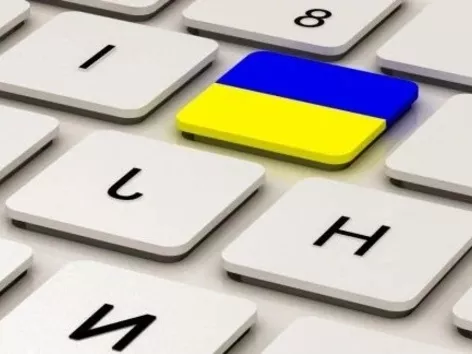
Die Erzählung von brüderlichen Völkern, die von den Russen gefördert wird, verbreitet sich aktiv auf der ganzen Welt. Allerdings zerschmettert das "Sprachenproblem" die Idee der Brüderlichkeit, denn unsere Sprachen haben völlig unterschiedliche Etymologien und Symbolik. Finden Sie heraus, was der grundlegende Unterschied zwischen Ukrainisch und Russisch ist und warum Brüderlichkeit ein Mythos ist

Despite the fact that Ukraine is a much older state than russia, russians have not given up trying to convince themselves and the world that the Ukrainian language is just a dialect of russian. And they are not at all embarrassed by the fact that for some reason they do not understand "their dialect."
The historical origins of the Ukrainian and russian languages
The "common cradle" in which the Ukrainian and russian languages grew up is another fake that russia is trying to promote. After all, the language spoken by Ukrainians comes from the vernacular of Kyivan Rus, while russian comes from the now-dead Old Slavonic or, as it is also called, Church Slavonic, which was artificially created in the ninth century by Cyril and Methodius. And after the collapse of Kievan Rus, Ukrainian and russian generally took different paths and were formed separately from each other. Moreover, the Horde language, which is not even a Slavic language, had a significant influence on the formation of the russian language.
Phonetic and grammatical similarities between Ukrainian and russian
If the historical origin of languages is not an argument for someone, let's look at the phonetic and grammatical side of the issue. For example, the Ukrainian language has 29 common features with the Belarusian language, 23 common features with Slovak and Lithuanian, 22 common features with Polish, and even 20 common features with Serbian and Macedonian, while it has only 11 common features with russian.
Fraternal peoples according to the "russian world" or why brother kills brother
Everything would be fine with the kremlin's narrative of brotherly relations between Ukrainians and russians if only the world did not know the real history of Ukraine and did not see the events that are taking place in the 21st century.
So, can peoples be brothers when one of them has been diligently and persistently destroying the other for centuries? Even if we turn a blind eye to the actual genocide of the Ukrainian people, which, by the way, is recognized throughout the world, and take into account only the "language issue." So why, then, did russia ban the Ukrainian language at the official level for so many centuries, destroy literature and manuscripts, shoot people who spoke Ukrainian, and actively promote the narrative that "Ukrainian is the language of uneducated and poor peasants" in order to encourage people to switch to russian?
I don't think that's what brothers do. And it is unlikely that this happened because Ukrainian is a dialect of russian. Otherwise, russia would not have tried to wipe it off the map. Or maybe russia just doesn't like the fact that someone didn't want to submit to such a "majestic" empire once, and continues to successfully resist it today?
Visit Ukraine on social media: Telegram | YouTube | Instagram | Facebook | Twitter | TikTok
The fundamental difference between Ukrainian and russian: the nation's code
The essence and character of a nation lies in its language, and one need not wander through history to see the fundamental difference between Ukrainians and russians. After all, words were formed based on the way of thinking, and thinking itself was formed on the customs and way of life of the people. Let's look at a few vivid examples that are actually just the tip of the mountain called "Ukraine is not russia."
● «Victory» in Ukrainian — [Peremoha] — is a word that Ukrainians repeat every day like a mantra. What is the difference? Ukrainian "peremoha" comes from overcoming oneself, i.e., "over-making," doing more than is possible, more than you could. At the same time, russian "pobeda" means "walk in trouble" and therefore it is not surprising why russians do not see any crimes in what their government is doing today.
● «Holiday» — [Sviato] — in Ukrainian comes from the holy and spiritual, while the russian "prazdnik" means "idle" or "idly wandering".
● «Humbly» — [Strunko] — means to stand upright or in a string and be ready for battle, while the russian "smirno" means to humble oneself and submit to someone's will.
● «Hospital» — [Likarnya] — is a place where people are treated, and a russian "bol'nitsa" is a place where people are sick.
● «Tax» — [Podatok] — is derived from the action of "to give" and russian "nalog" from the action of "to impose".
● «Carefully» — [Oberezhno] — comes from the words "to protect," "to keep safe," and "amulet" as a symbol, russian "ostrozhno" from "to beware" and "to guard," which means to be afraid. Ukrainians take care, while russians keep an eye out for what they might lose.
● «Usually» — [Zazvychay] — Ukrainians live by customs, "kak pravilo" - russians live by rules.
This is the fundamental difference between Ukrainians and russians. The meaning, symbolism, and origin of the words prove that Ukrainians are people with their own history, customs, traditions, and worldview.
Ukraine is a country of unconquered, free and strong people with an indomitable spirit and a big heart! That is why we have never been and will never be brothers.
Glory to Ukraine!
We remind you! The Ukrainian cultural heritage is under threat due to the massive export of historical property by the occupiers. We told you which historical and cultural values of Ukraine were included in the Red List and what is the importance of creating a document at the link.
Photo: Depositphotos
You may be interested in:
Visit Ukraine Donation - make a good deed and an important contribution to the Victory of Ukraine;
Visit Ukraine Tours - the largest online database of tours to Ukraine for every taste;
Visit Ukraine Merch - choose patriotic clothing and accessories with worldwide delivery;
Visit Ukraine News - get the latest news and updates in our Telegram channel;
Cooperation - cooperation and advertising integrations with Visit Ukraine and Visit World projects.
Recommended articles
1 min
Krieg
Massive Raketenangriffe: wie die Ukraine die Angriffe überlebt und welche Städte am meisten leiden
Ukrainische Städte und Dörfer sind seit fast anderthalb Jahren ständigen russischen Raketenangriffen ausgesetzt. Erfahren Sie mehr darüber, wo die Alarme am häufigsten heulen und welche Orte am häufigsten von den Angriffen betroffen sind
Yuliia Dyka
30 Mai. 2023
More details1 min
Krieg
Wie Dnipro während des Krieges lebt: die Atmosphäre in der Stadt heute
Seit Beginn des umfassenden Krieges ist Dnipro regelmäßig Ziel des Feindes. In dieser Zeit hat die Stadt wiederholt schwere Schäden durch feindliches Beschuss erlitten. Wir berichten über den heldenhaften Kampf der Stadt und wie Dnipro heute lebt
Yuliia Dyka
31 Mai. 2023
More details2 min
Beliebt
Boykottkultur: Wie viele Ukrainer unterstützen den Boykott von Russen und russischen Inhalten
In den letzten zwei Jahren hat die Boykottkultur in der Ukraine an neuer Stärke gewonnen. Berühmte Künstler, Sportler, Wissenschaftler und Wissenschaftler weigern sich, in großem Umfang mit Russen aufzutreten. Finden Sie heraus, ob die Ukrainer die Kultur des Boykotts von Veranstaltungen und feindlichen Inhalten unterstützen
Yuliia Dyka
31 Mai. 2023
More details1 min
Kultur
8 brillante ukrainische Künstler, die auf der ganzen Welt bekannt sind
Jedes Jahr bringt neue Errungenschaften für das kulturelle Erbe der Ukraine. Prominente ukrainische Künstler verkaufen aktiv ihre Werke bei internationalen Auktionen wie Phillips und Sotheby's. Sie nehmen an der Biennale von Venedig teil und ihre Gemälde sind in führenden Galerien in Europa zu sehen. Erfahren Sie mehr über beliebte ukrainische Künstler, deren Werke auf der ganzen Welt bekannt sind
Yuliia Dyka
31 Mai. 2023
More details