


.gif)
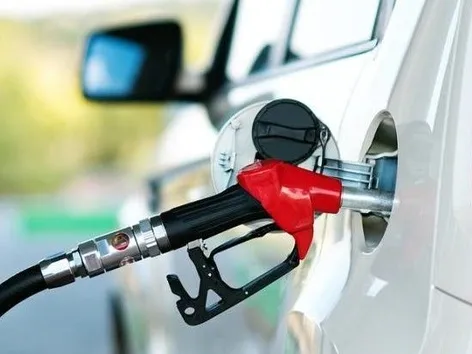
Fuel prices in Ukraine may rise in the near future due to European factors and internal market characteristics. Find out what experts say about the rise in gasoline and diesel prices, how the government is responding, and how drivers can prepare for the new reality

In October, analysts were still cautious, saying that there were no serious reasons for fuel prices to jump in Ukraine. But in November, the situation changed—forecasts appeared on the market predicting that gasoline and diesel prices would rise by 1 hryvnia per liter within the next week, and by another 1 hryvnia by the end of the month.
Some experts explain this by objective reasons, in particular, a shortage of resources in Europe and logistical difficulties. Others talk about a conspiracy among large traders and artificially inflated prices. The main arguments of both sides are discussed in an article by Finance.ua.
Fuel price forecast: what is happening now
According to Auto.ria, fuel prices in Ukraine remained relatively stable between November 6 and 12. The trends were as follows:
● A-95+ and A-92 gasoline prices rose slightly;
● A-95 prices even fell slightly;
● Diesel prices rose, but without any sharp jumps.
In other words, there were no “shocks” on gas station price tags until mid-November. At the same time, experts warn that this period of relative stability may be short-lived.
The European factor: fuel shortage or local problems?
One of the first to draw attention to the issue of possible price increases was Dmitry Leushkin, founder of the Prime group of companies. He links the expected price increase primarily to a shortage of resources on the European market, from which Ukraine imports most of its gasoline and diesel fuel.
Artem Kuyun, an analyst at the consulting company A-95, admits in a comment to Finance.ua that it is difficult to predict the exact scale of the price increase, but there are grounds for it. According to him, there is an abnormal situation on the market:
● gasoline prices in Europe are relatively stable,
● while diesel has risen sharply in price,
● and there is a noticeable shortage of fuel and restrictions on imports.
The situation is complicated by:
● sanctions against Russia's Lukoil in Romania and Bulgaria, where its production assets were important market players;
● the closure of a plant in Serbia;
● a fire on a pipeline in Slovakia, which affected logistics and the stability of supplies.
Romanian and Bulgarian refineries have traditionally supplied fuel not only to domestic markets but also for export, including to Ukraine. Part of this resource is now being taken over by other countries, in particular Moldova, Serbia, and Hungary, which are themselves experiencing supply problems.
Another nuance is logistics through the Romanian port of Constanta. Leushkin previously stated that the lack of stable supplies from Constanta was one of the reasons for the reduction in fuel imports in October.
Kuyun clarifies that the supply issue has now been resolved, but a new problem has arisen: the Ukrainian barges that were supposed to provide transportation have been moved further up the Danube, and it will take time to return them to their previous routes.
Despite some alarming statements, European sources indicate that no large-scale fuel shortage is expected in the EU in November, with only local problems possible. But even local disruptions in supply chains affect the Ukrainian market, which is heavily dependent on imports.
Conspiracy of traders or market reality: two opposing positions
Contrary to the version of an objective shortage is the position of a well-known expert in the oil products market, Professor Gennady Ryabtsev of the Kyiv-Mohyla School of Governance.
He believes that the current media reports about fuel shortages and problems in Europe are more likely an attempt by some large operators to justify further price increases. Ryabtsev's main points are as follows:
● There are no catastrophic problems in the fuel market in either Europe or Ukraine.
● Prices in large retail chains are already inflated by at least 5 hryvnia per liter.
● Companies are “looking for reasons” to raise prices again, knowing that fuel is a staple commodity and people will have to buy it anyway.
The expert also criticizes the argument about “logistical problems” with Constanta and barges, considering it exaggerated. In his opinion, the key problem is the oligarchic structure of the market, where:
● 17 largest companies receive more than half of the revenue,
● small players are being squeezed out,
● large chains have much greater opportunities to set prices and earn super profits.
Artem Kuyun, however, disagrees with this approach, calling it populist. His arguments are as follows:
● there are many different operators on the market, from premium chains to budget gas stations;
● consumers have a choice between different brands and price segments;
● the market as a whole is demonopolized, and there is competition between chains.
According to Kuyun, when wholesale prices rise by 15% in 1-2 days, blaming only Ukrainian traders for this is an oversimplification, as they themselves depend on the situation on the European market.
Don't want to miss important updates and useful articles? Subscribe to our weekly newsletter!
The role of the state: regulator or observer?
Another important aspect is state policy in the fuel sector. Ryabtsev criticizes the authorities' approach and believes that:
● the state does not actually protect competition,
● the single requirement for all gas stations regarding advance payments (30-60 thousand UAH regardless of the size of the chain) creates unequal conditions,
● small gas stations, especially in villages and frontline areas, cannot withstand such a financial burden and are forced to close,
● this, in turn, strengthens the position of large networks, which shape pricing policy.
In his opinion, it would be more logical to link advance payments to the volume of fuel sold rather than to the existence of a station.
The expert also draws attention to the problem of fuel quality control. In practice, it is difficult to distinguish between A-92 and A-95, or “European” gasoline from regular gasoline in terms of quality — the difference is only noticeable in price, while the quality monitoring system is not working effectively enough.
What can drivers expect: will gasoline and diesel prices rise?
Despite polar opposite assessments of the reasons, experts agree on one thing: the likelihood of fuel price increases is high. The scenario already being discussed in the market is as follows:
● +1 UAH/liter in the coming week;
● another +1 UAH/liter by the end of the month;
further price increases are not ruled out if problems with imports and logistics persist or tensions on the European market intensify.
Gennady Ryabtsev believes that the price increase may not be limited to two hryvnia — prices could theoretically rise even higher if large traders realize their potential to increase margins.
At the same time, the three major oil traders who were asked for comment had not publicly explained their position on possible price changes at the time of publication of the materials on Finance.ua.
Tip: While the fuel market is experiencing another period of volatility, drivers should not only keep an eye on prices, but also take care of their financial protection on the road. Obtaining motor vehicle liability insurance — mandatory insurance for every car owner — will help avoid unnecessary expenses in the event of an accident. Obtain motor vehicle liability insurance online on the Visit Ukraine portal — quickly, officially, and without hidden fees.

We remind you! The seven-year period of tax breaks for electric cars in Ukraine is coming to an end — starting in 2026, their import will again be subject to VAT and customs duties. This decision has sparked heated debate between supporters of green transport and defenders of budget revenues. Experts predict a temporary increase in prices and a decline in imports, but they are confident that the electric car market will not roll back. Read how prices, demand, and customs clearance conditions will change after the end of the tax breaks.
Photo: Shutterstock
Want to know more? Read the latest news and useful materials about Ukraine and the world in the News section.
We recommend purchasing it for a safe and comfortable trip to Ukraine:
Visit Ukraine Insurance – insurance covering military risks for entry and travel in Ukraine;
Visit Ukraine Car Insurance – car insurance with extended coverage in Ukraine;
Visit Ukraine Legal Advice – comprehensive legal support on entry to Ukraine;
Visit Ukraine Tickets – bus and train tickets to/from Ukraine;
Visit Ukraine Tours – the largest online database of tours to Ukraine for every taste;
Visit Ukraine Hotels – hotels for a comfortable stay in Ukraine;
Visit Ukraine Merch – patriotic clothing and accessories with worldwide delivery.
© 2018-2025, Visit Ukraine. Use, copying or reprinting of materials on this site is permitted only with a link (hyperlink for online publications) to Visit Ukraine.
All rights reserved.
Recommended articles
1 min
Finance
Payment of 1,000 UAH: how to apply and when the money will arrive
A new winter support program is being launched in Ukraine. This step will be part of a set of government initiatives aimed at supporting the population during the cold season. Find out who is eligible for the payment, how to apply, and when the funds will be credited
 Yuliia Dyka
15 Nov. 2025
More details2 min
Transport
Preparing your car for winter: 10 proven tips before the cold weather sets in
The winter season requires special attention to your car. Learn how to prepare your car for the cold weather, avoid breakdowns, and ensure safety on the road
Yuliia Dyka
16 Nov. 2025
More details2 min
Real estate
Housing in Kyiv is significantly cheaper than in EU capitals: price comparison in 2025
Housing prices in Kyiv remain significantly lower than in EU capitals and neighboring countries. Find out how much new construction will cost in Ukrainian and European cities in 2025 and why demand for real estate continues to grow
Yuliia Dyka
14 Nov. 2025
More details1 min
Transport
Buying electric cars from abroad: how demand has grown and where the cars are sourced from
More and more Ukrainians are switching to electric transport, considering the purchase of electric cars from abroad as a way to save money and get modern technology. Find out which models are chosen most often and from which countries Ukrainians prefer to order such cars
Yuliia Dyka
16 Nov. 2025
More details