


.gif)
Ukraine and the EU agree on a plan to end temporary protection for Ukrainians: what will change after 2027

- The “post-temporary protection” era in the EU: challenges and opportunities
- Temporary protection in the EU is coming to an end: what does this mean for Ukrainians after 2027?
- Why is it critically important to prepare for the end of temporary protection now?
- The EU's new focus: from refugees to diaspora
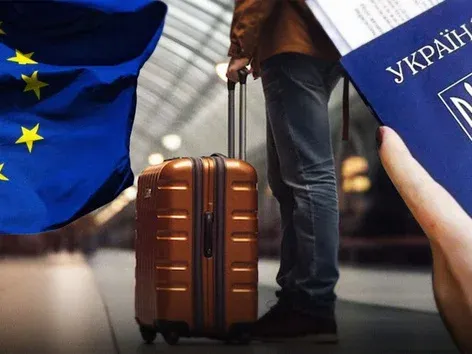
For more than three years, Ukrainians have been living in EU countries under temporary protection due to the war in Ukraine. However, there are already discussions about a plan to gradually phase out this program by 2027, as well as new legal ways to live, work, and study. Find out what awaits Ukrainians in the EU after the end of temporary protection and how to prepare for the new rules

The European Union and Ukraine are actively working on a step-by-step plan to end temporary protection for Ukrainians, which has been in place for over three years. During a high-level meeting in Brussels, Ilona Gavronska, Deputy Minister of Social Policy, Family, and Unity of Ukraine for European Integration, presented the key principles on which this process will be based.
"Our joint work with the EU on future changes for Ukrainians is based on three key principles: unity, dignity, and partnership. Unity means supporting Ukrainians' connection with their homeland, with each other, and with Europe. Dignity lies in recognizing the active participation of Ukrainians in the life of the countries that have taken them in. Partnership will determine further interaction between Ukraine and the EU," Gavronska emphasized.
According to her, after the temporary protection ends, Ukrainians will be able to switch to other residence permits or return to Ukraine at their own discretion. Currently, about 4.3 million Ukrainians are exercising their right to temporary protection in EU countries.
The “post-temporary protection” era in the EU: challenges and opportunities
The Temporary Protection Directive (TPD) was introduced by the EU in 2022 in response to the war in Ukraine. It is valid until March 4, 2027. After that date, each EU country will independently determine the conditions for Ukrainians to stay on its territory.
EU Special Representative for Ukrainians Ilva Johansson called on member states to start preparing legislative changes now so that Ukrainians can continue to live legally in the EU after the TPD expires. She stressed that the current rules do not reflect the new reality of Ukrainians' long-term stay in Europe and need to be adapted.
“EU governments must start working on changes now,” Johansson stressed.
In September 2025, the EU Council adopted recommendations on the gradual termination of temporary protection. The main directions are:
- support for voluntary return to Ukraine;
- creation of new legal pathways for residence through work, study, humanitarian and family reasons;
- strengthening the integration of Ukrainians into the communities of host countries.
As Johansson summed up: “We are moving from temporary protection to diaspora.”
Don't want to miss important updates and useful articles? Subscribe to our weekly newsletter!
Temporary protection in the EU is coming to an end: what does this mean for Ukrainians after 2027?
For every Ukrainian who is in the EU under temporary protection, the scenarios after 2027 are different:
those who work are offered a transition to a work permit or Blue Card
those who study are offered a transition to a student permit
those whose children attend local schools will have grounds for family residence
those who are not working or studying should expect restrictions on social assistance and a requirement to integrate
those who want to return to Ukraine may be provided with support for relocation and return home
Thus, the EU is effectively giving Ukrainians two years to plan their future and determine their life priorities.
Why is it critically important to prepare for the end of temporary protection now?
Switching to another type of residence permit in most EU countries requires:
a minimum of 6–12 months of bureaucracy;
knowledge of the local language at the A2–B1 level;
having a job with an official contract or student status;
decisions made separately by national governments.
Without advance preparation, there may be queues, delays, and legal loopholes.
The EU's new focus: from refugees to diaspora
The EU is changing its rhetoric regarding Ukrainians. They are no longer considered temporary guests — Ukrainians are now viewed as a diaspora that:
- works and pays taxes;
- studies and develops;
- integrates into local communities;
- forms a lasting connection with Europe and their homeland.
Ilva Johansson proposes three key steps for a smooth transition:
1. Adapt national laws to allow Ukrainians to stay legally for a longer period of time;
2. Ensure a transition to other permits without gaps in rights;
3. Strengthen integration through language, education, and employment.
This approach will avoid chaos after 2027 and ensure a smooth transition from temporary protection to sustainable policies to support the Ukrainian community in the EU.
Overall, the temporary protection of Ukrainians in the EU, which was initially conceived as a short-term solution, has become the EU's largest humanitarian program in the 21st century. The next two years will be critical for Ukrainians to plan their lives and choose their future path — whether to stay in the EU or return home — and for EU countries to prepare the legislative framework for a new phase of relations with the Ukrainian diaspora.
In the future, this will allow Ukrainians to live with dignity and stability while remaining an active part of European society.
Need help with immigration issues?
Contact the lawyers at Visit Ukraine for advice.

Reminder! Nearly 4.3 million Ukrainians are still under temporary protection in EU countries, but this protection is gradually coming to an end. What will happen after 2027: an extension, a return home or a transition to other statuses? Find out what to prepare for and what decisions EU countries are considering.
Want to know more? Read the latest news and useful materials about Ukraine and the world in the News section.
Our recommendation for a safe and comfortable trip:
Visit Ukraine Insurance - insurance for a safe stay abroad without unnecessary expenses;
Green Card - compulsory car insurance for traveling abroad;
Visit Ukraine Tickets - book tickets for buses, trains, and airplanes to/from Ukraine and between cities around the world;
Private Lawyer service - professional legal support on visa and migration issues;
Visit Ukraine Merch - buy patriotic clothing and accessories with worldwide delivery.
© 2018-2025, Visit Ukraine. Use, copying or reprinting of materials on this site is permitted only with a link (hyperlink for online publications) to Visit Ukraine.
All rights reserved.
Recommended articles
1 min
For refugees
Ukrainians in Poland: until when can refugees stay in the country and who can stay longer
Up to one million Ukrainians currently live in Poland, some of whom moved there after the outbreak of full-scale war. These people can legally stay in Poland until 30 June this year, but some have the right to stay for a longer period of time. Find out which categories of migrants are allowed to do so
Yuliia Dyka
24 Mar. 2024
More details2 min
Transport
The electronic vignette is now available online at Visit Ukraine — quickly and officially. Learn how to get an e-vignette for traveling in Europe in just a few clicks
Yuliia Dyka
29 Oct. 2025
More details1 min
Work
The German government has approved an increase in the minimum wage: what will change in 2026
Germany has made an important decision to raise the minimum wage. This will be another step toward greater social justice and improved working conditions for millions of workers. Find out when the increase will take effect, how payments will change, and what this means for Ukrainians working in Germany
Yuliia Dyka
29 Oct. 2025
More details1 min
Entry rules
The EES system will start operating on the border with Hungary: what will change for Ukrainians
Hungary has begun implementing a new entry and exit control system, EES, which completely changes the border crossing process for citizens of non-EU countries. Learn how the EES system works and what to expect when crossing the Hungarian border
Yuliia Dyka
30 Oct. 2025
More details