


.gif)
The new EES system in Europe has hit Ukrainians hard: what problems have people encountered?

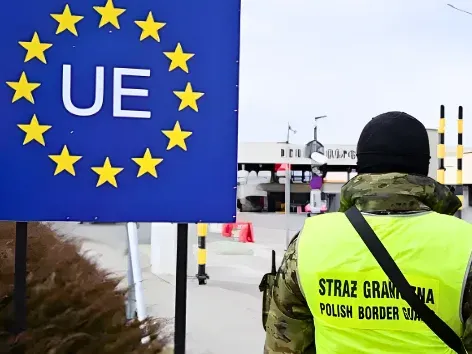
The launch of the Entry-Exit System (EES) on 12 October was the most significant change at EU borders in recent years. The new rules are designed to improve security and migration control, but the first few days turned into chaos — especially for Ukrainians crossing the border with Poland. Queues, glitches, and unprepared infrastructure showed that the system needs refinement. Find out how the EES works now and what travellers can expect

On 12 October, the European Union officially launched the Entry-Exit System (EES), a large-scale project that had been postponed for more than seven years. This system is designed to record the crossing of EU borders by third-country nationals, including Ukrainians, and is intended to improve security and migration control. However, the first days of its operation turned into chaos, especially on the Polish-Ukrainian border, where queues and delays reached record levels, writes Eurointegration.
💡 Do you have questions about the new rules for crossing the EU border?
Consult with immigration lawyers at Visit Ukraine. Specialists will help you understand complex issues and explain all the nuances of the new rules.

What is the EES system and why is it needed
EES is a new electronic database that records the dates of entry and exit of foreign citizens to and from European Union countries. It replaces passport stamps and stores biometric data — fingerprints and photographs. According to the EU's plan, the system should simplify migration control, speed up border crossing and prevent cases of overstaying.
Development of the system began long before the war in Ukraine, and its implementation is not directed against Ukrainians. However, they were the first to experience the difficulties of the transition period, as most Ukrainians cross the border by land transport rather than through airports, where the implementation of the EES is easier.
Read also: The EES system in Europe. What do Ukrainians need to know before entering the EU?
Poland - the main testing ground
Poland was the first EU country to launch the EES at two border crossing points: the railway crossing in Przemyśl and the road crossing in Shehyni-Medyka. Within hours of the launch, it became clear that the system was not ready. Passengers reported chaos, delays of up to 3-4 hours on trains and queues stretching for tens of metres. Some buses stood at the border for more than ten hours, and pedestrian crossings were extremely slow.
The Polish Border Guard warned in advance about possible problems. Service representative Andrzej Juszwiak acknowledged that ‘difficulties may arise’ in the initial stage, and full implementation of the system is planned to be completed by April 2026. However, even these caveats did not save the situation: the technology failed, and border guards often resorted to manual data entry.
Why the system collapsed
The main reason for the chaos was the unpreparedness of the infrastructure. Despite the fact that Poland had purchased equipment for biometric data collection in advance, the new devices did not start working on 12 October. Border guards photographed people and their passports on ordinary phones, which caused even greater delays.
In addition, there was no procedure for those who had submitted their biometric data in advance. Polish border guards scanned everyone again without exception, which is contrary to EU rules, where the procedure may be repeated no more than once every three years. As a result, the database that had been created in advance proved useless, and the time required to check each person increased several times over.
How this affected Ukrainian travellers
For Ukrainians who regularly cross the border with the EU, especially with Poland, the new rules mean one thing: they need to allow much more time for their trip. The Polish-Ukrainian border was already one of the busiest in Europe, and with the introduction of the EES, queues are only likely to grow.
Ukrainians planning trips should keep an eye on updates from the Polish border service in advance and choose alternative routes where the system is not yet fully operational. In the future, delays should be reduced, because after the first entry of biometric data into the database, subsequent crossings will be faster.
For a comfortable trip abroad, we recommend using the transfer service at Visit Ukraine: convenient international transport, comfortable cars and experienced drivers. Book now!

Don't want to miss important updates and useful articles? Subscribe to our weekly newsletter!
Who is to blame, and are they to blame?
Problems at the start of the EES are to be expected, but the responsibility for the failure of its implementation in Poland lies with the Polish authorities. They did not ensure sufficient preparation of border crossing points and did not test the equipment in advance. This was particularly acute in Przemyśl, where the checkpoint is not physically designed to handle passengers leaving and entering at the same time.
However, the Polish side intends to continue implementing the system gradually, analysing mistakes and adjusting the process. The EU has given member states until April 2026 to fully transition to the new system.
Poland is not the only country facing problems
Poland is not the only country facing difficulties. Most EU countries have decided to introduce the EES gradually, limiting the experiment to a few points. The Czech Republic, Estonia and Luxembourg started using the system immediately, but on a limited scale — mainly at airports. Spain and Belgium have officially announced that the transition will be gradual.
The collapse at the Polish border was an important signal to other countries: without careful preparation, the new system can cause serious disruptions.
The EES system is not a temporary measure, but a fundamental reform of border control in the EU. In the long term, it will indeed simplify life for travellers: after the initial collection of biometric data, border crossings will become faster and the information more accurate and secure.
However, the coming months will be a test for Ukrainian travellers. Until the infrastructure is adapted, travelling through Przemyśl and Shehyni will require patience and extra time.
Don't forget that travelling abroad always requires careful preparation for your own safety. To feel confident, take out medical insurance that will cover your basic needs in case of unforeseen health situations.

Reminder! The European System (EES) began operating on 12 October. Find out all the necessary details so that your first trip using the EES system goes smoothly and without hassle.
Want to know more? Read the latest news and useful materials about Ukraine and the world in the News section.
Our recommendation for a safe and comfortable trip:
Visit Ukraine Insurance - insurance for a safe stay abroad without unnecessary expenses;
Green Card - compulsory car insurance for traveling abroad;
Visit Ukraine Tickets - book tickets for buses, trains, and airplanes to/from Ukraine and between cities around the world;
Private Lawyer service - professional legal support on visa and migration issues;
Visit Ukraine Merch - buy patriotic clothing and accessories with worldwide delivery.
© 2018-2025, Visit Ukraine. Use, copying or reprinting of materials on this site is permitted only with a link (hyperlink for online publications) to Visit Ukraine.
All rights reserved.
Recommended articles
2 min
Transport
Ukrainians are buying electric cars at record rates: why has demand for electric vehicles grown?
Ukraine is experiencing a real electric boom, with electric vehicle sales breaking historical records. Several factors have driven this growth. Find out why demand for electric vehicles has increased among Ukrainians right now
Yuliia Dyka
12 Oct. 2025
More details2 min
Emigration
Germany has abolished fast-track citizenship: what has changed for migrants
Germany has abolished the fast-track procedure for obtaining citizenship, leaving the five-year residency requirement in place. Find out who will be affected by the changes, how they will affect Ukrainians, and why the abolition of “turbo citizenship” is more symbolic than anything else
Yuliia Dyka
13 Oct. 2025
More details3 min
For refugees
Ukrainians can continue to enjoy temporary protection in the Czech Republic in 2025. In this article, learn how to obtain or extend the status, what rights it provides, what are the conditions for receiving humanitarian aid, how to find housing or work, obtain health insurance, and where to turn for support
Yuliia Dyka
13 Oct. 2025
More details1 min
For refugees
ZUS tightens checks on recipients of 800+ payments: new rules for Ukrainians
ZUS in Poland has announced a new control system for recipients of 800+ benefits, including Ukrainians. From 2026, only those who work and actually live in Poland will be eligible for payments. Find out who will be affected by the checks and what new rules will apply to foreigners
Yuliia Dyka
13 Oct. 2025
More details