


.gif)
Germany has abolished fast-track citizenship: what has changed for migrants

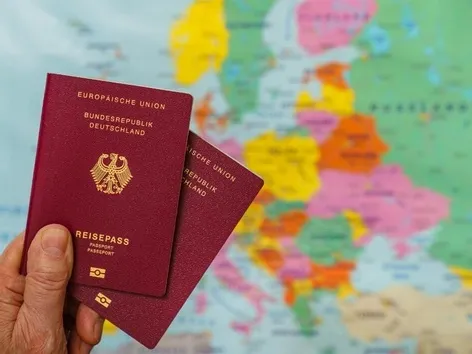
Germany has abolished the fast-track procedure for obtaining citizenship, leaving the five-year residency requirement in place. Find out who will be affected by the changes, how they will affect Ukrainians, and why the abolition of “turbo citizenship” is more symbolic than anything else

Germany has abandoned “turbo citizenship” — a procedure that allowed people to obtain a German passport after only three years of residence. As DW notes, the standard requirement now is at least five years of residence in the country, knowledge of the language, and proven integration.
The Bundestag has abolished accelerated naturalization
The Bundestag has supported a bill that abolishes the possibility of obtaining German citizenship in three years through the so-called “accelerated procedure.” The rule on acquiring citizenship after five years of residence in Germany remains in force, but without returning to the previous eight-year term.
At the same time, the government has retained the right to dual citizenship — this was a compromise between the Social Democrats (SPD), the Greens, and the Liberals, who are part of the ruling coalition.
According to DW, experts note that applications submitted before the changes came into force can formally be considered under the old rules, but there is no definitive forecast on this.
How did the political forces react?
The decision to abolish “turbo naturalization” has provoked a controversial reaction among political parties.
The far-right opposition party Alternative for Germany (AfD) supported the changes but said they were insufficient. Its representatives insist on the return of the eight-year period for obtaining citizenship and the abolition of dual citizenship. According to the party, the current government policy is too lenient and does not adequately restrict migration.
The Greens and the Left Party, on the other hand, criticized the initiative. They emphasized that the conditions for obtaining citizenship through the fast-track procedure were already difficult, as they required a high level of integration, C1-level language proficiency, and a proven contribution to community life.
The leadership of Diakonie, a humanitarian organization of the Evangelical Protestant Church, stated that the abolition of “turbo citizenship” could “slow down integration” instead of encouraging active and socially responsible migrants.
Don't want to miss important updates and useful articles? Subscribe to our weekly newsletter!
How did the idea of “fast-track citizenship” come about in Germany?
The fast-track procedure was part of the previous “traffic light” coalition's reform and came into force in June 2024. It allowed people to obtain a German passport after three years of residence, provided they had a stable income, knowledge of German at C1 level, and so-called “special achievements in integration.”
Such achievements included volunteer work and participation in local initiatives, such as volunteer fire brigades or community organizations.
However, in February 2025, after early elections to the Bundestag, the conservative CDU/CSU bloc made the abolition of this procedure one of the main points of its program. Conservatives believe that citizenship should not be the beginning, but the final stage of integration.
The issue of migration has remained sensitive for German society since 2015, when Angela Merkel's government decided not to close the border to more than a million refugees.
As of 2025, more than 12 million foreigners live in Germany, accounting for about 15% of the population. Despite a decline in the total number of migrants in recent years, political debates on integration issues remain heated.
What effect has the accelerated citizenship procedure had in Germany?
According to official data, in 2024 alone, 292,000 foreigners became German citizens — a record high for the last decade. In Berlin, in the first eight months of 2025 alone, about 27,000 people obtained citizenship, which exceeds the results for the entire previous year.
According to media estimates, around 300-500 people in the capital took advantage of the “turbo procedure.” In the rest of the federal states, this number was significantly lower. Therefore, experts believe that its abolition is more symbolic than practical.
What this means for Ukrainians in Germany
For most Ukrainians who have received temporary protection under the EU directive, the changes will not have a direct impact. To apply for citizenship, you must have a different legal status — for example, a residence permit for employment or long-term stay.
However, Ukrainians who plan to stay in Germany for a long time or change their status should consult with lawyers to understand how the new rules affect the naturalization process.
The Visit Ukraine team of lawyers assists Ukrainians with legalization, residence permit extensions, citizenship applications, visa documents, and the protection of migrants' rights in the EU. Our specialists will help you assess your status, prepare documents, and avoid mistakes in the application process.

We remind you! As Europe prepares to end its temporary protection program, Ukrainians in Germany are faced with a choice: stay and apply for long-term status or return home. The country's authorities are already launching new initiatives and support centers to help refugees decide on their future. Read about how to change your status, what documents are required, and what opportunities will be available to Ukrainians in Germany after 2027.
Photo: Vista Create
Want to know more? Read the latest news and useful materials about Ukraine and the world in the News section.
Our recommendation for a safe and comfortable trip:
Visit Ukraine Insurance - insurance for a safe stay abroad without unnecessary expenses;
Green Card - compulsory car insurance for traveling abroad;
Visit Ukraine Tickets - book tickets for buses, trains, and airplanes to/from Ukraine and between cities around the world;
Private Lawyer service - professional legal support on visa and migration issues;
Visit Ukraine Merch - buy patriotic clothing and accessories with worldwide delivery.
© 2018-2025, Visit Ukraine. Use, copying or reprinting of materials on this site is permitted only with a link (hyperlink for online publications) to Visit Ukraine.
All rights reserved.
Recommended articles
1 min
Work
Employment rules in Germany: for which Ukrainians can receive a fine of up to 50,000 euros
Most of the refugees from Ukraine who found refuge in Germany are already employed. However, the country strictly controls the labor market and imposes heavy fines on people who work illegally. Learn more about illegal employment and how to avoid fines
Yuliia Dyka
21 Sep. 2025
More details3 min
For refugees
Buying, registering and maintaining a car in Germany: instructions for Ukrainians
Ukrainians with temporary protection can buy and register cars in Germany. Find out what documents you need, how much registration costs, and what types of insurance you should take out
Yuliia Dyka
20 Sep. 2025
More details1 min
For refugees
Which German states will accept Ukrainians in October 2025: relevant information for forced migrants
The federal states of Germany continue to provide shelter and assistance to Ukrainian refugees. However, some categories of migrants may face difficulties in entering. Learn more about the addresses of refugee camps and their accommodation conditions in October 2025
Yuliia Dyka
02 Oct. 2025
More details3 min
Emigration
Emigration to Germany: how can Ukrainians move there in 2025?
For many years, Germany has attracted Ukrainians with opportunities for work, study and a comfortable life. However, if you are planning to move there in 2025, there are rules, document requirements and procedural nuances that you should be aware of in advance. Find out more about the types of visas, legalisation requirements and steps to permanent residence in Germany
Yuliia Dyka
15 Jul. 2025
More details