


.gif)
Der Erlass Nr. 1112 des Ministeriums für Bildung und Wissenschaft wird aufgehoben: Was passiert mit dem Fernunterricht?

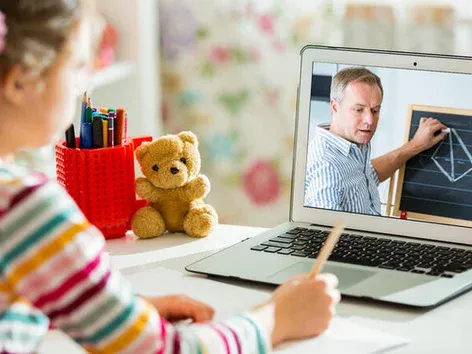
Die Ukraine wird den Erlass des Ministeriums für Bildung und Wissenschaft zum Fernunterricht aufheben. Erfahren Sie mehr darüber, warum diese Entscheidung getroffen wurde, was sich für Schulen und Eltern ändern wird und warum der Fernunterricht bestehen bleibt.

As of July 18, 2025, the government is preparing to repeal Order No. 1112 of the Ministry of Education and Science of Ukraine, which defined the rules for full-time, blended, and distance learning in municipal schools during martial law.
The initiator of the changes is Deputy Prime Minister for Innovation, Education, Science, and Technology (and Minister of Digital Transformation) Mykhailo Fedorov, who announced this during a meeting with the Servant of the People faction and later clarified the details on social media.
Do you dream of studying abroad, but don't know where to start? Visit Ukraine lawyers will help you choose a country, university, and complete all the documents - contact us for a consultation!

In brief: what is happening
Order No. 1112 of the Ministry of Education and Science, adopted on August 7, 2024, and updated in 2025, regulated the conditions under which schools could operate in person/hybrid mode during wartime and when they should switch to distance learning.
Fedorov announced that the order would be repealed on July 18, 2025, due to criticism from the public and MPs, in particular regarding the possible closure of small schools in frontline regions and restrictions on access to distance learning.
Distance learning will NOT be abolished as a format: it will remain part of the educational process where safe conditions for offline learning are not available.
What exactly does Order No. 1112 provide for?
Order No. 1112 of the Ministry of Education and Science “On the Approval of the Procedure and Conditions for Obtaining General Secondary Education in Municipal General Secondary Education Institutions under Martial Law in Ukraine” was registered with the Ministry of Justice on August 8, 2024 (No. 1222/42567) and subsequently amended. The document was to be fully implemented by the beginning of the 2025/2026 academic year.
Key conditions for full-time/blended learning
Full-time (day) education, including with “blended” elements, shall be organized only if:
- There is a suitable shelter with unhindered access for all participants in the educational process at the school or within a radius of 500 meters.
- The material and technical base allows for a full-time/blended format.
For a number of frontline areas (Dnipropetrovsk, Donetsk, Zaporizhzhia, Luhansk, Mykolaiv, Odesa, Sumy, Kharkiv, Kherson, Chernihiv; excluding temporarily occupied territories), additional decisions by regional defense authorities or military administrations and a corresponding order from the school principal following a decision by the teachers' council are required.
If the conditions are not met — distance learning
In the absence of safe shelter or adequate facilities, institutions must organize education in a distance format.
Why did the order cause outrage?
After the publication of Order No. 1112 and preparations for its full implementation, communities, educators, and parents began to signal a number of problems. According to the government, it was the accumulated criticism that led to the decision to cancel the document.
1. Risk of closure of small schools in frontline communities
In regions where the number of children has fallen sharply due to evacuation, migration, or destruction, formal enrollment thresholds could lead to the optimization or actual closure of schools. This sparked protests from local communities and members of parliament.
2. Restrictions on access to distance learning for children abroad or forcibly displaced
Critics pointed out that the order limits the ability of Ukrainian children to study remotely in “their” schools if they are outside Ukraine or have changed their place of residence due to the war.
3. Requirement for IDPs to attend school in person at their “place of temporary residence”
Comments focused on the fact that displaced students had to transfer to local schools even if they wanted to continue distance learning at their home school, which made it difficult to continue their education.
4. Minimum of 20 students in a distance learning class
The media discussed the rule requiring a minimum of 20 children to form a distance learning class, which contradicts the general legislative framework (minimum of 5 for a class in general) and effectively cut off small groups of children, particularly those from frontline or rural communities.
Distance learning will not be abolished
After a wave of public outcry, Fedorov separately emphasized that the distance learning format would remain in place. The main priority is the safety of children; in wartime, distance learning will continue to be a tool for accessing education where offline learning is impossible or risky.
How could the repeal of the order change approaches to organizing education?
The repeal of No. 1112 does not mean “chaos.” On the contrary, it opens a window for reviewing regulations that do not work in the realities of mass population displacement and an uneven security situation.
Possible areas for improvement (based on statements by government officials and public discussions):
- More flexible criteria for forming remote classes (lower minimum number of students, inter-community or inter-regional joint online classes).
- Preservation of the right to “study online at their native school” for children abroad or IDPs without compulsory enrollment in a local school if the family does not want this.
- Unified digital platforms (single electronic school/register) to avoid duplication and loss of data when switching between formats.
- Better integration of “blended” learning: some subjects offline, some online; rotation models depending on anxiety and safety indicators.
- Targeted solutions for special schools and children with SEN: remote modules + mobile offline support teams.
Shelter, underground schools, and offline only when safe
Fedorov emphasized that offline learning is only possible if there are guarantees that children's lives are not in danger. The government is simultaneously investing in the construction of underground schools and modern shelters to expand the map of safe facilities and encourage a return to face-to-face learning where possible.
Don't want to miss important updates and useful articles? Subscribe to our weekly newsletter!
What should parents and schools do right now?
For parents
Check your child's enrollment status: are they still enrolled in their “home” school, or is there a need/desire to change schools?
Find out the format for the 2025/2026 school year at the school: offline, blended, or remote; is there a shelter?
For IDPs/abroad
Find out if the school is willing to keep your child in remote learning regardless of their place of residence (chances are higher after restrictions are lifted).
Technology and internet: make sure your child has stable access to online lessons in case of alerts or a switch to remote learning.
Psychological support: long breaks, air raid sirens, and relocations affect motivation; check with the school about counseling services.
For schools/communities
Update shelter and safety protocols — this is key to making offline decisions. (The requirement for safe shelters has been central and will remain relevant in any new regulations.)
Prepare flexible class formation models (including inter-school distance learning groups) in case of new regulations. Criticism of the “20 students” rule has highlighted the need for flexibility.
Communicate with IDP parents and children abroad — requirements for mandatory in-person learning “at the place of residence” are expected to be relaxed.
The repeal of Order No. 1112 is not a rejection of distance learning, but an attempt to remove regulations that did not take into account the realities of war: the dispersion of students, uneven security, and the need to maintain educational ties regardless of geography. Ahead lies a period of developing a new flexible framework, where safety, accessibility, and quality will be key.
Get advice from a qualified lawyer today. Our experts will help you avoid common mistakes and successfully go all the way from choosing a university to starting your studies abroad.

Reminder! Ukraine is launching an ambitious programme to invite lecturers from 250 leading universities around the world, including MIT, Harvard and Oxford, to teach at Ukrainian universities. Find out how the project will work.
Want to know more? Read the latest news and useful materials about Ukraine and the world in the News section.
We recommend purchasing it for a safe and comfortable trip to Ukraine:
Visit Ukraine Insurance – insurance covering military risks for entry and travel in Ukraine;
Visit Ukraine Car Insurance – car insurance with extended coverage in Ukraine;
Visit Ukraine Legal Advice – comprehensive legal support on entry to Ukraine;
Visit Ukraine Tickets – bus and train tickets to/from Ukraine;
Visit Ukraine Tours – the largest online database of tours to Ukraine for every taste;
Visit Ukraine Hotels – hotels for a comfortable stay in Ukraine;
Visit Ukraine Merch – patriotic clothing and accessories with worldwide delivery.
© 2018-2025, Visit Ukraine. Use, copying or reprinting of materials on this site is permitted only with a link (hyperlink for online publications) to Visit Ukraine.
All rights reserved.
Recommended articles
1 min
Ereignisse
Der ukrainische Champion Oleksandr Usyk wird am 19. Juli 2025 im Wembley-Stadion gegen Daniel Dubois um den unbestrittenen Schwergewichtstitel antreten. Erfahren Sie, wo und wann Sie die Übertragung sehen können und alle Details zu diesem epischen Rückkampf
Yuliia Dyka
18 Jul. 2025
More details2 min
Visa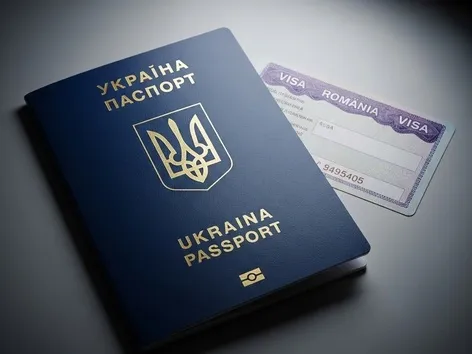
Wann benötigen Ukrainer ein Visum für Rumänien und wie beantragt man es?
Ukrainische Staatsbürger benötigen kein Visum für einen kurzfristigen Aufenthalt in Rumänien, aber ein Visum ist für Arbeit, Studium oder langfristigen Aufenthalt erforderlich. Erfahren Sie, welche Anforderungen an Antragsteller gestellt werden, wie man einen Antrag stellt, eine Liste der erforderlichen Dokumente, Arten von Visa und viele weitere nützliche Informationen.
Yuliia Dyka
18 Jul. 2025
More details1 min
Transport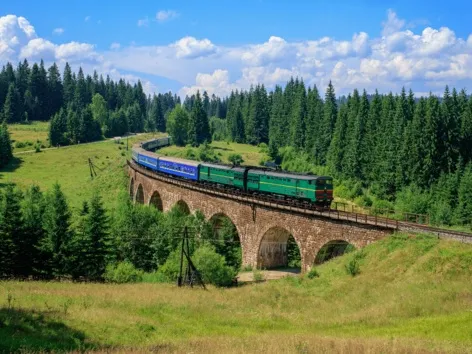
Züge nach Transkarpatien kehren zu ihrem gewohnten Fahrplan zurück: Einzelheiten
Ukrzaliznytsia nimmt den Service nach Transkarpatien nach der Modernisierung der Gleise wieder auf. Erfahren Sie, welche Züge wieder zu den Kurorten fahren, welche Strecken verlängert wurden und wann der Ticketverkauf beginnt
Yuliia Dyka
18 Jul. 2025
More details2 min
Dokumente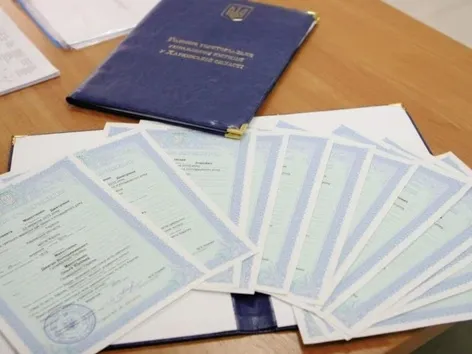
Ausländer benötigen häufig Duplikate oder Korrekturen von Personenstandsunterlagen aus der Ukraine. Erfahren Sie, wie Sie Dokumente vom Standesamt aus der Ferne wiederherstellen, Ablehnungen vermeiden und das Verfahren so schnell wie möglich abschließen können
Yuliia Dyka
18 Jul. 2025
More details