


.gif)
Renewed temporary protection for Ukrainians in 2025: conditions, countries, exceptions

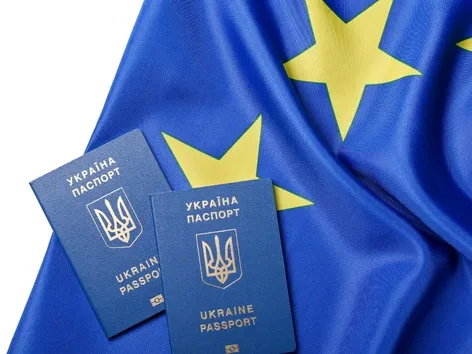
Temporary protection in the EU has been extended until 2027, but not all Ukrainians can renew it when entering the EU or changing the country where they were granted status. Find out in which countries repeat protection is possible, what conditions are imposed by states, and what to do to avoid rejection

Since the start of the full-scale war in Ukraine, millions of citizens have been granted temporary protection in EU countries in accordance with EU Council Directive 2001/55/EC. As of 2025, temporary protection has been extended until at least March 4, 2027, but the situation regarding the re-granting of protection in the event of return to Ukraine or change of country of residence within the EU raises many questions. Let's take a look at which countries this is possible in, what conditions need to be met, and what risks should be taken into account.
What is temporary protection and who is eligible for it?
Temporary protection is a procedure for reapplying for temporary protection in an EU country:
● after returning to Ukraine,
● after leaving for another EU country,
● or after voluntarily renouncing protection.
The reasons for returning to Ukraine or changing countries may vary: family circumstances, medical treatment, an attempt to find better living conditions, etc. However, EU countries impose specific conditions for renewing status, and these conditions vary significantly.
Read also: Which regions of Ukraine will not provide temporary protection to refugees?
Is it possible to reapply for temporary protection after returning to Ukraine?
Yes, in most countries this is possible, but with certain conditions:
● Netherlands: re-protection is granted if no more than 8 weeks have passed between leaving the country and returning. If more time has passed, a new application must be submitted, sometimes even through the courts.
● Germany: reapplication is allowed, but in some cases it is necessary to prove that the departure was temporary (e.g., due to family circumstances, medical treatment, etc.).
● Poland: re-registration is possible, but only if you can prove that your departure was temporary. If you have lost your PESEL UKR number, you must submit a new application.
● Czech Republic: you must submit an application in person and explain the circumstances of your departure. In some cases, you may have to wait up to 30 days for a decision.
Important: the longer you stay in Ukraine or another third country, the more likely you are to be refused re-registration.
Can I get temporary protection again after staying in another EU country?
If you had temporary protection, for example, in Poland, and now want to obtain it in the Netherlands or France, the situation is more complicated because in most EU countries this status is considered “non-transferable.” This means that:
● a person is entitled to protection in only one EU country at a time;
● transfer of status between countries is not provided for;
● the new country may refuse if it learns about the previous protection.
What is taken into account when reapplying:
● whether you already had status in another country;
● whether there are valid reasons for the change (family circumstances, work, housing, etc.);
● whether the previous status has been revoked (where possible).
Please note! France, the Netherlands, and Germany usually ask about previous protection. If false information is provided (for example, if previous status is not indicated), current protection may be revoked and entry may be denied.
Don't want to miss important updates and useful articles? Subscribe to our weekly newsletter!
Which countries do not grant temporary protection repeatedly?
There are countries that do not officially or de facto grant repeated temporary protection, in particular:
● Switzerland (not an EU member, but participates in protection mechanisms): if a person has left the country for more than 15 days, their status is lost and cannot be renewed.
● Denmark: not a full participant in Directive 2001/55/EC, so its policy is limited and depends on the specific case.
● Austria: in case of refusal or loss of status, reapplication often leads to refusal, especially without a clear explanation of the reasons for leaving.
● Italy: depending on the region, refusal of re-protection is possible even in the case of a short-term departure.
Read also: In which EU countries can you obtain re-protection — conditions and necessary documents.
How to avoid being refused re-protection: practical advice
1. Before leaving the country of protection, check the official policy on maintaining or renewing status.
2. Keep documents confirming the reasons for your departure (e.g., medical treatment, care for relatives, etc.).
3. Do not apply for protection in a new country without canceling your previous one — this may lead to rejection.
4. Do not conceal information about your previous status — this is a violation that may result in a ban on entry and revocation of your current status.
5. Consult a lawyer before applying for renewal of protection or moving to another EU country.
Legal support for Ukrainians abroad: how we can help
The team of migration lawyers at Visit Ukraine provides assistance to Ukrainians in the following areas:
● re-obtaining temporary protection;
● safe relocation to another EU country;
● correct preparation of documents;
● individual preparation of explanations for migration authorities.
We will help you maintain your status, avoid misunderstandings, and ensure that every step is taken in accordance with the law.
Leave a request on the Visit Ukraine website, and our specialists will advise you personally and accompany you at every stage.

Alternative option: if you do not know what type of consultation to choose, contact our managers via Telegram or WhatsApp. They will advise you and help you make an appointment.
We remind you! The visa-free regime allows Ukrainians to travel freely in Europe, but only for 90 days within a 180-day period. Read how to count these days correctly if you have temporary protection and how to avoid violations that could result in fines or a ban on entry in our previous article.
Photo: Canva
Want to know more? Read the latest news and useful materials about Ukraine and the world in the News section.
Our recommendation for a safe and comfortable trip:
Visit Ukraine Insurance - insurance for a safe stay abroad without unnecessary expenses;
Green Card - compulsory car insurance for traveling abroad;
Visit Ukraine Tickets - book tickets for buses, trains, and airplanes to/from Ukraine and between cities around the world;
Private Lawyer service - professional legal support on visa and migration issues;
Visit Ukraine Merch - buy patriotic clothing and accessories with worldwide delivery.
© 2018-2025, Visit Ukraine. Use, copying or reprinting of materials on this site is permitted only with a link (hyperlink for online publications) to Visit Ukraine.
All rights reserved.
Recommended articles
1 min
Documents
Ukrainians continue to actively travel to Schengen countries, but document requirements remain strict. This is especially true for those who have a non-biometric passport or plan to apply for a visa. Learn more about entry rules and required documents for travel in 2025
Yuliia Dyka
06 Jul. 2025
More details4 min
For refugees
Which German states are accepting Ukrainians in July 2025: current addresses of camps
The federal states of Germany continue to provide shelter and support to Ukrainian refugees. However, some categories of migrants may face obstacles when entering the country. Get the latest information on the addresses of refugee camps and their accommodation conditions in July 2025
Yuliia Dyka
02 Jul. 2025
More details1 min
Travel
Which Schengen countries have introduced border controls: restrictions in 2025
In 2025, Schengen countries continue to face challenges that require the restoration of border controls. These measures are aimed at improving security and managing migration flows. Find out which countries have restrictions in place
Yuliia Dyka
08 Jul. 2025
More details2 min
VU lawyers explain
Did you temporarily leave Ukraine for Europe? You can still apply for temporary protection in Belgium. Find out how to prove your main place of residence in Ukraine as of February 24, 2022, and what documents are required for this, using a real request to VU lawyers as an example
Yuliia Dyka
08 Jul. 2025
More details