


.gif)

Germany is preparing major changes in its social support policy for Ukrainians who arrived in the country after April 2025. The reform has sparked heated debate among politicians, as it involves switching new arrivals to a different, less favourable payment format. Find out more about the rules that are planned to be introduced and who they will affect

According to Reuters, the German government is preparing a large-scale reform that will change the payment procedure for Ukrainians who arrived in the country after 1 April 2025. It involves abandoning the current support model and transitioning to a different, less generous format of social assistance.
Why Berlin chose this path and what consequences to expect — we will discuss this further in the article.
New arrivals — under different rules
The main change concerns the abandonment of the Bürgergeld programme for Ukrainians who crossed the border after April 2025. This means that new arrivals will no longer have access to the same basic assistance as German citizens and foreigners who are more deeply integrated.
Instead, they will receive payments based on the model applied to asylum seekers. The level of this support is approximately €100 lower than the standard Bürgergeld rate for adults living alone or raising a child without a partner.
Why is Germany limiting social assistance?
In recent months, the number of Ukrainians in Germany has continued to grow. Between April and June 2025 alone, the number increased by another 21,000, bringing the total number of refugees from Ukraine to over 1.25 million. This places a significant burden on the budget and the social support system.
A number of German politicians argue that the high level of assistance reduces Ukrainians' motivation to find work, even though many have higher education and experience. That is why the government is increasingly talking about the need for reforms.
Don't want to miss important updates and useful articles? Subscribe to our weekly newsletter!
Political pressure and disputes within the country
One of the most active advocates of a tougher approach is Bavarian Prime Minister Markus Söder. He calls for the abolition of Bürgergeld not only for citizens who arrived after April 2025, but also for those who already live in Germany. In his opinion, the state takes care of Ukrainian refugees more than any other country in Europe.
However, there is no unity in the German political environment. Some parties believe that a sharp cut in social assistance will complicate integration, increase the vulnerability of newcomers and create additional barriers to employment.
What does this mean for Ukrainians who arrived after 1 April?
If the document is approved in its current form, Ukrainians who have already entered Germany after April 2025 will automatically fall under the new support system. It provides for lower payments, a different registration procedure and a longer integration process.
At the same time, the rules for those who arrived earlier remain unchanged — although it is this category that is the subject of the most heated political debate.
The current situation with payments to refugees in Germany: explanations from Visit Ukraine lawyers
In recent weeks, the topic of possible cuts to payments to Ukrainians in Germany has been actively discussed in the media, but much of this information is presented without context. According to explanations from Visit Ukraine lawyers, the reform does not apply to all refugees from Ukraine — the changes will only apply to those who arrived after 1 April 2025. It is for this category that the government plans to switch from the Bürgergeld model to the Asylbewerberleistungen system — payments that asylum seekers usually receive.
For a single person, this support currently amounts to around €441 per month, which is €122 less than the standard Bürgergeld rate of €563. This covers personal and basic expenses, such as food and clothing. It is important to note that the issue of housing compensation has not yet been resolved: citizens who receive Bürgergeld are entitled to have their rent covered — approximately €500 per month. Whether a similar mechanism will apply to those who arrived after April, or whether new arrivals will be housed in centres or dormitories, will only become clear after a final decision has been made.
Initially, the government coalition considered the idea of transferring all Ukrainians with temporary protection to the asylum seeker system, but this initiative was rejected due to excessive bureaucracy and resistance from local authorities. The main argument of the reform's supporters remains the low level of employment among Ukrainians and the need to strengthen economic integration.
At the same time, inaccurate information is actively spreading in society. For example, the claim that payments will be reduced to €196 is not true — this is only part of the overall support package. The Bild newspaper, which was the first to publish these figures, later corrected its mistake. Therefore, the key thing Ukrainians need to know is that the reform does not reduce assistance to those who are already in Germany, but establishes a new payment order only for new arrivals after 1 April.
Changes in the rules for social support, residence status and temporary protection conditions may raise many questions for newly arrived Ukrainians. Visit Ukraine's lawyers provide professional advice on all migration issues: from paperwork and social benefits to status confirmation, employment and housing procedures. The team helps to navigate complex situations, reviews individual cases and accompanies every stage of interaction with German institutions.
If you need accurate answers, verified information and confidence in your rights, consult our experts at Visit Ukraine!

Reminder! Travelling by car in Europe requires not only a road map and a full tank of fuel, but also knowledge of local traffic rules. In most EU countries, a special e-vignette is required to drive on motorways — a digital document confirming payment of the road tax. What is a road vignette, how does it work, in which countries is it required, and how to apply for it online — we explain it here.
Want to know more? Read the latest news and useful materials about Ukraine and the world in the News section.
Our recommendation for a safe and comfortable trip:
Visit Ukraine Insurance - insurance for a safe stay abroad without unnecessary expenses;
Green Card - compulsory car insurance for traveling abroad;
Visit Ukraine Tickets - book tickets for buses, trains, and airplanes to/from Ukraine and between cities around the world;
Private Lawyer service - professional legal support on visa and migration issues;
Visit Ukraine Merch - buy patriotic clothing and accessories with worldwide delivery.
© 2018-2025, Visit Ukraine. Use, copying or reprinting of materials on this site is permitted only with a link (hyperlink for online publications) to Visit Ukraine.
All rights reserved.
Recommended articles
1 min
For refugees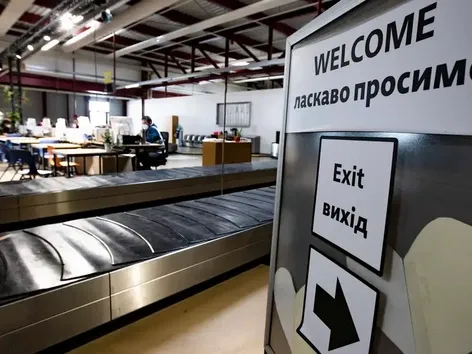
The Berlin-Tegel refugee reception center in Berlin is closing: what will happen to Ukrainians next?
The largest reception center for Ukrainian refugees in Berlin, the former Tegel Airport, is being closed. Find out where people will be relocated, why this decision was made, and what is planned to be built on the site of the center
 Yuliia Dyka
08 Nov. 2025
More details1 min
For refugees
Ireland changes rules on accommodation for newly arrived Ukrainians in state housing: details
Ireland is preparing to change the system for accommodating Ukrainian refugees arriving in the country. The authorities are considering reducing the length of stay in state housing and revising payments to homeowners who take in displaced persons. Find out what changes the Irish government is discussing and how they will affect new arrivals
Yuliia Dyka
04 Nov. 2025
More details2 min
For refugees
The EU has extended temporary protection for Ukrainians until March 4, 2027. Find out which countries supported the decision, how the status granting this protection is being extended, and what the plans are after 2027
Yuliia Dyka
09 Nov. 2025
More details2 min
For refugees
Changes in family benefits for Ukrainians in Austria: what you need to know in 2025
Austria has changed the rules for Ukrainians to receive family benefits. Find out who is eligible for benefits, how to apply, and when you need to renew your documents so you don't lose your benefits
Yuliia Dyka
07 Nov. 2025
More details