


.gif)
Temporary protection for Ukrainians in the EU extended until 2027: all the details, exceptions, and what happens next

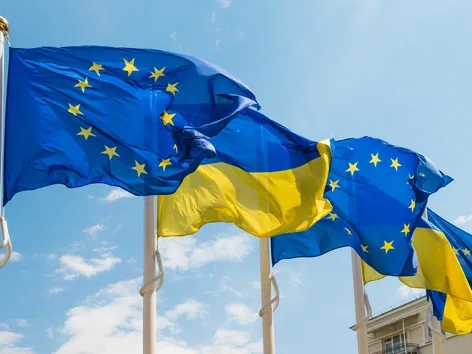
The EU has extended temporary protection for Ukrainians until March 4, 2027. Find out which countries supported the decision, how the status granting this protection is being extended, and what the plans are after 2027

The countries of the European Union have officially extended the temporary protection program for Ukrainian citizens until March 4, 2027. The decision was made by the EU Council in July 2025, taking into account the ongoing war and the lack of conditions for the safe return of Ukrainians home.
The program covers all 27 EU member states, as well as most associated countries — Switzerland, Norway, Iceland, and Liechtenstein. This means that millions of Ukrainians who received temporary protection status after the start of the full-scale invasion can continue to legally live, work, and study in Europe.
How is temporary protection status extended?
The extension mechanism depends on the country:
● Automatically — in most countries, including Germany, France, the Czech Republic, Lithuania, Italy, and Spain.
● Through an online application — in Poland, the Netherlands, and Austria.
● In person — in countries with local residence cards, such as Slovakia and Portugal.
The interior ministries of each country publish detailed instructions on renewal shortly before the current term expires — approximately in February 2026.
If you live in one of the EU countries and are unsure how to extend your status, you can consult with migration lawyers at Visit Ukraine. They will help you with paperwork, status verification, and preparation for transitioning to another type of permit after 2027.

Exceptions and special conditions
Ukrainians can only have temporary protection status in one EU country at a time. If you decide to change your country of residence, you must notify the local immigration authorities of the cancellation of your previous status.
In addition, some countries are introducing additional national support programs — for example, scholarships for students, housing rental compensation, or free language courses for integration.
Don't want to miss important updates and useful articles? Subscribe to our weekly newsletter!
Which EU countries have extended temporary protection?
The list of countries that have confirmed the extension of the program until March 2027 includes: Austria, Belgium, Bulgaria, Croatia, Cyprus, the Czech Republic, Denmark, Estonia, Finland, France, Germany, Greece, Hungary, Ireland, Italy, Latvia, Lithuania, Luxembourg, Malta, the Netherlands, Portugal, Romania, Slovakia, Slovenia, Spain, and Sweden.
As well as associated states: Norway, Switzerland, Iceland, and Liechtenstein.
These countries have confirmed the automatic extension of permits and guaranteed continued access for Ukrainians to education, healthcare, employment, and social protection.
Exception: Poland – the government has announced the termination of the pan-European program in March 2026. Instead, the country plans to introduce its own legalization mechanism — the CUKR Card (Centrum Uznawania Kwalifikacji i Rejestracji). It will provide Ukrainians with a three-year residence permit, which will allow them to continue staying in the country without losing their rights and opportunities.
What will happen after 2027?
The European Commission is already working on a plan for a gradual transition from temporary protection to other types of residence. This is a so-called “soft transition” that will avoid mass termination of statuses.
Possible options for Ukrainians include:
● residence permits (RP) for workers, students, or family members;
● national humanitarian permits;
● long-term EU residence cards — for those who have lived legally for at least 5 years.
Ukrainians who plan to remain in the EU after 2027 should prepare their documents in advance and check their rights. This can be done conveniently with the support of legal experts at Visit Ukraine, who advise on legalization, work, study, and family reunification in Europe.
We remind you! Almost 4.3 million Ukrainians are still under temporary protection in EU countries, but its term is gradually coming to an end. What will happen after 2027: extension, return home, or transition to other statuses? Read what to prepare for and what decisions EU countries are considering.
Photo: Shutterstock
Want to know more? Read the latest news and useful materials about Ukraine and the world in the News section.
Our recommendation for a safe and comfortable trip:
Visit Ukraine Insurance - insurance for a safe stay abroad without unnecessary expenses;
Green Card - compulsory car insurance for traveling abroad;
Visit Ukraine Tickets - book tickets for buses, trains, and airplanes to/from Ukraine and between cities around the world;
Private Lawyer service - professional legal support on visa and migration issues;
Visit Ukraine Merch - buy patriotic clothing and accessories with worldwide delivery.
© 2018-2025, Visit Ukraine. Use, copying or reprinting of materials on this site is permitted only with a link (hyperlink for online publications) to Visit Ukraine.
All rights reserved.
Recommended articles
1 min
For refugees
Which German states are accepting refugees from Ukraine in November 2025: current addresses of camps
The federal states of Germany continue to fulfil their obligations by providing shelter and necessary assistance to Ukrainian refugees. Despite this, certain categories of migrants may encounter difficulties upon entry. Get up-to-date information on the addresses of refugee camps and their accommodation conditions as of November 2025
Yuliia Dyka
03 Nov. 2025
More details1 min
For refugees
What are Ukrainians preparing for when temporary protection in the EU ends?
Almost 4.3 million Ukrainians are still under temporary protection in EU countries, but this protection is gradually coming to an end. What will happen after 2027: will it be extended, will they return home, or will they transition to other statuses? Find out what to prepare for and what decisions EU countries are considering
Yuliia Dyka
22 Oct. 2025
More details4 min
For refugees
Temporary protection in the UK for Ukrainians in 2025: how to apply and key rules for refugees
Support for refugees from Ukraine in the UK involves applying for temporary protection under special programmes. Find out what rights Ukrainians in the UK are guaranteed under temporary protection, what the application procedure is, and what documents are required
Yuliia Dyka
27 Oct. 2025
More details1 min
For refugees
Europeans are tired of Ukrainian refugees: how attitudes towards displaced persons have changed
Over the three years of war, Europe's attitude towards Ukrainian refugees has changed significantly. While at the beginning of the full-scale invasion, displaced persons were met with sympathy and open doors, now there are increasing calls to limit payments and reduce aid. Find out why Europeans are beginning to reconsider their attitude towards Ukrainians
Yuliia Dyka
01 Nov. 2025
More details