


.gif)
In which EU countries you can get re-protection in 2025: conditions and required documents

- What is important to know before changing the country of temporary protection?
- Which countries provide temporary protection in 2025?
- Who to contact for help in obtaining temporary protection again?
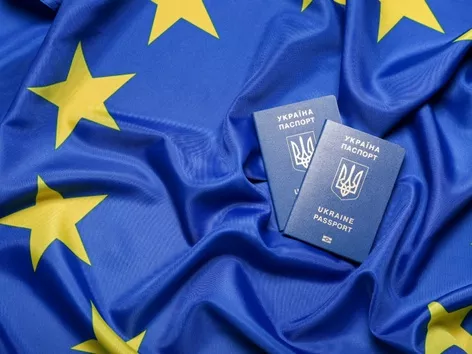
Migration trends among Ukrainians, particularly those seeking to change the country of temporary protection, are intensifying as conditions of stay and financial assistance change. Find out which countries will provide secondary temporary protection in 2025 and what you need to do to relocate

Currently, Ukrainians who have received temporary protection in one of the EU countries often wish to move to another country due to changes in living conditions and social assistance. It is possible to change the country of residence, but obtaining secondary protection depends on the policy of each country and the circumstances under which you decided to move.
Some countries grant Ukrainians the right to live in them and receive all the benefits provided by temporary protection almost without any problems. However, there is a list of countries where it is very difficult to obtain temporary protection. Ukrainians face problems when submitting documents or restrictions imposed by current legislation.
What is important to know before changing the country of temporary protection?
According to current European Union legislation (in particular, EU Directive 2001/55/EC on temporary protection) and the national legislation of member states, it is possible to change the country of temporary protection, but only under certain conditions.
Who can change the country of temporary protection?
Any person who meets the criteria for temporary protection (mainly citizens of Ukraine and certain categories of persons who resided in Ukraine before 24 February 2022) may initiate a change of country. This applies both to those who have already been granted temporary protection in one EU country and to those who have not yet registered but are present in the EU.
Under what conditions is it possible to change the country of temporary protection?
The ‘one EU country – one protection’ principle: This is a fundamental principle. A person can only enjoy temporary protection rights in one EU Member State at a time. This means that if you decide to move from country A (where you already have temporary protection) to country B, your status in country A will be terminated or cancelled when you receive temporary protection in country B.
What to do when moving: The European Commission recommends that a person who changes country inform the authorities of the country where they are currently registered of their intention to move. This helps to avoid ‘double registration’ and ensures that the status is properly terminated.
Right to choose: Every person who meets the criteria for temporary protection has the right to freely choose the EU country in which they wish to benefit from this protection. The country you move to must register you and grant you temporary protection status and the corresponding rights if you meet the criteria of the Directive.
Initiative of the person: The change of country of temporary protection is at the initiative of the person concerned. EU Member States cannot ‘transfer’ you to another country without your consent if you have already been granted protection.
Re-registration procedure: When you move to a new EU country, you will have to go through the full registration and documentation procedure (submitting an application, attending an interview, obtaining a new residence permit) in accordance with the national legislation of that country. It will be as if you are receiving protection for the first time in that country.
Differences in conditions: Although the rights associated with temporary protection (access to housing, the labour market, education, healthcare, social assistance) are the same in all EU countries, the actual level and conditions of these rights may vary from one Member State to another. For example, the amount of social benefits, conditions of access to housing or ease of finding employment may vary. This is often one of the reasons why people decide to change their country of residence.
A list of countries providing temporary protection to Ukrainians in 2025can be found here.
Which countries provide temporary protection in 2025?
Germany
If you have decided to apply for temporary protection status in Germany, please note that not all federal states in Germany are currently accepting refugees from Ukraine.
A list of states and addresses of camps accepting Ukrainians in Julycan be found at the link.
In order to obtain a temporary residence permit for Germany (Aufenthaltstitel), you must apply for a simplified procedure to obtain a temporary protection, residence and work permit at the nearest immigration office (Ausländerbehörde).
Which categories of citizens can obtain temporary protection in Germany?
According to current German law, the following categories of persons are entitled to temporary protection (in accordance with § 24 of the Residence Act – AufenthG), which was activated by the European Union in response to Russia's full-scale invasion of Ukraine (EU Directive 2001/55/EC):
1. Citizens of Ukraine who were permanently resident in Ukraine before 24 February 2022.
2. Stateless persons and citizens of third countries who, before 24 February 2022, had international protection (e.g. refugee status) or equivalent national protection in Ukraine.
3. Stateless persons and third-country nationals who can prove that they were legally present in Ukraine on 24 February 2022 on the basis of a residence permit issued in accordance with Ukrainian law (e.g. permanent residence permit) and who are unable to return to their country or region of origin safely and for an extended period of time.
4. Family members of the above categories (points 1, 2, 3), even if they are not citizens of Ukraine. Family members usually include spouses; unmarried minor children; other close relatives under certain conditions (e.g. if they were dependent or living together).
Is it possible to obtain temporary protection in Germany again?
According to current German law, temporary protection can be granted again (based on § 24 of the Residence Act), but with some important nuances.
Extension of existing temporary protection
For those who already have temporary protection in Germany, it has been automatically extended until 4 March 2026. This means that you do not need to submit a new application for ‘repeat’ protection if you already have it. Your residence permit (Aufenthaltserlaubnis) remains valid until that date. In most cases, you do not even need to renew your plastic card (eAT), but if you wish or under certain circumstances (e.g. change of address), you can contact the Foreigners' Registration Office (Ausländerbehörde) to update your information or obtain a new card.
Obtaining temporary protection after staying in another EU country
Germany, like other EU countries, adheres to the principle that a person can only have temporary protection in one EU country at a time.
If you had temporary protection in another EU country and have decided to move to Germany: You can apply for temporary protection in Germany. If your application is approved, your previous temporary protection status in another EU country will automatically be cancelled. You will need to go through the standard registration and document submission procedure in Germany, as do those arriving for the first time. Germany does not refuse protection solely on the grounds that you have already received it elsewhere, but requires you to renounce your previous protection.
If you have already received temporary protection in Germany, then left for another EU country, received protection there, and now want to return to Germany: The situation will be similar to the previous one. You will need to reapply, and your status in the other EU country will be cancelled.
Short-term trips to Ukraine
Short-term trips to Ukraine (e.g. for a few weeks or months) do not result in the loss or cancellation of your temporary protection in Germany if you have a valid residence permit. You are free to enter and leave Germany. This is not considered ‘re-obtaining’ protection, as your status remains valid.
Please note! When leaving Germany, you must notify the Ausländerbehörde (Foreigners' Registration Office) if your trip will last longer than 6 months. A prolonged stay outside the country, in particular in Ukraine, without serious reasons (such as medical treatment, care for relatives, etc.) may lead to the cancellation of your status.
Steps for applying for temporary protection in Germany
Entry into Germany and initial registration
Ukrainian citizens can enter Germany without a visa (on the basis of a biometric passport). If you do not have a biometric passport, you may enter with other documents, but this may complicate further procedures.
Upon arrival in Germany, you may be sent to one of the initial reception centres (Ankunftszentren / Erstaufnahmeeinrichtungen). This may be temporary accommodation where you will receive basic assistance (food, a place to sleep) and undergo initial registration. The aim is to distribute refugees evenly across the federal states of Germany to avoid overburdening certain regions. If you have arrived independently and have a place to stay, you can contact the local authorities directly.
The next step involves collecting your personal data (name, date of birth, nationality) and scanning your fingerprints. You will be issued a so-called ‘Ankunftsnachweis’ (proof of arrival) or a temporary ID card. This document confirms your legal stay in Germany until you receive an official residence permit.
Applying for temporary protection and obtaining a residence permit
After initial registration, you must contact the Foreigners' Registration Office (Ausländerbehörde) at your place of residence (or where you have been assigned). This is where you submit your official application for temporary protection in accordance with § 24 of the Residence Act (Aufenthaltsgesetz).
Important! Do not delay this step. It is recommended that you submit your application as soon as possible after your arrival and initial registration.
At the interview at the Ausländerbehörde, you will need to provide:
1. Passport or other identity documents (ID card, birth certificate for children). Even if you do not have all the documents, your application will still be accepted, but this may slow down the process.
2. Proof of arrival (Ankunftsnachweis), if you have received it.
3. Documents confirming your place of residence (e.g. registration at your address if you have already found accommodation).
4. Documents confirming your connection to Ukraine (e.g. permanent residence permit for third-country nationals who lived in Ukraine).
During the interview, your details will be checked and you may be asked questions about your situation and the reasons for applying for temporary protection.
Once your application has been approved, you will be issued a Aufenthaltserlaubnis (residence permit). This is usually a plastic card (eAT – elektronischer Aufenthaltstitel) containing information about your status, the validity of your permit and allowing you to work and receive social benefits. A temporary paper permit may be issued initially.
Integration and social support
Once you have received your residence permit, you will need to register at your actual place of residence at the local registration office (Bürgeramt / Meldeamt). This is mandatory and is the basis for many other services (e.g. opening a bank account, health insurance).
With a residence permit, you are entitled to social benefits (Arbeitslosengeld II / Bürgergeld) from the Jobcenter (employment centre). You will need to submit a corresponding application there.
A residence permit in accordance with § 24 AufenthG automatically entitles you to work. You do not need a separate work permit.
Access to schools for children and integration and language courses for adults. Enrol in an integration course (Integrationskurs), which includes German language lessons and an orientation course on life in Germany.
Don't risk your health and financial well-being while travelling! Take out reliable health insurance now and travel to Europe with complete peace of mind!

Slovakia
In accordance with current Slovak legislation and practice, temporary protection (Dočasné útočisko) is provided.
Extension: Slovakia, like other EU countries, has extended temporary protection for Ukrainians. It is currently valid until 4 March 2026. This extension is automatic, but to update the document with the new date, you often need to take certain steps (e.g., update your information on the Slovak Ministry of Interior portal or contact the police for foreigners).
Changing your country of residence in the EU: Slovakia allows you to obtain temporary protection even if you already had this status in another EU country. However, your previous temporary protection status in another country will automatically cease to apply. It is important to understand that EU Directive 2001/55/EC, which regulates temporary protection, stipulates that a person can only enjoy temporary protection rights in one EU country at a time.
Returning from Ukraine: Visiting Ukraine does not result in the cancellation of your temporary protection status granted in Slovakia. You have the right to travel to Ukraine and return to Slovakia while retaining your status and all associated benefits. This is not considered ‘re-gaining’ status in the sense of restoring it after it has been lost.
Procedure for obtaining repeated/new status: If you had temporary protection in another EU country and want to obtain it in Slovakia, you will need to go through the standard procedure for applying for temporary protection in Slovakia. From 5 August 2024, this will require you to first fill in an online application form via the Slovak Ministry of the Interior's booking system and then go to any police station dealing with foreign nationals.
Refugees who have been granted temporary protection status in Slovakia can join the state insurance scheme. Find out what insurance policy Ukrainians need in Slovakiaon the Visit Ukraine portal.
Netherlands
If you already have temporary protection in the Netherlands, it has been automatically extended until 4 March 2026. For most people, this means that your residence permit (e.g. in the form of a sticker or document from the IND – Immigration and Naturalisation Service) remains valid and you continue to enjoy all the rights that this status entails. You do not need to submit a new application for ‘renewed’ protection if you already have it in the Netherlands.
Obtaining temporary protection after staying in another EU country
The Netherlands, like other European Union countries, adheres to the principle that a person can only enjoy temporary protection in one EU country at a time.
If you are considering applying for temporary protection in the Netherlands after staying in another EU country, or if you have already had protection in the Netherlands and are returning here, there are important details you should be aware of.
If you are considering the Netherlands as a new country for temporary protection, even if you have already received it in another EU country, this is possible. However, it is important to remember the key EU rule: you can only have temporary protection in one country at a time.
This means that if you choose the Netherlands, your previous temporary protection status granted by another EU country will be terminated or cancelled. You will have to go through the full registration procedure and submit all the necessary documents to the Immigration and Naturalisation Service (IND) in the Netherlands, as is the case for first-time applicants. The Netherlands will not refuse you protection simply because you have already had it, but will require official confirmation of the withdrawal of your previous status.
Important! Recently, the number of people receiving temporary protection again has increased significantly. This may lead to changes in the rules for refugees from Ukraine in the Netherlands. The country may soon introduce strict restrictions on obtaining refugee status again.
Returning to the Netherlands after temporary protection in another EU country
Repeat protection is granted if no more than 8 weeks have passed between leaving the country and returning. If more time has passed, you will need to submit a new application, sometimes even through the courts.
Short-term trips to Ukraine
Short-term visits to Ukraine, for example for holidays or to settle personal matters, will not result in the loss or cancellation of your temporary protection in the Netherlands, provided that you have a valid residence permit. You can travel freely between the Netherlands and Ukraine. Such trips are not considered ‘re-obtaining’ protection, as your status remains valid. However, if your stay in Ukraine is too long and may indicate that you intend to return permanently, this could potentially affect your status.
Please note! From 1 October 2025, the prices for refugee accommodation in the Netherlands will double. Follow the link to find out all the details.
Spain
It is possible to obtain temporary protection in Spain again, but you cannot choose your place of residence yourself; it is assigned at random. To obtain temporary protection, you must submit an application to the CREADE centres in Madrid or Malaga, or, if necessary, to the police stations in the province where you are located.
Temporary protection in Spain is granted for one year, then automatically extended for another year and, in some cases, for another year.
Steps to apply for temporary protection in Spain
1. Prepare documents confirming your right to temporary protection: foreign passport (if you don't have one, your internal passport or identity document), as well as documents confirming family ties with your spouse, partner and/or children under 18.
2. Indicate your address in Spain for correspondence.
3. Provide a telephone number and email address for correspondence.
4. Undergo biometric identification at the police station and obtain a document with your foreigner identification number.
To submit documents, you must have a biometric passport for travel abroad and a child's birth certificate if protection is being sought for a child. You will also need a residential address in Spain.
Previously, we reported: Ukraine and Spain have signed a Joint Declaration on the creation of a Ukrainian Unity Hub – a support centre for refugees. It will help Ukrainians adapt and receive educational, consular and economic services.
Portugal
Portugal also continues to accept Ukrainian refugees, even if they already have temporary protection in other countries. In this country, temporary protection is granted for one year, but it can be extended twice for six months at a time.
Please note! To obtain temporary protection in Portugal, you must have proof that you have refused protection in another country.
When a request is received, the Foreigners and Borders Service (SEF) reviews the relevant databases and then forwards the applicant's data to the organisations responsible for automatically assigning a tax identification number, social security and health insurance.
After registration, a confirmation of acceptance and confirmation of the application for temporary protection are issued, and a residence permit valid for one year is issued.
What is the procedure for obtaining temporary protection in Portugal?
1. Register online on the website of the Agency for Integration, Migration and Asylum (AIMA) (there are special departments that only deal with applications concerning children who are in Portugal without their parents, for example, accompanied by other family members).
2. Provide your personal details, place of residence in Portugal and contact details.
3. AIMA forwards the data to the tax authorities, social security and health services. Registration with these services is automatic, and a certificate is sent to your email address.
Detailed instructions on how to obtain temporary protection in Portugal after other countries have been prepared by Visit Ukraine lawyers.
Croatia
Croatia also provides shelter to Ukrainians after they have been refused asylum in another country. You can apply online or in person at the nearest police station. Once you're registered, you'll get a foreigner's ID card at the station.
Important! You can get temporary protection again in any country if you give up the previous one and have objective reasons, documents, and proof (like family stuff, work, etc.).
Follow the link to find out if you can obtain temporary protection in Croatia if you left Ukraine before 24 February 2022.
Who to contact for help in obtaining temporary protection again?
In difficult times, when you are forced to seek refuge abroad, every detail matters. Moving to a new country, adapting to a different culture and, most importantly, obtaining legal status are challenges that require not only determination but also in-depth knowledge of international and national legislation. This is where the help of immigration lawyers becomes indispensable.
Why is a migration lawyer your key ally?
For refugees seeking to enter European countries and obtain protection there, a migration lawyer is not just a consultant, but your guide through a complex legal system. Here's why their help is critical:
Navigating the legal maze: The legislation on refugees and temporary protection in each EU country has its own peculiarities. An experienced immigration lawyer is thoroughly familiar with these rules, the rules for submitting documents, deadlines and possible ‘pitfalls’, helping you avoid common mistakes that could cost you your status.
Correct document preparation: From initial registration to applying for temporary protection or refugee status, every document must be completed flawlessly. A lawyer will help you gather the necessary documents, check that they meet the requirements and ensure that your interests are properly represented.
Protection of your rights: Unfortunately, in the process of obtaining protection, situations may arise where your rights are violated or you are faced with rejection. A migration lawyer will defend you by representing your interests in all instances, from migration services to court, appealing unfair decisions.
Individual approach: Every refugee's story is unique. A professional lawyer will study your specific situation, provide personalised advice and develop the best strategy for obtaining the status you need.
Save time and stress: Dealing with all the issues related to immigration law on your own can be extremely stressful. By placing this responsibility in the hands of professionals, you can focus on adapting and settling into your new life.
Don't want to miss important updates and useful articles? Subscribe to our weekly newsletter!
What do our immigration lawyers offer?
Our specialists are ready to provide a full range of legal services for refugees heading to Europe:
1. Advice on the procedure for obtaining temporary protection, refugee status, and other types of protection available in EU countries.
2. Assistance in preparing and completing all necessary documents, applications, and questionnaires.
3. Support during interviews with migration services.
4. Representation of your interests before state authorities and in courts.
5. Explanation of your rights and obligations in the country of residence.
Don't face the challenges of the migration process alone. Entrust your future to experienced professionals who will help you navigate this path with confidence and safety.

Reminder! We previously reported that Ukrainian schools will recognise the results of children's education abroad. Details can be found at the link.
Want to know more? Read the latest news and useful materials about Ukraine and the world in the News section.
Our recommendation for a safe and comfortable trip:
Visit Ukraine Insurance - insurance for a safe stay abroad without unnecessary expenses;
Green Card - compulsory car insurance for traveling abroad;
Visit Ukraine Tickets - book tickets for buses, trains, and airplanes to/from Ukraine and between cities around the world;
Private Lawyer service - professional legal support on visa and migration issues;
Visit Ukraine Merch - buy patriotic clothing and accessories with worldwide delivery.
© 2018-2025, Visit Ukraine. Use, copying or reprinting of materials on this site is permitted only with a link (hyperlink for online publications) to Visit Ukraine.
All rights reserved.
Recommended articles
2 min
For refugees
In 2025, many Ukrainians are asking: does the U4U program work, how to apply for Uniting for Ukraine, are there alternatives, and what support Ukrainians in the US can get. In this guide, we explain what has changed in the US migration program for Ukrainians, what opportunities Ukrainians in America have to stay in the country in 2025, how TPS status works, what visas are available, and how to get legal help for Ukrainians
Yuliia Dyka
11 Jul. 2025
More details2 min
Finance
Social benefits for Ukrainians in Germany: will they have to be returned?
Germany is changing its rules on assistance for Ukrainian refugees, but will benefits already received have to be returned? Find out who is affected by the new restrictions, what legal certainty is guaranteed, and when benefits will be retained in full
Yuliia Dyka
11 Jul. 2025
More details1 min
Education
Lithuania has postponed mandatory language requirements for Ukrainian refugees
The Lithuanian government has temporarily waived the requirement for Ukrainian refugees working in the country to know the official language. This decision allows them to remain in the labor market without proof of language proficiency until at least 2026. Find out why this decision was made and how many Ukrainians are already working in the country
Yuliia Dyka
11 Jul. 2025
More details2 min
Finance
How much will Ukrainians earn in different EU countries in 2025: updated overview of salaries
Which EU countries will provide the most financial assistance to Ukrainians in 2025? Learn more about monthly payments, child benefits, housing support, and additional bonuses in European countries
Yuliia Dyka
14 Jul. 2025
More details