


.gif)
Europeans are tired of Ukrainian refugees: how attitudes towards displaced persons have changed

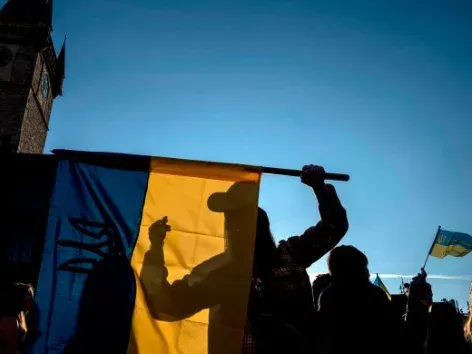
Over the three years of war, Europe's attitude towards Ukrainian refugees has changed significantly. While at the beginning of the full-scale invasion, displaced persons were met with sympathy and open doors, now there are increasing calls to limit payments and reduce aid. Find out why Europeans are beginning to reconsider their attitude towards Ukrainians

Since the start of Russia's full-scale invasion of Ukraine, millions of Ukrainians have found refuge in European Union countries. At that time, Europe opened its doors, launched a temporary protection regime and offered unprecedented support to those who fled the war. However, after almost three years, the situation has changed. In countries that previously showed maximum solidarity, voices of discontent and fatigue are increasingly being heard. Support has not disappeared, but it has become more restrained and pragmatic, and attitudes have become less clear-cut.
In the first months of the war, Europeans perceived Ukrainians as genuine refugees fleeing disaster, rather than migrants seeking economic gain. This aroused sympathy and a willingness to help, as these were people who had survived horrific circumstances. Over the years, as the crisis ceased to be temporary and became protracted, the mood began to change. Issues of social assistance, housing, integration and employment gradually came to the fore, causing discontent among some local residents.
Czech Republic
In the Czech Republic, one of the countries that has accepted the largest number of Ukrainians, public opinion is divided. According to data from the STEM analytical centre, the majority of citizens still support the presence of Ukrainians, but want the scale of assistance to be reduced. At the same time, some of those surveyed believe that the Czech Republic should no longer accept new migrants. People close to liberal parties are more likely to perceive aid as a moral obligation, while supporters of populist and radical movements demand restrictions and the return of refugees to their homeland. These contradictions reflect not only political divisions, but also society's fatigue from prolonged uncertainty.
Germany
In Germany, the process of ‘fatigue’ has been particularly evident. More than two-thirds of citizens oppose social benefits for Ukrainian migrants, and the majority believe that men of conscription age should return home. Germans feel the growing burden on the social security system, as it is not only about housing and assistance, but also about schools, healthcare and integration programmes. For a country that already has experience with mass migration, the new wave of refugees has become a test of strength, and attitudes towards Ukrainians are gradually becoming less emotional and more rational.
Poland
Poland, which in the first months of the war became a symbol of hospitality, is also experiencing a change in sentiment. While in 2022 almost 90% of Poles supported the reception of Ukrainians, today this figure has fallen significantly. Many believe that the assistance has become excessive and should only be provided to those who work and pay taxes. Against the backdrop of economic pressure and growing domestic social demands, Poles are increasingly talking about the need to redistribute resources, and the topic of refugees is gradually becoming part of the domestic political debate.
Don't want to miss important updates and useful articles? Subscribe to our weekly newsletter!
Why has the level of support for Ukrainians in the EU fallen?
The reasons for these changes are not only financial. The war, which has been going on for three years now, has destroyed the sense of temporariness. People in the host countries have begun to perceive the presence of Ukrainians as part of a new reality, rather than a short-term humanitarian episode. Fatigue and irritation have set in, especially in regions where the strain on infrastructure has become noticeable. At the same time, Ukrainians who work, learn the language and actively participate in society continue to command respect — it is precisely such examples that maintain trust and sympathy.
For Ukrainians themselves, this is a new stage — from the status of ‘refugees’ to the need for real integration. European governments are gradually moving from emergency measures to systematic policies: now it is important not only to help, but also to include people in the economy, education and social life. This means that aid may be reduced and self-sufficiency requirements may increase. Some countries are already discussing that benefits should only be given to those who work or take language courses.
Despite the obvious fatigue, it is too early to talk about a complete reversal of Europe's position on Ukraine. Most EU residents still support aid to the country under attack, but want it to be more rational. Humanitarian solidarity is gradually giving way to pragmatism, and the concept of ‘temporary protection’ is no longer temporary. This is a natural process — Europe is adapting to a new reality in which the war has dragged on and millions of Ukrainians have become part of European society, albeit involuntarily.
Reminder! For more than three years, Ukrainians have been living in EU countries under temporary protection due to the war in Ukraine. But now there are discussions about a plan to gradually end this programme by 2027, as well as new legal ways to live, work and study. Find out what awaits Ukrainians in the EU after the end of temporary protection and how to prepare for the new rules.
Want to know more? Read the latest news and useful materials about Ukraine and the world in the News section.
Our recommendation for a safe and comfortable trip:
Visit Ukraine Insurance - insurance for a safe stay abroad without unnecessary expenses;
Green Card - compulsory car insurance for traveling abroad;
Visit Ukraine Tickets - book tickets for buses, trains, and airplanes to/from Ukraine and between cities around the world;
Private Lawyer service - professional legal support on visa and migration issues;
Visit Ukraine Merch - buy patriotic clothing and accessories with worldwide delivery.
© 2018-2025, Visit Ukraine. Use, copying or reprinting of materials on this site is permitted only with a link (hyperlink for online publications) to Visit Ukraine.
All rights reserved.
Recommended articles
2 min
For refugees
Which Ukrainians will be able to live for free in Poland: new rules from November 1, 2025
Poland is changing the rules for Ukrainians from November 2025. Find out which Ukrainians will be able to live for free in Poland from November 1, 2025, how to extend legal status and receive payments under the “800+” program
Yuliia Dyka
29 Oct. 2025
More details1 min
Work
The German government has approved an increase in the minimum wage: what will change in 2026
Germany has made an important decision to raise the minimum wage. This will be another step toward greater social justice and improved working conditions for millions of workers. Find out when the increase will take effect, how payments will change, and what this means for Ukrainians working in Germany
Yuliia Dyka
29 Oct. 2025
More details2 min
Work
Switzerland simplifies employment for Ukrainians with S status: what will change from December 1
Switzerland is taking an important step towards integrating people with S status, including Ukrainians. Find out what changes in employment rules will take effect on December 1, 2025, and how they will affect employers and people with protection status
Yuliia Dyka
02 Nov. 2025
More details1 min
VU lawyers explain
How Ukrainians can obtain social assistance in France: explained by lawyers from Visit Ukraine
In France, Ukrainians with temporary protection can receive financial assistance, housing, and medical care under the same conditions as citizens of the country. Find out how to apply for social support and what benefits are available to displaced persons
Yuliia Dyka
01 Nov. 2025
More details