


.gif)
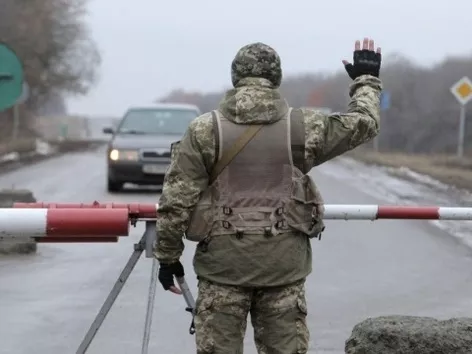
The martial law imposed on the territory of Ukraine entails a number of restrictions and prohibitions for Ukrainian citizens and foreign visitors. Find out which rights cannot be restricted during martial law according to the Constitution of Ukraine

Martial law, like a state of war, is a special legal regime provided for by international law and the Constitution of Ukraine, but each of these regimes has its own characteristics.
Currently, martial law has been introduced in Ukraine, in connection with which a number of restrictions and prohibitions are in force in the country, in particular, a curfew has been introduced, the right of men liable for military service to leave the country has been restricted, and elections are prohibited, etc.
Which citizens' rights cannot be restricted during wartime according to the Constitution of Ukraine is explained further in this article.
If you are planning to travel to Ukraine during martial law, be sure to take out medical insurance that covers military risks. Such a policy is mandatory for foreigners entering the country and guarantees free medical care or compensation in case of injury, sudden illness, or emergency.
On the Visit Ukraine website, you can take out insurance online in a few minutes — it is valid throughout the entire territory of Ukraine and meets the official requirements for crossing the border.

Restrictions during martial law: what does the law say?
According to Article 64 of Section II on “Rights, Freedoms, and Duties of the Person and Citizen” of the Constitution of Ukraine, the constitutional rights and freedoms of the person and citizen cannot be restricted, except in cases provided for by the Constitution of Ukraine.
Martial law, in accordance with the laws “On the Defense of Ukraine” and “Legal Regime of Martial Law,” is a special legal regime that provides for the granting of powers to the relevant state authorities to avert threats, as well as temporary restrictions on the constitutional rights and freedoms of citizens and legal entities throughout the country or in certain parts of it, without restrictions on the number of extensions of the special regime.
The rights that may be restricted include:
– the right to freedom of movement (closed borders, curfew, etc.);
– the right to free choice of employment (involvement in socially useful work, introduction of compulsory labor, etc.);
– the right to participate in the management of public affairs (prohibition of elections, referendums, etc.).
In addition, the law provides that during martial law, interference in personal life is possible: control of means of communication, inspection of property, documents, housing, etc. For more information on what other rights may be restricted during martial law, see our previous article.
In the difficult conditions of martial law, the correct interpretation of rights and obligations can be crucial. If you have doubts about whether the restrictions applied to you are legal or need protection of your rights, Visit Ukraine's immigration lawyers are ready to advise you: they will help you assess your case, propose a strategy, and, if necessary, represent you in court or before state authorities.

Don't want to miss important updates and useful articles? Subscribe to our weekly newsletter!
What rights cannot be restricted during martial law?
Article 64, Part II of the Constitution states that in conditions of martial law or a state of emergency, certain restrictions on rights and freedoms may be imposed, specifying the duration of these restrictions. However, the rights and freedoms provided for in Articles 24, 25, 27, 28, 29, 40, 47, 51, 52, 55, 56, 57, 58, 59, 60, 61, 62, and 63 of this Constitution cannot be restricted. Namely:
● Article 24 — Citizens have equal constitutional rights and freedoms and are equal before the law. This means that there can be no privileges or restrictions based on race, skin color, gender, religious beliefs, property status, etc.
● Article 25 — A citizen of Ukraine cannot be deprived of citizenship or the right to change citizenship. At the same time, a citizen of Ukraine cannot be expelled from Ukraine or extradited to another state, and the state itself guarantees care and protection to citizens abroad.
● Article 27 — Every person has an inalienable right to life. This means that no one can be arbitrarily deprived of life, and it is the duty of the state to protect human life.
● Article 28 — Everyone has the right to respect for their dignity. This means that no one may be subjected to torture, cruel, inhuman, or degrading treatment or punishment.
● Article 29 — Everyone has the right to liberty and security of person. This means that no one may be arrested or detained without a court order (except in cases where there is an urgent need to prevent a crime, in which case the relevant law enforcement authorities may apply temporary detention — this period is assumed to be 72 hours; this is the time during which the court must decide on further measures).
● Article 40 — Everyone has the right to own, use, and dispose of their property and the results of their intellectual and creative activity. At the same time, the law stipulates that a state of war or emergency on the territory of Ukraine is the only case when such property may be forcibly expropriated with subsequent full compensation for its value. At the same time, confiscation of property may only take place by court order.
● Article 47 — Everyone has the right to housing. The state creates conditions under which every citizen will be able to build, purchase, or rent housing. At the same time, citizens who need social protection are provided with housing by the state.
● Article 51 — Marriage is based on the free consent of a woman and a man. Each spouse has equal rights and obligations in marriage and family. At the same time, parents are obliged to support their children until they reach the age of majority, and adult children are obliged to care for their incapacitated parents.
● Article 52 — Children have equal rights regardless of their origin and whether they were born in or out of wedlock.
● Article 55 — The rights and freedoms of individuals and citizens are protected by the courts. This means that everyone has the right to appeal decisions in court, including those concerning the actions or inaction of state authorities, local self-government bodies, and officials or civil servants.
● Article 56 — Everyone has the right to compensation from the state or local self-government bodies for material and moral damage caused by unlawful decisions, actions, or inaction of state authorities, local self-government bodies, their officials, and civil servants in the exercise of their powers.
● Article 57 — Everyone is guaranteed the right to know their rights and obligations. This means that all laws and other normative legal acts that define the rights and obligations of citizens, which are not brought to the attention of the population in the manner prescribed by law, are invalid.
● Article 58 — Laws and other regulatory legal acts shall not have retroactive effect, except in cases where they mitigate or cancel the liability of a person.
● Article 59 — Everyone has the right to professional legal assistance. In cases provided for by law, such assistance may be provided free of charge, and everyone is free to choose a defender of their rights.
● Article 60 — No one is obliged to carry out clearly criminal orders or instructions. At the same time, the execution of such an order or instruction entails legal liability.
● Article 61 — No one may be held legally liable twice for the same offense.
● Article 62 — A person is presumed innocent of a crime and cannot be subjected to criminal punishment until their guilt is proven in accordance with the law and established by a court verdict. At the same time, if the court's verdict is overturned as unjust, the state shall compensate for the material and moral damage caused by the unjustified conviction.
● Article 63 — A person shall not be held liable for refusing to give testimony or explanations about themselves, their family members, or close relatives, the circle of whom is determined by law. At the same time, a suspect, accused, or defendant has the right to defense, and a convicted person enjoys all human and civil rights, except for restrictions defined by law and established by a court verdict.
If you find yourself in a controversial situation and need legal protection, you can seek help from Visit Ukraine lawyers. Our specialists will answer all your questions and help you understand the intricacies of the law. Both Ukrainians who need help anywhere in the world and foreigners who are planning a trip or are already in Ukraine can seek advice.
We remind you! Ukraine is launching a military registration automation system that will simplify registration and eliminate unnecessary bureaucracy. Now, men between the ages of 25 and 60 will be registered automatically, and young men will be able to register remotely through the “Reserve+” app. Read how the registration process will change in our previous article.
Want to know more? Read the latest news and useful materials about Ukraine and the world in the News section.
We recommend purchasing it for a safe and comfortable trip to Ukraine:
Visit Ukraine Insurance – insurance covering military risks for entry and travel in Ukraine;
Visit Ukraine Car Insurance – car insurance with extended coverage in Ukraine;
Visit Ukraine Legal Advice – comprehensive legal support on entry to Ukraine;
Visit Ukraine Tickets – bus and train tickets to/from Ukraine;
Visit Ukraine Tours – the largest online database of tours to Ukraine for every taste;
Visit Ukraine Hotels – hotels for a comfortable stay in Ukraine;
Visit Ukraine Merch – patriotic clothing and accessories with worldwide delivery.
© 2018-2025, Visit Ukraine. Use, copying or reprinting of materials on this site is permitted only with a link (hyperlink for online publications) to Visit Ukraine.
All rights reserved.
Recommended articles
1 min
Popular
When 17-year-old boys in Ukraine need to register for military service: new deadlines
The Ukrainian government has simplified the military registration system by introducing new rules for different age groups of men. Registration will now be more automated, and some procedures will be eliminated. Find out who will be affected by the changes and how the new system will work
 Yuliia Dyka
02 Oct. 2025
More details2 min
War
How transport will operate during blackouts in Ukraine: metro, buses, taxis
Ukrainian cities are preparing for new challenges during large-scale power outages. Find out how the metro, buses, and taxis will operate
Yuliia Dyka
12 Oct. 2025
More details1 min
War
Are Ukrainians ready to cede territory for peace: results of a KIIS poll
Most Ukrainians remain categorically opposed to any territorial concessions to russia, even for the sake of a quick end to the war. According to the results of a new KIIS poll, more than half of citizens believe that Ukraine should not give up its land under any circumstances. Find out how Ukrainians' attitudes toward possible territorial losses have changed and which scenarios they categorically reject
Yuliia Dyka
09 Oct. 2025
More details2 min
War
Ukraine to create Armed Forces Cyber Forces: how they will protect the state in cyberspace
Ukraine is preparing to create Armed Forces Cyber Forces, which will be responsible for cyber defense and digital security of the state. Find out what tasks the new forces will perform and how they will cooperate with NATO partners
Yuliia Dyka
10 Oct. 2025
More details