


.gif)
The island Trump wants: what you need to know about Greenland, how to get there and what to do there?

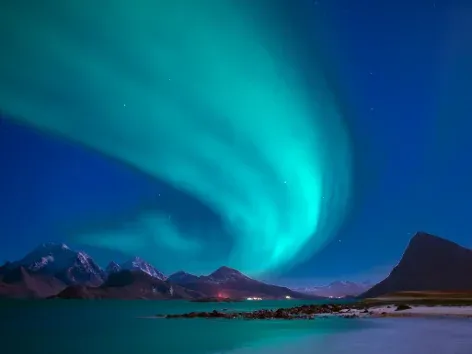
Greenland has once again found itself at the centre of world politics following Donald Trump's sensational statements. But behind the geopolitical disputes lies a unique island with glaciers, icebergs and the ancient culture of the Inuit. Find out why the US needs Greenland, how to get there, and what tourists should definitely see

US President Donald Trump's statements about the need to ‘own and control’ Greenland have once again brought the world's largest island to the forefront of the global agenda. For some, it is a matter of geopolitics and security, for others, it is the economy of the future, but for travellers, Greenland remains a land of icebergs, the northern lights and northern silence. Let's take a look at what this territory is, why there is so much fuss about it and why tourists fly there in the first place.
Where is Greenland and what is it like?
Greenland is the largest island on Earth, located in the Arctic between the Atlantic and Arctic Oceans. Geographically, it belongs to North America, but politically it is an autonomous part of the Kingdom of Denmark. The island stretches almost 2,700 km from north to south and covers an area of over 2.17 million km².
About 80% of the territory is covered by glaciers. Approximately 56-57 thousand people live here permanently, mainly Inuit. People settle along the south-western coast, where the climate is milder and there is access to the sea. The interior of the island is permafrost, and temperature differences can reach 40–50 °C.
Greenland is considered the least populated territory in the world, and in its east is the largest national park on the planet — almost a million square kilometres of Arctic wilderness.
To get to Greenland, you will need a separate visa (not a Schengen visa), which is issued through the Danish embassy, and, as a rule, a flight with a stopover in Copenhagen (Denmark) or Reykjavik (Iceland) on Air Greenland or Air Iceland flights, as there are no direct connections from other countries. Upon arrival, you will need your passport, return tickets, accommodation reservations, proof of financial means and medical insurance.
What is Greenland's status today?
The island has been under Danish control for almost 300 years. In 1953, Greenland became part of the kingdom, and its inhabitants received Danish citizenship. In 1979, after a referendum, the island became autonomous with its own parliament, and in 2009, it received even broader powers.
Today, Greenland independently manages taxes, natural resources, education, social services, immigration and border control. However, it does not have its own currency, constitution or foreign policy — defence and diplomacy remain the responsibility of Copenhagen. Denmark allocates around €500 million in subsidies to the island each year, which represents a significant portion of its GDP.
Greenland's Prime Minister Morten Aagaard openly supports the idea of independence. A 2009 law allows for such a scenario, but it requires a national referendum and further negotiations with Denmark.
Why does Trump want Greenland?
Greenland lies on the shortest route between North America and Europe, making it strategically important in military terms. The American space base at Thule (formerly Thule Air Base) is located in the north-west of the island and plays a key role in the early warning system.
The US has been present here since World War II, and a 1951 agreement gave Washington the right to establish and maintain military bases. Experts emphasise that in the event of a hypothetical missile threat from Russia, the flight path would pass through the North Pole and Greenland.
In addition to security, the island is also interesting from an economic point of view. Due to the melting of glaciers, deposits of rare earth minerals, uranium and iron are becoming more accessible — resources that are critical for high technology, energy and the defence industry. It is no coincidence that the US, China and Russia are actively increasing their presence in the Arctic.
What do the Greenlanders themselves think?
Opinions within the island are divided. Some politicians who advocate independence do not see Trump's statements as a direct threat and are open to a defence partnership with the US. However, the idea of ‘buying’ Greenland has been met with strong opposition from many residents.
Locals emphasise that the island is not a commodity, but a people with their own culture and right to self-determination. In response to Washington's rhetoric, Denmark has increased its defence spending in the region, and King Frederik X has even changed the royal coat of arms, making Greenland more prominent on it — a gesture that many considered a symbolic response to the US.
Don't want to miss important updates and useful articles? Subscribe to our weekly newsletter!
Where to go and what to see in Greenland
Nuuk
The capital and largest city on the island with a population of about 16,500. Nuuk is the smallest capital in the world. It is home to the National Museum, the university, the port and the main cultural centres. In summer, the temperature rarely exceeds +10 °C, and in winter it stays around −8 °C.
Sisimiut
The second largest city and the northernmost ice-free port. Dog sledding is still actively used here in winter, and one of the attractions is a heated pool on stilts and a museum area with old houses.
Ilulissat
The country's main tourist centre, located 200 km from the Arctic Circle. The city is famous for the Ice Fjord, a 40-kilometre-long ice fjord included in the UNESCO list. Here you can watch the birth of icebergs, fly over glaciers in helicopters and ride in dog sleds.
Kakort and Narsarsuaq
These southern towns have a milder climate, traces of the Viking era, open-air art projects, and even their own brewery. In Narsarsuaq, they mine the rare mineral tugtuupit, and a special certificate is required to export products made from it.
What you need to know before travelling to Greenland
Greenland is one of the most expensive destinations in the world. Almost all food is imported from the mainland, so fresh fruit and vegetables are very expensive, while fish and seafood are relatively affordable. The Danish krone is used, so it is best to exchange currency in advance. ATMs operate in large cities, but currency exchange on the island is extremely unfavourable.
There are no roads or railways between cities — travel is only possible by plane, helicopter or sea. Alcohol is sold in limited quantities and is expensive. A licence is required for fishing, and the export of products made from walrus bones, whiskers or tusks is only possible with permission.
Ukrainians planning trips to alternative destinations can conveniently book tickets for all types of transport in advance through Visit Ukraine — this helps to plan a route without unnecessary transfers and stress.
The sun reflecting off the snow can seriously burn the skin, and in summer mosquitoes are a nuisance, so sunscreen and repellents are a must. Environmental laws are strict: littering is not allowed and fines are very high.
Best time to travel
The year here is divided into two seasons rather than four. Winter — from September to April — is the time of the northern lights and dog sledding. Summer is the period of white nights, flowering tundra and icebergs against the backdrop of a blue sky. In July, temperatures can rise to +15...+20 °C, but the weather remains extremely changeable.
Holidays give the island a special flavour: Christmas, New Year, the festival marking the end of the polar night, dog sled races, the longest day on 21 July, and the Asivik summer festival with drums and traditional dances.
Before travelling, be sure to purchase an insurance policy, which will save you money in the event of an unforeseen health situation.

Reminder! The authoritative publisher Fodor's has published its anti-rating of tourist destinations for 2026. Find out which 8 places in the world experts advise to avoid due to excessive tourist traffic.
Want to know more? Read the latest news and useful materials about Ukraine and the world in the News section.
Our recommendation for a safe and comfortable trip:
Visit Ukraine Insurance - insurance for a safe stay abroad without unnecessary expenses;
Green Card - compulsory car insurance for traveling abroad;
Visit Ukraine Tickets - book tickets for buses, trains, and airplanes to/from Ukraine and between cities around the world;
Private Lawyer service - professional legal support on visa and migration issues;
Visit Ukraine Merch - buy patriotic clothing and accessories with worldwide delivery.
© 2018-2026, Visit Ukraine. Use, copying or reprinting of materials on this site is permitted only with a link (hyperlink for online publications) to Visit Ukraine.
All rights reserved.
Recommended articles
2 min
Entry rules
Crossing the border with a child in 2026: updated rules and necessary documents
The rules for crossing the border with underage children have changed since the beginning of the full-scale invasion. Find out how to leave Ukraine with a child in 2026 and what documents you need to have
Yuliia Dyka
18 Jan. 2026
More details2 min
Travel
Where to ski in the Carpathians without overpaying: Ukrainian resorts worth considering
A winter holiday in the Carpathians can be both exciting and affordable if you choose the right resort. In addition to popular locations, Ukraine has ski resorts with more affordable prices for lifts, equipment and accommodation. Find out more about where in Ukraine it is most affordable to ski this season
Yuliia Dyka
18 Jan. 2026
More details3 min
Tourists in Ukraine
Winter in Ukraine is marked by an energy crisis, extreme cold, and constant security threats. Foreigners planning a trip should understand how power and water outages work, whether there is a curfew, whether it is safe to travel at night, and where to seek help in an emergency. Find out what you need to be prepared for before travelling to Ukraine this winter
Yuliia Dyka
18 Jan. 2026
More details2 min
Travel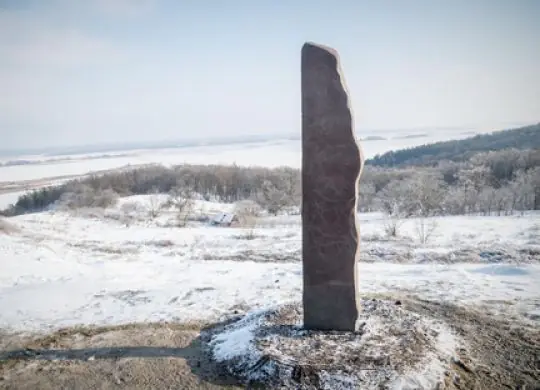
A Viking rune stone from the time of Yaroslav the Wise has appeared in Kyiv region
A copy of a unique rune stone that tells the story of a Viking who served in the army of Yaroslav the Wise more than a thousand years ago was unveiled in the village of Vytachiv in Kyiv Oblast. Learn more about this historic event and the place where you can see the stone with your own eyes
Yuliia Dyka
19 Jan. 2026
More details