


Año Nuevo Chino 2024: tradiciones y leyendas de celebración interesantes

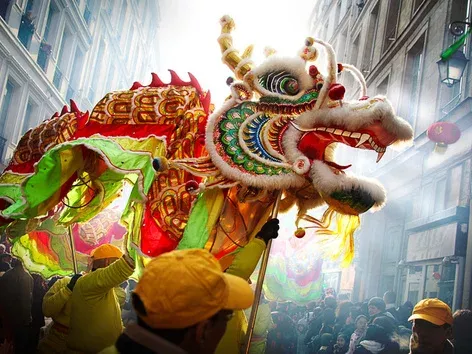
Cada año, China celebra su Año Nuevo tradicional, que dura aproximadamente 15 días. Descubre más sobre las tradiciones, leyendas y supersticiones más interesantes asociadas con las celebraciones del Año Nuevo Chino

Modern China celebrates the New Year twice a year: together with the rest of the world on 1 January and according to the Eastern calendar. When will the Chinese New Year 2024 begin? It will happen on the second new moon after the winter solstice. Thus, according to the Gregorian calendar, it can be any date between 21 January and 21 February. The main difference between the Chinese New Year is the absence of a fixed date. Celebrations in China usually last up to 15 days, encompassing a variety of traditions that symbolise a happy and prosperous next year.
When did the tradition of celebrating the Chinese New Year appear?
The Chinese New Year has its roots in ancient legends, where a monster named Nian attacked villages every year. The villagers scared him away with loud noises, bright lights and the colour red. These symbols became not only a defence against the monster, but also mandatory attributes of the New Year's celebration.
Lights, lanterns and the colour red are an essential part of the festive atmosphere. Since the mid-1990s, the Chinese have been given seven consecutive days off, allowing them to have a cosy family celebration and pay homage to traditions during this special period.
Who celebrates Chinese New Year?
The Chinese New Year, also known as the Spring Festival, is the most important holiday for many Southeast Asian countries, such as Taiwan, Mongolia, Vietnam, etc. During these days, businesses and government offices close for a week, and the celebration continues throughout this time.
Different countries have their own names for the holiday, for example, in Vietnam it is called Tet, in South Korea - Seollal, and in Indonesia - Imlek. The celebration ends with the Red Lantern Festival, which is accompanied by various traditions.
In Malaysia, for example, there is the Chap Goh Mei holiday, when young women throw oranges with their name and phone number into the sea in the hope of finding a match. At this time, fairs are also held, where you can see traditional dances, fireworks, and historical performances that revive the traditions of the Chinese Empire.

Where is the Chinese New Year celebrated?
Unforgettable events to celebrate the Chinese New Year are held in different parts of the world. In New York, firecrackers are set off, followed by lion dances and parades through the streets of Chinatown.
Singapore hosts the colourful Chingay street parade with live performances and fireworks. In Manchester, home to one of the largest Chinese communities in the UK, a 53-metre-long dragon is paraded through the streets of the city towards Chinatown. Each city celebrates the holiday uniquely, creating a unique atmosphere and unforgettable memories.
Visit Ukraine on social media: Telegram | YouTube | Instagram | Facebook | Twitter | TikTok
Traditions of celebrating the Chinese New Year
15 January: preparations
A week before the New Year's celebration, preparations for festive dishes begin, with a special place being occupied by pies and puddings known as gao or gou. These names sound the same as the word "high". It is believed that eating these dishes will help to improve your well-being in the new year.
19 January: general cleaning
According to Chinese traditions, on this day, you need to get rid of all the bad things in your home that could have accumulated over the past year.
Traditionally, this is the day to get rid of all the bad things in your home that have accumulated over the past year.
21 January: a big feast
On Lunar New Year's Day, a grand dinner is usually organised for a family reunion. The menu is carefully selected, including dishes associated with good luck, such as fish (symbolising wealth in Chinese tradition), puddings (symbolising promotion) and dishes resembling gold coins, such as dumplings. It's worth noting that in China, the dishes at this classic dinner vary by region: dumplings and noodles are popular in the north of the country, while steamed rice is the most popular in the south.
22 January - Lunar New Year: visiting relatives
The first days of the Lunar New Year are a test of stamina, appetite and social skills, as many people have to visit relatives and friends. Everyone is prepared with bags of gifts and fruit. The hosts, in turn, treat the guests at home. Married people hand out red packages to those who have not yet found a mate. It is believed that these gifts can protect children from evil spirits.
24 January: "red mouth"
The third day of the New Year according to the lunar calendar, this year it falls on 24 January, is known as "chi kou/chek hou" or "red mouth". It is believed that quarrels are more likely to occur on this day, so many people visit temples and avoid socialising. Every year, certain signs of the Chinese zodiac come into negative conflict with the stars. Visiting a temple is considered a good practice to resolve these conflicts and bring peace in the months ahead.
28 January: National Day
The seventh day of the Lunar New Year is considered to be the day when, according to beliefs, the Chinese mother goddess Nuwa created humanity. This holiday is called Renri/Jan Jat (People's Birthday). Various festive dishes are served in different Asian countries on this day.
9 February: Lantern Festival
The culmination of the Spring Festival, the last day of which falls on 9 February 2023, is celebrated in ancient Chinese society as the only day when young girls were allowed to go out, admire the lanterns and meet boys. This day is also known as Chinese Valentine's Day. In the modern world, cities around the world still organise massive lantern exhibitions and fairs on the last day of the festival, continuing this ancient tradition.
Rules and superstitions for celebrating the Chinese New Year
Believing in the customs, the celebrants of the holiday closely follow the traditions. On the first day of the New Year, haircuts and washing are unacceptable, as they can wash away wealth and success. Buying shoes is also considered unlucky, as it is associated with "loss" and "sighing".
Instead, it is considered a duty to wear red clothes to symbolise good luck and prosperity. Such beliefs and superstitions are deeply rooted in the culture of celebrating this special day.
We remind you! In Ukraine, New Year's Eve is a symbol of family feasts and gifts from Santa Claus. However, some countries have completely different customs. Find out what traditions are celebrated on New Year's Eve in northern, western, central and southern Europe.
Want to know more? Read the latest news and useful materials about Ukraine and the world in the News section.
You may be interested in:
Visit Ukraine Donation - make a good deed and an important contribution to the Victory of Ukraine;
Visit Ukraine Legal advice - comprehensive legal support on entry to Ukraine;
Visit Ukraine Tours - the largest online database of tours to Ukraine for every taste;
Visit Ukraine Merch - choose patriotic clothing and accessories with worldwide delivery;
Visit Ukraine News - get the latest news and updates in our Telegram channel;
Cooperation - cooperation and advertising integrations with Visit Ukraine and Visit World projects.
© 2018-2023, Visit Ukraine. Use, copying or reprinting of materials on this site is permitted only with a link (hyperlink for online publications) to Visit Ukraine.
All rights reserved.
Recommended articles
2 min
Popular
Para apaciguar al Dragón Verde: qué cocinar para la mesa de Año Nuevo 2024
El símbolo del año 2024 es el Dragón Verde de Madera, lo que significa que la mesa de Año Nuevo perfecta es una tarea importante para aquellos que quieren celebrar la festividad de acuerdo con la tradición china. Descubre más sobre lo que se debe y no se debe hacer en la mesa de Nochevieja 2024 para satisfacer las preferencias del Dragón
Yuliia Dyka
30 dic.. 2023
More details2 min
Events
Cómo Europa celebra el Año Nuevo: las tradiciones más interesantes de diferentes países
En Ucrania, el Año Nuevo simboliza reuniones familiares y regalos debajo del árbol de Navidad. Sin embargo, algunos países tienen costumbres completamente diferentes. Descubre qué tradiciones se observan en la víspera de Año Nuevo en el norte, oeste, centro y sur de Europa
Yuliia Dyka
18 dic.. 2025
More details2 min
Events
¿Qué regalar para el Día de San Valentín?
El Día de San Valentín es una festividad en la que todos quieren hacer un regalo especial a las personas que tienen cerca de su corazón. I Visit Ukraine puede ayudarte a encontrar ese regalo. Descubre qué presentar a tu ser querido el 14 de febrero para que el regalo tenga un significado especial
Yuliia Dyka
31 ene.. 2024
More details2 min
Events
¿Cómo se celebra el Día de San Valentín en todo el mundo?
Cada año, el 14 de febrero, casi todos los países del mundo celebran el Día de San Valentín. Descubre cómo varía la celebración en diferentes partes del mundo y qué tradiciones especiales tienen las distintas naciones
Yuliia Dyka
10 feb.. 2024
More details