


.gif)
Romania has launched the EES system at the border with Ukraine: what does this mean for travellers?


Romania is gradually connecting border crossings with Ukraine to the new European Entry-Exit System (EES). Travellers will now face additional procedures, such as passport scanning, photo and biometric data collection, but subsequent trips will be faster thanks to automatic identification. Find out how the EES system is changing the rules for Ukrainians crossing the border

Romania has become the next EU country to implement the EES automated entry and exit control system, an innovation that is gradually being rolled out across all external borders of the Schengen area. This is particularly important for Ukrainians, as Romania is one of the key transit routes to Europe for travel, work and study.
Since 10 December, the system has been in operation at several checkpoints between Ukraine and Romania. This means that border formalities will now be carried out differently: faster, more technologically advanced and more formalised.
Where EES is already in operation on the Romanian border
The first checkpoints on the Ukrainian-Romanian border were connected to the system in December:
‘Dyakivtsi — Rakovtsi’
‘Krasnoilsk — Vicov de Sus’
‘Dyakovo — Halmeu’
The system is also already operational at the ‘Solotvyno — Sighetu Marmatiei’ checkpoint, which was connected on 12 October.
The next connection is expected on 9 January 2026 — the system will start operating at one of the busiest checkpoints, ‘Porubne — Siret’. The rest of the Romanian checkpoints are planned to be transferred to the EES by 10 March 2026.
Don't want to miss important updates and useful articles? Subscribe to our weekly newsletter!
What will change when crossing the border
The EES will completely modernise the control process. Previously, border crossing data was entered manually by border guards, but now almost everything is done by an automated system. It records:
▪️ passport details
▪️ photograph of the person
▪️ biometric data
▪️ time of entry or exit
For children under 12 years of age, biometrics in the form of fingerprints are not taken, but photography remains mandatory.
When crossing the border with Romania for the first time, the traveller undergoes full registration: the document is scanned, the person is photographed, and fingerprints are taken. This data is linked to your profile in the system.
On subsequent entries, the EES automatically recognises the person and verifies the data without repeating the biometric process. This speeds up control and reduces queues.
How the EES affects the 90/180 rule
One of the key advantages of the EES is the accurate automatic calculation of the number of days spent in the EU. Errors that previously occurred due to human factors will be eliminated: the system itself tracks how many days you have already used under the visa-free regime and will warn you if you exceed the limit.
This is especially important for Ukrainians, given the flow of travel and transit through Romania to other Schengen countries.
How the new system works in practice: what Ukrainians need to know before traveling to the EU
1. The first crossing will take a little longer. Fingerprinting is a one-time procedure, so the first trip may be slightly longer, but subsequent crossings will be faster.
2. Follow the 90/180 rule. The system automatically counts the days of your stay — it will not be possible to extend this period.
3. Prepare your documents in advance. Check the validity of your passport, the availability of medical insurance, and the documents of your child and accompanying persons.
4. If you are traveling by car, don't forget your Green Card. This is mandatory international insurance for traveling by car to the EU. The easiest way is to apply for a Green Card online at Visit Ukraine — the policy is sent immediately to your email, is valid in all EU countries, and helps you avoid fines at the border. The application takes a few minutes and does not require any additional documents.

Reminder! The new European EES control system is now operational at Ukraine's borders with Poland and Hungary. Find out how fingerprint and photo recording works, whether there will be queues, and what Ukrainians need to consider before travelling.
Want to know more? Read the latest news and useful materials about Ukraine and the world in the News section.
Our recommendation for a safe and comfortable trip:
Visit Ukraine Insurance - insurance for a safe stay abroad without unnecessary expenses;
Green Card - compulsory car insurance for traveling abroad;
Visit Ukraine Tickets - book tickets for buses, trains, and airplanes to/from Ukraine and between cities around the world;
Private Lawyer service - professional legal support on visa and migration issues;
Visit Ukraine Merch - buy patriotic clothing and accessories with worldwide delivery.
© 2018-2025, Visit Ukraine. Use, copying or reprinting of materials on this site is permitted only with a link (hyperlink for online publications) to Visit Ukraine.
All rights reserved.
Recommended articles
2 min
For foreigners in UA
How to get to Ukraine from Mexico in 2025: convenient routes, entry rules and useful tips
In 2025, there are no restrictions on entry to Ukraine for foreigners. However, the airspace is still closed, so you should plan your travel route in advance. Find out how to get to Ukraine from Mexico and what border crossing rules are relevant this year
Yuliia Dyka
18 Nov. 2025
More details1 min
Entry rules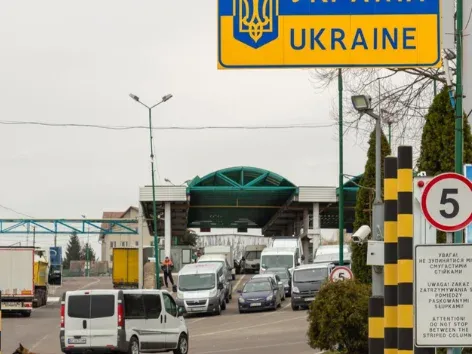
Due to a large-scale failure at customs, Ukraine has temporarily suspended the operation of checkpoints: citizens cannot enter or leave the country. According to the State Border Service, technical problems arose after an attack on the energy infrastructure. Find out when passage across the Ukrainian border will resume
Yuliia Dyka
08 Nov. 2025
More details1 min
Entry rules
Ukraine wants to expand the list of citizens who are prohibited from travelling abroad
Ukraine is preparing for new changes in the rules for citizens travelling abroad: MPs have submitted a bill that could expand the grounds for temporary restrictions. Find out what is known about the bill and which groups of citizens may be subject to possible restrictions
Yuliia Dyka
11 Nov. 2025
More details2 min
For refugees
Registration of Ukrainians in Berlin is changing: what do you need to know from 1 December 2025?
Berlin is updating its procedure for accepting Ukrainians, and from 1 December 2025, initial registration will take place according to new rules. The city is changing the registration routes, introducing mandatory registration and streamlining the allocation of temporary accommodation. Find out more about the new registration procedure and all the steps you now need to take
Yuliia Dyka
01 Dec. 2025
More details