


.gif)
New rules for entering the EU: Poland and Hungary have fully connected their border crossing points to the EES system

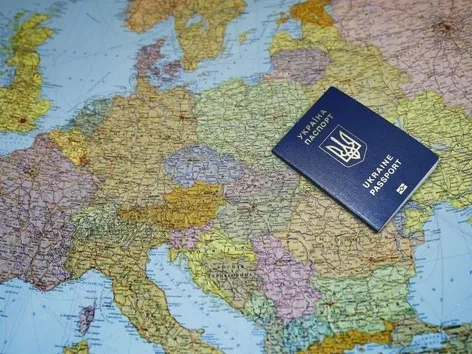
The new European EES control system has been launched at Ukraine's borders with Poland and Hungary. Find out how fingerprint and photo recording works, whether there will be queues, and what Ukrainians need to consider before traveling

The European Union is moving to a new stage of border control — the launch of the Entry/Exit System (EES). This is a large-scale electronic system that replaces passport stamping and records every entry and exit of third-country nationals, including Ukrainians.
As reported by State Border Service spokesman Andriy Demchenko in a comment to Ukrinform, all Ukrainian border crossing points with Poland and Hungary are already connected to the EES. Some of the border crossings with Slovakia and Romania are still being connected, but the process will be completed in the near future.
The introduction of the EES has raised many questions among travelers: will there be long queues, how quickly will the formalities be completed, and will the border crossing procedure change? Let's take a look at all the details.
What is the EES and why is it being introduced?
The EES is a European automated system that records data on border crossings by third-country nationals. It records:
● date and time of entry and exit,
● fingerprints,
● facial photos,
● document information,
● number of days allowed to stay in the Schengen area.
The system replaces manual passport stamping and allows border guards to accurately calculate how many days a person can stay in the EU under the “90/180” rule. For Ukraine, this means transparent recording of all trips and quick control of legal stays in EU countries.
Are there queues due to fingerprinting?
There were concerns in society that the new system would create traffic jams: biometric data must be provided, photographs must be taken, and the process may be slower than the usual passport stamping. However, the State Border Service spokesperson emphasizes:
● The EES does not affect traffic intensity,
● border capacity is maintained,
● no significant queues have been reported.
Only in the first few days was there a small traffic jam at the Yagodin-Dorogusk checkpoint, but the situation was quickly stabilized: “As of now, intensive traffic is ensured there as well,” Demchenko noted.
Don't want to miss important updates and useful articles? Subscribe to our weekly newsletter!
How the new system works in practice: what Ukrainians need to know before traveling to the EU
1. The first crossing will take a little longer. Fingerprinting is a one-time procedure, so the first trip may be slightly longer, but subsequent crossings will be faster.
2. Follow the 90/180 rule. The system automatically counts the days of your stay — it will not be possible to extend this period.
3. Prepare your documents in advance. Check the validity of your passport, the availability of medical insurance, and the documents of your child and accompanying persons.
4. If you are traveling by car, don't forget your Green Card. This is mandatory international insurance for traveling by car to the EU. The easiest way is to apply for a Green Card online at Visit Ukraine — the policy is sent immediately to your email, is valid in all EU countries, and helps you avoid fines at the border. The application takes a few minutes and does not require any additional documents.

When will the EES be operational at all borders?
According to Andriy Demchenko: “All border crossing points with Poland and Hungary are already connected to the new European system.” This means that the EES is operational at Shehyni, Krakivets, Hrushev, Ustyluz, Yagodyn, Tisa, and other points. The EES is still being implemented at the borders with Slovakia and Romania, but full connection is only a matter of time.
According to the State Border Service of Ukraine, in the near future:
● all land borders between Ukraine and the EU will operate through the EES,
● the system will become the single point of entry/exit registration for Ukrainians traveling to Europe.
We remind you! The European Union has strict technical and environmental standards for cars. Read about which cars are difficult or impossible to register in the EU, what to look for before buying, and what documents are required for a car to be allowed on European roads.
Photo: UNIAN
Want to know more? Read the latest news and useful materials about Ukraine and the world in the News section.
Our recommendation for a safe and comfortable trip:
Visit Ukraine Insurance - insurance for a safe stay abroad without unnecessary expenses;
Green Card - compulsory car insurance for traveling abroad;
Visit Ukraine Tickets - book tickets for buses, trains, and airplanes to/from Ukraine and between cities around the world;
Private Lawyer service - professional legal support on visa and migration issues;
Visit Ukraine Merch - buy patriotic clothing and accessories with worldwide delivery.
© 2018-2025, Visit Ukraine. Use, copying or reprinting of materials on this site is permitted only with a link (hyperlink for online publications) to Visit Ukraine.
All rights reserved.
Recommended articles
1 min
Transport
How to travel with pets by train in 2025: new rules for transportation in Ukraine and abroad
To travel with your pet by train, both abroad and within Ukraine, you need to prepare a number of documents. Find out more, everything you need to know about the rules for transporting animals by rail
Yuliia Dyka
19 Nov. 2025
More details1 min
Transport
Where to relax in Europe without a car: the best cities for walking are named
Car-free travel in Europe is becoming increasingly popular among tourists. Find out which cities are recognized as the most convenient for walking holidays, how public transport works in top cities and how to book a transfer from Ukraine for a comfortable trip
Yuliia Dyka
14 Nov. 2025
More details1 min
Entry rules
Ukraine wants to expand the list of citizens who are prohibited from travelling abroad
Ukraine is preparing for new changes in the rules for citizens travelling abroad: MPs have submitted a bill that could expand the grounds for temporary restrictions. Find out what is known about the bill and which groups of citizens may be subject to possible restrictions
Yuliia Dyka
11 Nov. 2025
More details1 min
Transport
The EU has updated its rules on driver's licenses: what will change for drivers
The European Parliament has adopted important changes to the rules for obtaining and using driver's licenses in EU countries. The updates concern age requirements, document validity periods, and the transition to digital format. Learn more about how these new rules will affect drivers
Yuliia Dyka
19 Nov. 2025
More details