


.gif)
What awaits Ukrainians in the EU after 2027: new rules instead of temporary protection

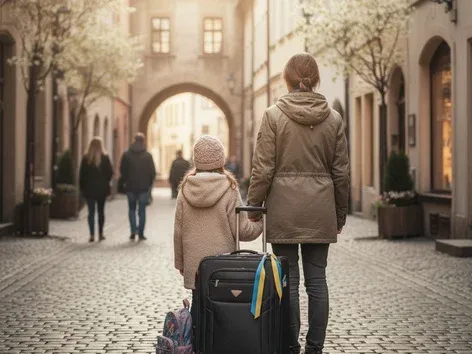
Millions of Ukrainians currently live in the EU thanks to temporary protection, but this protection has a clear time limit. European countries are already preparing transition rules — from legalising residence to voluntary return programmes. Find out more about the changes that await Ukrainians in the EU after 2027

More than four million Ukrainians currently live in European Union countries thanks to the temporary protection mechanism introduced after the start of the full-scale war.
However, temporary protection for Ukrainians in the EU has only been extended until 4 March 2027. European institutions are already developing a transition plan to avoid chaotic decisions and give Ukrainians the opportunity to choose: to stay in the EU or return home.
What options are available and what are the recommendations of the Council of the EU — we explain in this article.
Not sure what to do in your situation?
Contact the immigration lawyers at Visit Ukraine and get answers to all your questions!

Temporary protection: the final date is already known
The status, which guarantees Ukrainians the right to reside, access to healthcare, education and the labour market, has been extended several times. The EU has decided to extend this protection until spring 2027.
This means that over the next two years, member states must prepare the conditions for a smooth transition to other forms of legalisation.
Opportunities to remain in the EU after the expiry of temporary protection
Many Ukrainians have already integrated into the life of their host countries: they work, study and have started families. There are several legal ways to do this:
– National residence permits based on official employment, entrepreneurial activity, study, scientific research or family circumstances.
– European programmes. These include the ‘Single Permit’ for workers, the ‘EU Blue Card’ for highly qualified professionals, and permits for students and trainees.
Member States are required to inform Ukrainians about the available options and simplify access to them so that the transition takes place without loss of rights and opportunities.
Don't want to miss important updates and useful articles? Subscribe to our weekly newsletter!
Returning to Ukraine after the end of temporary protection in the EU: voluntary and gradual
The European Council emphasises that after the end of temporary protection, no one will force Ukrainians to leave immediately. Special voluntary return programmes are planned, which will last at least one year after 2027. These will help to organise the move in a safe and controlled manner.
Special conditions will apply to families with children and people with special needs: schoolchildren will be able to finish the school year, and vulnerable groups will remain in the EU until Ukraine is able to provide them with adequate conditions.
New support tools for Ukrainians in the EU
To enable Ukrainians to choose the most convenient path for themselves, the EU is creating a network of so-called Unity Hubs — advisory centres where migrants will be explained the conditions for transitioning to other statuses or returning to their homeland. Joint databases have also been introduced to track the number of people with temporary protection status and those who are transitioning to other programmes.
Although the final completion of protection is still ahead, experts advise Ukrainians to think about their next steps in advance. Some plan to build a life in the EU on a new legal basis, while others are considering returning to Ukraine after the war ends.
The process of legalisation or return can be complicated, from gathering documents to choosing the right legal status. In such matters, it is worth relying on professional support.
Visit Ukraine's migration lawyers will help you assess your chances of obtaining a residence permit, prepare a package of documents for your chosen EU country, and advise you on return and reintegration programmes.
Book a consultation today to plan your future with confidence!
Reminder! Ukrainians residing in Poland are facing significant changes in the rules for receiving social assistance, which will particularly affect families with children, the elderly, and those without official employment. In response, the Ukrainian government is preparing a support programme for citizens who have decided to return to their homeland. Here we explain what support measures are available for Ukrainians planning to return home from Poland.
Photo: generated using Gemini
Want to know more? Read the latest news and useful materials about Ukraine and the world in the News section.
Our recommendation for a safe and comfortable trip:
Visit Ukraine Insurance - insurance for a safe stay abroad without unnecessary expenses;
Green Card - compulsory car insurance for traveling abroad;
Visit Ukraine Tickets - book tickets for buses, trains, and airplanes to/from Ukraine and between cities around the world;
Private Lawyer service - professional legal support on visa and migration issues;
Visit Ukraine Merch - buy patriotic clothing and accessories with worldwide delivery.
© 2018-2025, Visit Ukraine. Use, copying or reprinting of materials on this site is permitted only with a link (hyperlink for online publications) to Visit Ukraine.
All rights reserved.
Recommended articles
1 min
For refugees
Ukrainians living in Poland are facing significant changes in the rules for receiving social assistance, which will particularly affect families with children, the elderly, and those who do not have official employment. In response, the Ukrainian government is preparing a support programme for citizens who have decided to return to their homeland. Find out what support measures are planned
Yuliia Dyka
22 Sep. 2025
More details2 min
For refugees
Temporary protection for Ukrainians in the Netherlands has been extended until March 2027. At the same time, the government is preparing a number of changes that will primarily affect social assistance and housing. Find out how to apply for temporary protection in the Netherlands and what rights it guarantees Ukrainians in 2025
Yuliia Dyka
24 Sep. 2025
More details1 min
For refugees
Lithuania has extended temporary protection for Ukrainians until 2027: details
The EU has extended temporary protection for Ukrainians, and Lithuania has adopted a corresponding decision. Thanks to this, tens of thousands of refugees will be able to continue to legally reside, work, and receive social support in the country. Find out what new opportunities the extension of protection provides
Yuliia Dyka
24 Sep. 2025
More details2 min
For refugees
Extradition from Poland to Ukraine: changes in practice and procedures
The number of extraditions to Ukraine has increased in Poland, indicating a change in the approach of European courts and a gradual strengthening of legal cooperation between states. Despite the state of war, the practice of extradition continues to develop, although each case is considered with particular care. Find out on what grounds decisions are made, how the procedure works, and when deportation is used instead of extradition
Yuliia Dyka
25 Sep. 2025
More details