


.gif)
Do EU countries provide housing for refugees: conditions and details

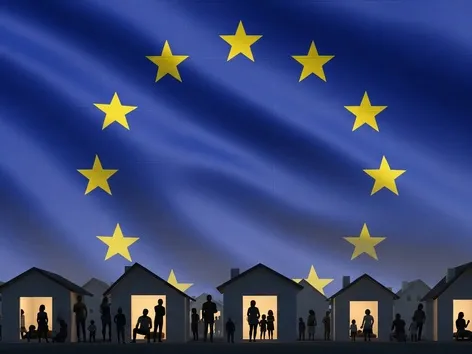
According to research by the Centre for Economic Strategy, as of 2025, there are more than 5 million Ukrainians abroad who left after the start of the full-scale invasion. Most of them have faced the question of whether it is possible to obtain housing for refugees in the EU. Find out how to obtain housing in Europe and how social assistance is provided to Ukrainians abroad

Housing assistance for refugees in Europe remains a pressing issue, especially given that the flow of migrants is not decreasing and settlement opportunities are limited. EU countries that provide housing to forced migrants are prone to reforms and optimisation of social assistance, which may create additional difficulties for migrants. Of course, how housing is provided for Ukrainians abroad depends directly on the country you have moved to, but the general trend is that the number of refugees exceeds the accommodation capacity in most European countries.
Also, remember that immediately upon arrival, you will not be able to take advantage of state insurance programmes in European countries, so it would be wise to take out insurance for travel abroad. You can do this in just a few minutes on the Visit Ukraine portal.
Planning a trip to Europe? Make sure you have reliable insurance.

In this article, we have compiled relevant information about settling in Europe. Read on to find answers to the most frequently asked questions:
– Are Ukrainians provided with housing in the EU?
– Where is it easier for Ukrainians to find housing?
– How to find housing abroad?
Which EU countries provide housing for Ukrainian refugees?
Poland
If you are looking for housing in Poland for refugees, please note the changes that will come into effect in November this year. According to the draft amendments to the Special Act, from 1 November 2025, only representatives of vulnerable groups will be able to stay in collective accommodation centres. These include:
– children receiving 800+ benefits (daily payment – 15 zlotys);
– pensioners receiving a Polish pension (daily payment – PLN 15);
– persons with disabilities;
– women aged 60 and over and men aged 65 and over (provided they do not receive a pension);
– pregnant women and persons caring for a child under 1 year of age;
– single parents raising three or more children (the main condition is that at least one child must be under 7 years of age);
– minors under guardianship;
– persons caring for persons with disabilities (in the absence of care assistance);
– temporary guardians appointed by Ukrainian authorities;
– adult students in full-time education until the end of the academic year in which they turn 20;
– persons who have recently been hospitalised for at least 7 days at the expense of Polish funds (if it is not possible to return home).
Important! Other categories of persons seeking accommodation after receiving temporary protection may also stay in collective accommodation centres, but on a commercial basis. The cost of stay will be determined by the administration of the centres.
Details on the settlement of Ukrainian refugees in Poland from 1 November 2025 are already available on the Visit Ukraine portal.
If you do not wish to stay in collective accommodation centres, there are other options for obtaining housing for refugees in 2025:
1. The ‘40+’ programme (compensation for accommodating refugees): the Polish government provides financial support to Poles who take Ukrainian refugees into their homes.
2. Programmes run by NGOs and charitable organisations.
3. Rented accommodation (Najem mieszkań na wolnym rynku).
4. Social housing (Mieszkania socjalne / komunalne): provided by local authorities (gminas) to people in difficult life situations who meet certain income criteria.
5. Accommodation from employers (e.g. in agriculture).
Find out more about life in Poland:
➤ obtaining temporary protection.
Before emigrating to Poland, we recommend consulting with an immigration lawyer. This is primarily due to the fact that the new law may cause various conflicts, and there are not many precedents for resolving them. On the Visit Ukraine portal, you can get qualified legal assistance on any issues, taking into account the specifics of crossing the border and obtaining temporary protection.

Germany
You can only choose your region of residence in Germany upon arrival – you will need valid reasons for relocation, such as work, study or family reunification. Upon arrival, you must register at the initial reception centre. After that, you will either stay there or be transferred to another camp, depending on availability. At the reception centre for refugees, you will receive temporary accommodation, food, medical care and legal advice.
Important information: Which German states are accepting Ukrainians in July 2025?
Ukrainians in Germany automatically receive temporary protection status. After that, they have the right to apply for social housing. It is usually given to those who have lived in the community for a longer period of time. Priority is also given to people with disabilities, large families and pensioners. You may be temporarily accommodated in a hostel, shelter or hotel, but this is not a long-term solution.
Please note! To receive social housing or assistance, you must have:
1. Refugee status (§24 of the Residence Act).
2. Proof of income or entitlement to WBS.
Learn more about life in Germany:
Legal services for refugees on the Visit Ukraine portal
Czech Republic
Official sources in the Czech Republic (in particular, the Ministry of the Interior and the Ministry of Labour and Social Affairs) indicate that Ukrainian refugees with temporary protection are eligible for social housing.
Access to shelters and municipal housing: In the first months after arrival, the state provided accommodation in collective accommodation centres (hostels, hotels, sports halls), as well as in municipal premises or through programmes that coordinate accommodation in private households receiving state compensation.
Special features of extended stays: After the initial period of free accommodation (usually 150 days, except for vulnerable groups), persons who have the financial means may be required to pay for their accommodation in state housing or seek private options. Extension of free accommodation in state housing may be available for the most vulnerable groups.
Learn more about life in the Czech Republic:
➤ obtaining temporary protection.
Netherlands
The Netherlands, through the Central Agency for the Reception of Asylum Seekers (COA) and municipalities, is actively providing housing to Ukrainian refugees. This may include:
Collective reception centres: Accommodation in large buildings such as former offices, hotels, sports halls or specially built temporary shelters.
Private households: The Dutch have also actively welcomed Ukrainians into their homes, often with the support of local authorities and charitable organisations.
Important! From 1 October 2025, the cost of living in state shelters in the Netherlands will increase from €105 to €244.22 per month. This is part of a policy to balance conditions for all asylum seekers.
Learn more about life in the Netherlands:
➤ obtaining temporary protection.
Portugal
Portugal provides temporary protection and assists in the accommodation of Ukrainians through the Foreigners and Borders Service (SEF) and the Social Security Institute (ISS).
Reception centres: At the initial stage, accommodation was provided in reception centres or hotels.
Support from non-governmental organisations: Non-governmental organisations and charitable foundations play an important role in providing accommodation, coordinating placement in private homes or in their own centres.
Slovakia
Slovakia provides housing assistance through its primary reception centres and regional coordination centres.
Collective accommodation centres: Temporary accommodation is provided in shelters, dormitories or hotels, often with basic meals.
Coordination with local authorities: Local authorities and volunteer organisations also play an important role in finding and providing accommodation.
You may be interested in: Can I get temporary protection again after staying in another EU country?
Austria
In Austria, the Federal Ministry of the Interior is responsible for providing accommodation through the Federal Agency for Care and Support (BBU) as part of the basic provision system (Grundversorgung).
State accommodation: Accommodation is provided in special shelters, hostels or state-rented flats.
Financial assistance for housing: In some cases, if a person rents accommodation independently, financial assistance may be provided to cover part of the rent.
A list of countries that already restrict or plan to restrict temporary protection is available on the Visit Ukraine portal.
France
In France, housing assistance is provided by the French Office for Immigration and Integration (OFII) and prefectures.
Collective centres: Accommodation may be provided in special reception centres or hotels, often on a shared basis.
Assistance with finding private accommodation: The government also encourages and supports initiatives to accommodate Ukrainians in private households or in accommodation provided by associations.
Updated overview of social benefits in different EU countries in 2025 can be found at the link.
Other countries providing shelter to Ukrainian refugees
In countries such as Italy and Spain, as well as in some other EU countries, the approach to providing housing may have the following features:
More available housing, but more difficult to obtain: There is often less direct state provision of housing in large centres, with more reliance on a network of non-governmental organisations, regional programmes and local community initiatives. This may mean greater flexibility in finding housing, but also greater responsibility for refugees themselves in finding and registering it. For example, in Italy, municipalities and church organisations play an important role. In Spain, government programmes are often complemented by actions taken by regional governments and non-governmental organisations.
Priority for families with children: In many countries, regardless of the general approach, families with children, pregnant women, persons with disabilities and other vulnerable groups are often given priority in the provision of housing and social support.
Each country has its own characteristics – to avoid mistakes and obtain relevant and accurate information, it is best to consult specialists directly.
What are the conditions for housing in EU countries?
Do I need to have temporary protection status?
Yes, to receive housing assistance in EU countries, including accommodation in state shelters or financial assistance, you must have temporary protection status.
This status, granted in accordance with EU Directive 2001/55/EC, is a key prerequisite for access to most social services and support, including the right to residence, work, education and healthcare. Without this status, access to organised state housing is extremely limited or impossible.
Follow the link to find out which EU countries will offer subsidiary protection in 2025.
How long can you stay for free?
The duration of free accommodation in state-provided housing varies between countries. At the initial stage (the first weeks or months), accommodation is usually provided free of charge. However, some countries may introduce a nominal fee after a certain period (e.g. 90 or 150 days) or expect persons with an income to contribute to the cost of their accommodation. Vulnerable groups (elderly people, persons with disabilities, large families) are often exempt from these contributions or are entitled to a longer period of free accommodation. All these conditions are regulated by the national legislation of each EU Member State.
Don't want to miss important updates and useful articles? Subscribe to our weekly newsletter!
Is it possible to get help with renting private accommodation?
The possibility of receiving assistance with renting private accommodation also depends on the policy of the specific country. Some EU countries provide financial assistance to persons under temporary protection to cover part of the rent for private accommodation. This may take the form of monthly payments or one-off grants. The conditions for granting such assistance usually include:
1. Temporary protection status.
2. Meeting certain income criteria or having no income.
3. Having a formal rental agreement.
To access such programmes, you must contact the relevant social services or migration authorities in your country of residence.
REMEMBER! Before travelling to any country, check that you have an international insurance policy ‘Green Card’ – in the event of an accident, it will help you compensate third parties for their expenses. Follow the link and get a policy in just a few minutes on the Visit Ukraine portal!
Reminder! In the previous article, we reported that the number of Ukrainians receiving temporary protection in Europe has increased.
Photo: generated by Gemini
Want to know more? Read the latest news and useful materials about Ukraine and the world in the News section.
Our recommendation for a safe and comfortable trip:
Visit Ukraine Insurance - insurance for a safe stay abroad without unnecessary expenses;
Green Card - compulsory car insurance for traveling abroad;
Visit Ukraine Tickets - book tickets for buses, trains, and airplanes to/from Ukraine and between cities around the world;
Private Lawyer service - professional legal support on visa and migration issues;
Visit Ukraine Merch - buy patriotic clothing and accessories with worldwide delivery.
© 2018-2025, Visit Ukraine. Use, copying or reprinting of materials on this site is permitted only with a link (hyperlink for online publications) to Visit Ukraine.
All rights reserved.
Recommended articles
2 min
For refugees
How to get a TIE card in Spain in 2025?
Ukrainians in Spain can obtain or extend temporary protection, which is valid until 4 March 2027. However, a TIE identity card is also required to reside in this country. Find out how to obtain or extend it if you already have one
Yuliia Dyka
22 Jul. 2025
More details2 min
For refugees
The Polish government has approved draft amendments to the Special Act on Assistance to Ukrainian Citizens in Poland, which provides for the extension of temporary protection until March 4, 2026, new accommodation rules, clarification of the conditions for receiving 800+ assistance, and tighter control over residence. Learn about the key changes that may affect the lives of Ukrainians in Poland
Yuliia Dyka
17 Jul. 2025
More details1 min
For refugees
Since the beginning of the war, millions of Ukrainians have been forced to seek refuge in European Union countries. The temporary protection mechanism has become a key tool for their integration and support. As of May 2025, more than 4.28 million Ukrainians are under protection in the EU, and this number continues to grow. Find out which countries provide the most support to Ukrainians, where there has been an increase or decrease in numbers, and how the composition of refugees is changing
Yuliia Dyka
21 Jul. 2025
More details1 min
For refugees
How many Ukrainian refugees return home every six months: IOM statistics
Since autumn 2023, there has been a steady return of Ukrainians from abroad, with around 100,000 people coming home every six months. Find out which countries they are returning from most often and why
Yuliia Dyka
22 Jul. 2025
More details