


.gif)
In welchen europäischen Ländern kann man mit Euro bezahlen und wo wird die Landeswährung akzeptiert?

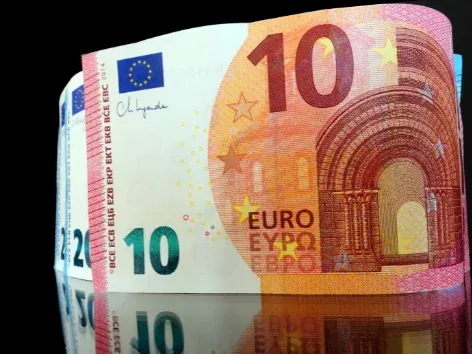
Reisen in Europa erfordert nicht nur eine Routenplanung, sondern auch ein Verständnis dafür, welche Währung für Zahlungen in jedem Land bequemer und vorteilhafter ist. In einigen Ländern kann man problemlos mit Euro bezahlen, während es in anderen vorteilhafter ist, die Landeswährung zu verwenden, um Überzahlungen zu vermeiden. Finden Sie heraus, wo in Europa der Euro offiziell akzeptiert wird und wo es besser ist, die nationale Währung dabei zu haben.

When planning a trip to Europe, it is important to understand which currency will be the most advantageous for payments in each specific country. Although the euro (€) is one of the most widely used currencies in the world, there are many countries in Europe where it is not the official currency. In such cases, payments in euros may be disadvantageous due to low exchange rates or additional commissions.
Before any trip abroad, it is important to take care not only of currency, but also of travel insurance. On the Visit Ukraine platform, you can quickly take out travel insurance that will cover unforeseen expenses abroad, including treatment and medical evacuation.

Countries where the euro is the official currency
The euro is the official currency of the Eurozone, which includes 20 countries of the European Union. In these countries, you can pay with euros everywhere, from supermarkets to small cafes, and the exchange rate will be the same throughout the zone.
List of Eurozone countries:
Austria, Belgium, Germany, Greece, Ireland, Spain, Italy, Cyprus, Latvia, Lithuania, Luxembourg, Malta, the Netherlands, Portugal, Slovakia, Slovenia, Finland, Estonia, France, and Croatia (which will switch to the euro in 2023).
If you are only travelling to these countries, you do not need to exchange currency in advance — it is enough to have cash in euros or a card with cashless payment option.
Don't want to miss important updates and useful articles? Subscribe to our weekly newsletter!
Countries outside the Eurozone where the euro is partially accepted
In some EU and European countries, the euro is not the official currency, but it may be accepted in tourist areas, at train stations or in hotels. However, the exchange rate in such places is usually unfavourable, and the change may be given in the local currency.
▪️ Czech Republic (Czech koruna, CZK) — In Prague and tourist areas, euros may be accepted, but almost always at an inflated rate. It is more advantageous to withdraw korunas from an ATM.
▪️ Poland (Polish zloty, PLN) — Euros are rarely accepted, mainly in border areas. It is best to pay in zlotys.
▪️ Hungary (Hungarian forint, HUF) — paying in euros is almost always disadvantageous, it is better to exchange money.
▪️ Romania (Romanian leu, RON) — local currency is required almost everywhere.
▪️ Bulgaria (Bulgarian lev, BGN) — euros may be accepted in hotels and tourist areas, but the country will officially switch to the euro in 2026.
▪️ Switzerland (Swiss franc, CHF) — euros are accepted in large cities, but change is given in francs.
In these countries, it is better to use a bank card with a favourable conversion rate or exchange money in advance at banks.
Countries with their own currency where the euro is rarely accepted
There are a number of countries where the euro is not officially used and is practically impossible to use in everyday transactions:
▪️ Denmark (Danish krone, DKK)
▪️ Sweden (Swedish krona, SEK)
▪️ Norway (Norwegian krone, NOK)
▪️ Iceland (Icelandic króna, ISK)
▪️ United Kingdom (pound sterling, GBP)
In these countries, it is better not to even try to use euros — take local currency or pay by card.
Important tips for tourists
1. Do not count on a favourable exchange rate when paying with euros outside the Eurozone. The difference can be as much as 10–15% of the official rate.
2. Have cash in the local currency. Even if you pay by card, you will need cash for transport, small purchases or tips.
3. Choose cards with free currency conversion. For example, multi-currency cards or cards with an interbank exchange rate.
4. Check prices. If the price is in euros, check the exchange rate.
💡 If you are planning to travel abroad in your own car, don't forget to get an international Green Card insurance policy at Visit Ukraine. This document is mandatory for entering most European countries in a Ukrainian car and will protect you from unforeseen expenses in the event of an accident.
Reminder! How much will Ukrainians will earn in different EU countries in 2025.
Recommended articles
2 min
BusinessUA
Investieren in der Ukraine kann profitabel sein, aber es ist wichtig zu wissen, wie man Betrug vermeidet. Erfahren Sie, wie Sie Partner, Immobilien überprüfen, einen zuverlässigen Vertrag aufsetzen und rechtlichen Schutz für Ihr Kapital gewährleisten können
Yuliia Dyka
08 Aug. 2025
More details2 min
Immobilien
Was deckt die Versicherung ab, wenn eine Rakete in der Nähe landet?
Leider decken Standardversicherungen keine Schäden durch Raketenangriffe ab, aber es gibt spezielle Programme, die militärische Risiken abdecken. Erfahren Sie, wie Sie diese Art von Versicherung abschließen, was sie abdeckt und wie Sie eine Entschädigung erhalten, wenn eine Rakete in der Nähe landet
Yuliia Dyka
08 Aug. 2025
More details1 min
Für Flüchtlinge
Polen ändert seinen Ansatz zur Unterstützung ukrainischer Flüchtlinge – neue Regeln zur sozialen Unterstützung, Unterbringung, Registrierung und anderen Aspekten des Aufenthalts von Ukrainern im Land treten bald in Kraft. Erfahren Sie genau, was sich für Ukrainer in Polen ändern wird
Yuliia Dyka
08 Aug. 2025
More details2 min
Transport
Bequeme Reise nach Polen: Transfer von Kiew nach Krakau
Die Reise von Kiew nach Krakau kann nicht nur lang, sondern auch anstrengend sein, insbesondere aufgrund von Grenzkomplikationen und Einschränkungen im öffentlichen Verkehr. Es gibt jedoch eine Möglichkeit, bequem nach Polen zu gelangen, zu einem Festpreis und ohne Stress. Erfahren Sie mehr über den bequemsten Transfer von Kiew nach Krakau im Jahr 2025
Yuliia Dyka
08 Aug. 2025
More details