


.gif)
Als die Ukraine geboren wurde: 20 Fakten über den Staat, die die russische Propaganda widerlegen

- Rus: the origins of Ukrainian statehood
- The myth of ‘brotherly peoples’
- Ukrainian language: separate development
- Cossacks: a symbol of freedom
- The myth of ‘novorossiya’
- Ukraine was not created by Lenin
- National symbols: deep roots
- Kyiv is the centre of Orthodoxy
- The myth of the ‘common cradle’ of three nations
- Ukrainian culture: identity and influence
- The myth of the ‘little russians’
- Ukrainian language: bans and persecution
- Cossack state: The Hetmanate
- The myth of ‘voluntary accession’ to russia
- The myth of the ‘primordial russian land’
- The Ukrainian Constitution: the first in Europe
- The struggle for independence in the twentieth century
- The myth that Ukraine did not have its own statehood
- Ukrainian diplomacy in the world
- The myth of the ‘impossibility’ of Ukrainian independence
- Ukraine in the modern world
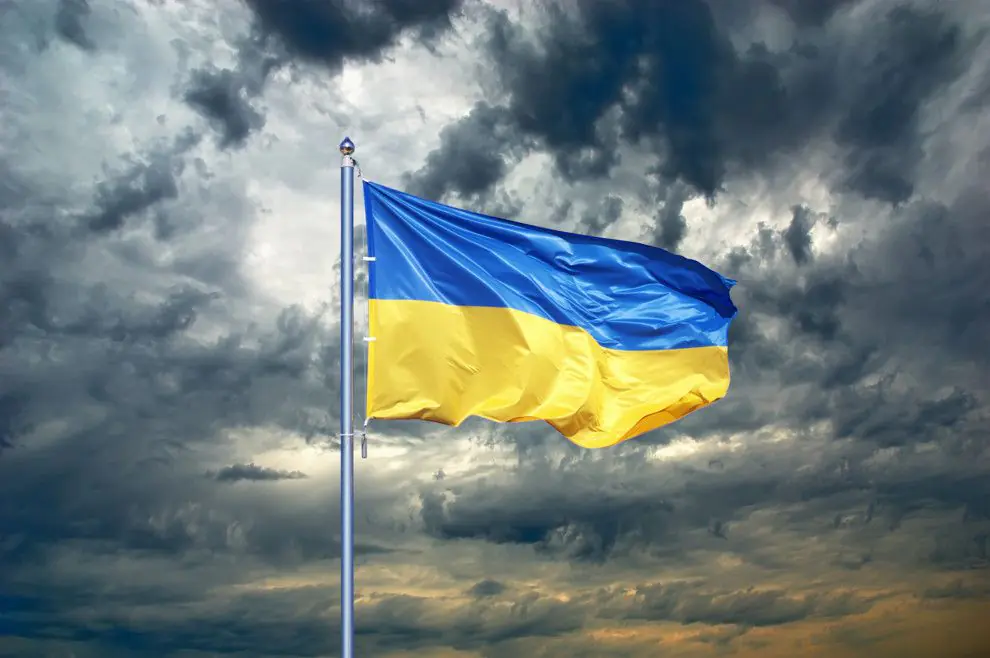
Die Ukraine hat eine lange Geschichte, die oft von der russischen Propaganda verzerrt wird. Lesen Sie mehr über 20 Fakten, die russische Mythen widerlegen und die tausendjährige Geschichte der Ukraine bestätigen

Ukraine is a country with a long history and deep traditions of statehood, which russian propaganda tries to distort or deny. However, historical facts prove that the Ukrainian nation was formed long before the emergence of modern russia and has always fought for its independence.
Let's look at the key facts that refute common myths and demonstrate the true path of Ukrainian statehood.
Rus: the origins of Ukrainian statehood
In the ninth century, the state of Rus, with its centre in Kyiv, emerged on the territory of modern Ukraine.
This disproves the myth that Ukrainian statehood is a late development. Rus was the political and cultural centre of the Eastern Slavs, and Kyiv played a key role in its development.
The myth of ‘brotherly peoples’
Russian propaganda often claims that Ukrainians and russians are ‘brotherly’.
In fact, after the Mongol invasion in the 13th century, the development paths of these peoples diverged. The Ukrainian lands integrated into the European context, developing democratic traditions and self-government, while the moscow principality was under the influence of the Golden Horde.
Ukrainian language: separate development
The Ukrainian language has developed independently and is not a dialect of russian.
It was formed on the basis of the Old Russian language, but was influenced by various cultures, including Polish and Lithuanian, which distinguishes it from russian.
Cossacks: a symbol of freedom
The Zaporizhzhia Cossacks were the bearers of democratic traditions and self-government.
The russian empire attempted to destroy the Cossacks by liquidating the Zaporozhian Sich in 1775 to strengthen its control over Ukrainian lands.
The myth of ‘novorossiya’
The term ‘novorossiya’ was coined by the russian empire after it seized southern Ukrainian lands in the 18th century.
It was an attempt to erase the Ukrainian identity of these territories, although they had a long history linked to Kyivan Rus and the Cossacks.
Ukraine was not created by Lenin
Russian propaganda claims that Ukraine was created by Lenin.
In fact, the Ukrainian national movement existed long before that. The Ukrainian People's Republic declared independence in 1918, even before the formation of the USSR.
National symbols: deep roots
The Ukrainian trident originates from the sign of Prince Volodymyr the Great and has a history of more than a thousand years.
This refutes claims that it is ‘new’ or borrowed.
Kyiv is the centre of Orthodoxy
The baptism of Rus took place in Kyiv in 988 under Prince Volodymyr.
This makes Kyiv the cradle of the Orthodox tradition for Eastern Slavs, not moscow, which was founded later.
The myth of the ‘common cradle’ of three nations
Russian propaganda claims that Ukrainians, russians and Belarusians are descended from a single old russian people.
However, the ethnogenesis of these peoples has its own peculiarities, and they were formed as separate nations with their own languages and cultures.
Ukrainian culture: identity and influence
Ukrainian culture has deep roots and has influenced neighbouring nations.
For example, the Kyiv-Mohyla Academy, founded in 1632, was one of the leading educational centres in Eastern Europe.
The myth of the ‘little russians’
The term ‘little russia’ was introduced by the russian authorities to denigrate Ukrainian identity.
Ukrainians have always had their own self-designation - ‘Ukrainians’ or ‘Rusyns’.
Don't want to miss important updates and useful articles? Subscribe to our weekly newsletter!
Ukrainian language: bans and persecution
The russian empire repeatedly banned the Ukrainian language, including the Valuev Circular of 1863 and the Ems Decree of 1876, in an attempt to destroy Ukrainian identity.
Cossack state: The Hetmanate
In the seventeenth and eighteenth centuries, there was a Cossack state on the Left Bank of Ukraine - the Hetmanate - which had its own government and administration.
The myth of ‘voluntary accession’ to russia
The Pereyaslav Council of 1654 was not an act of ‘voluntary accession’ of Ukraine to russia.
It was a military and political alliance, the terms of which were repeatedly violated by moscow.
The myth of the ‘primordial russian land’
Russian propaganda claims that Ukrainian lands have always belonged to russia.
In fact, the territory of modern Ukraine was part of various state entities - Kyivan Rus, the Grand Duchy of Lithuania, the Polish-Lithuanian Commonwealth, the Ottoman Empire - and muscovy gained control over part of the Ukrainian lands only in the 17th century.
Therefore, the claim of ‘primordiality’ is manipulative and has no historical basis.
The Ukrainian Constitution: the first in Europe
In 1710, Pylyp Orlyk signed the Pacts and Constitution of the Rights and Freedoms of the Zaporozhian Army, one of the first constitutional acts in the world.
The document provided for the separation of powers and democratic principles of government, which proves that Ukrainians aspired to create a democratic state long before similar documents appeared in russia.
The struggle for independence in the twentieth century
After the defeat of the UPR, the struggle for independence continued even within the USSR. In the 1960s and 1980s, Ukrainian dissidents such as Vyacheslav Chornovil, Vasyl Stus, and Levko Lukyanenko fought for Ukrainian rights and state sovereignty. They were repressed, but laid the foundation for the independence gained in 1991.
The myth that Ukraine did not have its own statehood
Russian propaganda often claims that Ukraine never had its own statehood before 1991.
However, historical sources show that several state entities existed on the territory of Ukraine: Kyivan Rus, the Principality of Galicia-Volhynia, the Cossack State (Hetmanate), the Ukrainian People's Republic (UPR) and the Western Ukrainian People's Republic (WUPR).
Ukrainians have always fought for their independence and defended their statehood traditions.
Ukrainian diplomacy in the world
At the beginning of the 20th century, the Ukrainian People's Republic had official diplomatic missions in more than 20 countries, including Germany, France, Switzerland and the United States.
This demonstrates the international recognition of Ukraine as a sovereign state, despite the aggressive policy of soviet russia.
The UPR signed the Brest-Litovsk Peace Treaty in 1918, which became the first international document to recognise Ukraine's independence on the world stage.
The myth of the ‘impossibility’ of Ukrainian independence
Russian propaganda is trying to impose the idea that Ukraine is not capable of existing as an independent state.
However, over the three decades of independence, the country has shown resilience by developing its economy, culture, international relations and army. Events since 2014 have proven that Ukrainians are ready to fight for their country and have a strong national identity.
Ukraine in the modern world
Today, Ukraine is a sovereign state with a developed cultural, economic and military sphere.
Ukrainian is the official language and is recognised as one of the oldest languages in Europe.
Current events, including the struggle for territorial integrity, prove that Ukraine continues to defend its freedom and seeks integration into the European Union and NATO.
The myths of russian propaganda about the ‘failure’ of the Ukrainian state are shattered by the country's real achievements in technological, defence and cultural development.
Ukraine is a country with a long history, a strong national character and a relentless desire for freedom. The historical facts that destroy russian propaganda prove that the Ukrainian nation has existed, exists and will continue to exist regardless of any external influences.
Let us remind you! Ukraine has many fascinating and extraordinary places that have no analogues not only in Europe but also in the world. Read about unique places and amazing facts you didn't know about Ukraine here.
Photo: Getty Images
Want to know more? Read the latest news and useful materials about Ukraine and the world in the News section.
We recommend purchasing it for a safe and comfortable trip to Ukraine:
Visit Ukraine Insurance – health insurance with coverage of war risks;
Visit Ukraine Mini Hull Insurance – car insurance with extended coverage in Ukraine;
Visit Ukraine Osago – compulsory motor third party liability insurance for cars with Ukrainian registration;
Visit Ukraine Tickets – bus and train tickets to/from Ukraine;
Visit Ukraine Tours – the largest online database of tours to Ukraine for every taste;
Visit Ukraine Hotels – hotels for a comfortable stay in Ukraine;
Visit Ukraine Merch – patriotic clothing and accessories with worldwide delivery.
© 2018-2025, Visit Ukraine. Use, copying or reprinting of materials on this site is permitted only with a link (hyperlink for online publications) to Visit Ukraine.
All rights reserved.
Recommended articles
3 min
Für Ausländer in UA
Die Ukraine freut sich immer über ausländische Besucher. Trotz des Krieges sind ihre Grenzen für Touristen geöffnet. Erfahren Sie mehr über die Besonderheiten der Organisation einer Reise in die Ukraine für Ausländer im Jahr 2025
Yuliia Dyka
16 Okt. 2025
More details3 min
Für Ausländer in UA
Trotz des umfassenden Krieges zieht die Ukraine weiterhin Touristen aus der ganzen Welt mit ihrer unglaublichen Geschichte, Kultur und unbezwingbaren Geist an. Ausländische Besucher teilen ihre faszinierenden Eindrücke von ukrainischen Städten, heben das hohe Sicherheitsniveau und die professionelle touristische Infrastruktur hervor und planen, wiederzukommen. Erfahren Sie mehr darüber, wie die Ukraine und Visit Ukraine insbesondere komfortable und sichere Reisen in die Ukraine für ausländische Touristen während des Krieges gewährleisten.
Yuliia Dyka
14 Jan. 2025
More details2 min
Touristen in der Ukraine
Das ist nicht London: Ein Tourist besuchte die Ukraine und erzählte, was ihn am meisten beeindruckte
Ein europäischer Journalist erfüllte sich seinen lang gehegten Traum, während des Krieges die Ukraine zu besuchen. Er war erstaunt über den Kontrast zwischen der militärischen Realität und dem friedlichen Leben in Lwiw, wo es seiner Meinung nach sicherer ist als in manchen Teilen Londons. Erfahren Sie mehr über die Eindrücke des Ausländers von der Reise in die Löwenstadt und seine unerwarteten Entdeckungen über das Leben in der Ukraine während des Krieges
Yuliia Dyka
20 Jan. 2025
More details2 min
Reisen
Regionen der Ukraine, in denen Sie ohne Risiko reisen können
Das Reisen in der Ukraine wird immer beliebter, insbesondere in Regionen, die für Touristen sicher bleiben. Die Westukraine bietet eine einzigartige Kombination aus historischen Denkmälern, natürlichen Landschaften und moderner touristischer Infrastruktur, die es Ihnen ermöglicht, Ihren Urlaub ohne unnötige Risiken zu genießen. Erfahren Sie mehr über sichere Regionen für Reisen in die Ukraine und wie Sie eine Reise organisieren können
Yuliia Dyka
21 Jan. 2025
More details