


.gif)
Festung Bilhorod-Dnistrovskyi: Was hat Ackerman im Laufe der Jahrhunderte gesehen und was beeindruckt und zieht heute Touristen an?

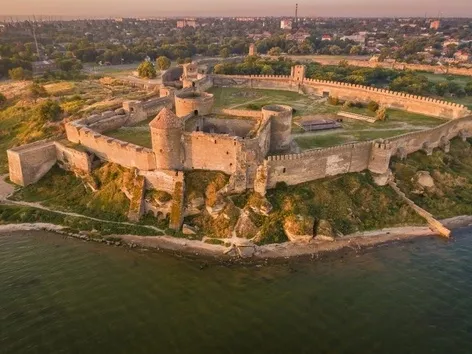
Im Süden der Ukraine, in Bessarabien, steht eine der größten mittelalterlichen Festungen der Ukraine. Akkerman, Bilhorod-Dnistrovska, Moncastro - all diese Namen wurden hier in verschiedenen Epochen verwendet. Erfahren Sie, welche historischen Ereignisse Ackerman miterlebt hat, welche Geheimnisse es verbirgt, was Touristen aus der ganzen Welt anzieht und wie man dorthin gelangt.

The Akkerman Fortress, which was completed in the 13th century, has been capturing the imagination of people - both locals and foreigners - for almost a thousand years. The mighty castle with its high towers and strong walls creates a unique medieval setting on the banks of the Dniester lipan. For almost a thousand years of its existence, the fortress has seen different rulers and different peoples, conquests and defences, personal dramas and political games. Read about what the Bilhorod-Dnistrovskyi fortress is famous for, its history and legendary past in the article
About the history of Akkerman over the centuries
Construction of the Akkerman fortress
The largest fortress in Ukraine was built on the site of the ruins of the ancient polis of Tira in the 13th century by the Genoese, so it dates back to the late Middle Ages. At that time, the Black Sea region belonged to the Golden Horde, but the Genoese managed to reach an agreement with the khan. Their main goal was to control the Dniester Estuary. Later, the Genoese lost access to the Aegean Sea and the fortress became the property of the Grand Duchy of Lithuania, and in the 14th century it was conquered by the Moldovans. At that time, it was called Moncastro.
What was there before the construction of the Bilhorod-Dnistrovskyi fortress?
Until the 5th century, there was a Greek polis called Tira, which was destroyed by the Goths. Later, the invasion of the Huns took place here. From the 12th century the territory was under the rule of the Mongols. The polis of Thira belonged to the Greeks, and later the area was inhabited by Dacians, Antes, and Slavs. From the 6th to the 13th centuries, it was part of Kyivan Rus, the Kingdom of Hungary, and the Principality of Galicia-Volhynia.

Bilhorod-Dnistrovskyi fortress under the rule of the Moldovan principality
The Moldovans called Bilhorod Chetiaia Albă (White City). At that time, 20 thousand people lived there, including Tatars, Jews, Armenians, Genoese, Greeks, and Moldovans. The city was formed around the fortress - the main elements were completed by the 1440s (these were 34 towers up to 20 metres high). The fortress was built of white limestone, to which millet was added to maintain the hydrothermal balance.
In 1457, Stefan the Great seized power in Moldova and developed Belgorod as the main defensive point on the trade route from Europe to Asia. It was then that the Kiliya Gate was built, which now serves as the entrance to the city. A permanent guard garrison was placed near the gate.
Akkerman as part of the Ottoman Empire
The fortress became part of the Ottoman Empire in the 15th century after a large-scale siege by joint Turkish and Tatar troops. The city became a stronghold of the Ottomans in the north and was regularly attacked by Zaporizhzhia Cossacks. Among the most famous were Ivan Sirko, Ivan Sulyma, Severin Nalyvaiko, Semen Paliy, and Hryhorii Loboda. Attacks by Moldovans and Poles were frequent.
The fortress was repeatedly rebuilt and strengthened using the latest fortification technologies. However, this did not save it in the three Russian-Turkish wars. In 1170, it was first captured by Russian troops, and in 1812 it finally became part of the Russian Empire along with the entire south of Bessarabia.

How does the Bilhorod-Dnistrovskyi fortress look like now?
The Bilhorod-Dnistrovskyi fortress is one of the largest in Ukraine. Its area is more than 2 hectares, and the perimeter of the walls is 2.5 km. The maximum thickness of the walls is up to 5 metres and the height of the towers is up to 15 metres. The natural fortification of the fortress is the Dniester estuary in the north, and on the other three sides it is artificially fortified with a ditch up to 14 metres deep.
The heart of Akkerman is the citadel, which has been preserved since the time of the Genoese. It is based on four towers connected by a powerful wall with their own names: The Treasury (north-west), the Dungeon (south-west), the Commandant's (southeast), and the Court (north-east). Currently, three towers are in perfect condition, and the Treasury is dilapidated. Particular attention should be paid to the citadel's underground passages that penetrate the towers, the wall, and lead to other parts of the fortress. They have hardly been explored.
The fortress has several courtyards, which are separate defensive fortifications. The largest of them is the Civic Yard, which covers an area of 5 hectares. The remains of the Quarantine Yard, also known as the Port Yard and the Household Yard, also attract tourists. Previously, warehouses were located here, and active trade was carried out, but now almost nothing remains of the yard.
Filmmakers did not ignore the majestic beauty. Othello, The Knight's Castle, D'Artagnan and the Three Musketeers and many other films were filmed here.
What can you see in the Bilhorod-Dnistrovskyi fortress?
The Akkerman Fortress is a godsend for lovers of history and fortification architecture. It strikes the imagination with its power and grandeur, tells about the periods of domination of various empires and the heyday of great nations.
Cores on the wall
On the wall of the fortress there is a tetraxis - a figure of 10 points that form 9 right triangles. This will be of particular interest to folklorists and researchers of ancient cults. Some consider the figure to be magical, used by druids in their rituals. Others say that the fortress was built by the Freemasons and that they specifically placed the tetraxis here as a symbol of their organisation. To support their theory, they cite a tablet found in one of the towers that reads: ‘Master Fedorko finished the construction in 1440’ (master is the title of the head of a Masonic lodge).
Historians believe that the cores on the wall form a specific version of a sundial-calendar.

Ovid's Tower (Maiden Tower)
The extreme southeastern tower has two names, one of which is associated with a creepy legend. The Moldovan ruler Alexander the Good allegedly had an extremely beautiful and extremely cruel daughter, Tamara. She gathered a gang of robbers, attacked neighbouring villages and plundered them. She once deceived her father by asking for money to build a monastery, but spent it on building a powerful fortress from which the gang raided people. The father was very angry, cursed his daughter and ordered her to wall up the tower walls. Since then, it has been called the Maiden Tower.
Another legend says that it was Tira, which was located on the site of the fortress, that hosted the disgraced poet Ovid. He was sent here by the Roman Emperor Augustus, who decided that the poet's ‘Science of Love’ was an attempt on the morality of Roman society.

How to get to the Akkerman Fortress?
The fortress is located in Bilhorod-Dnistrovskyi, to which buses from Odesa regularly depart: the first one at 6:30 am and the last one at 19:00 pm.
You can buy tickets to Odesa from any city in Ukraine here.
You can see the fortress with your own eyes and join other traditions and memorable places of Bessarabia on a special tour from Visit Ukraine.
Make your trip incredible! Contact Visit Ukraine specialists (Telegram | WhatsApp) who will help you organise the best route, book tickets and a hotel, arrange the necessary types of insurance and select a tour according to your preferences.
Photo: Bilhorod-Dnistrovskyi District State Administration
We recommend purchasing it for a safe and comfortable trip to Ukraine:
Visit Ukraine Tours – the largest online database of tours to Ukraine for every taste;
Visit Ukraine Hotels – hotels for a comfortable stay in Ukraine;
Visit Ukraine Merch – patriotic clothing and accessories with worldwide delivery.
© 2018-2024, Visit Ukraine. Use, copying or reprinting of materials on this site is permitted only with a link (hyperlink for online publications) to Visit Ukraine.
All rights reserved.
Recommended articles
3 min
Ukraine erkunden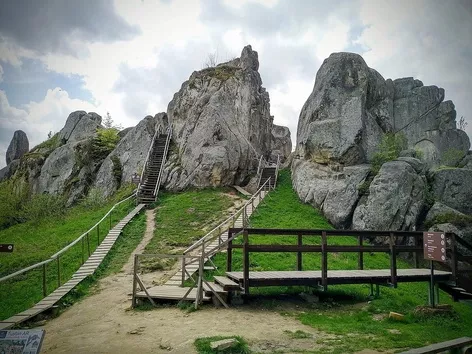
Dutzende von Ruinenburgen sind seit dem letzten Jahrhundert auf dem Territorium der Ukraine erhalten geblieben. Die majestätischen Ruinen erinnern an die Geschichte und empfangen jedes Jahr Tausende von Besuchern. Tustan ist nicht die einzige Festung, aber sie ist eine der bekanntesten. Sie hat malerische Beskydy-Berge, Petroglyphen an den Wänden, die Überreste einer Zollstraße und vieles mehr. Erfahren Sie, wofür Tustan bekannt ist und wie es lebt, welche Ausflüge es den Besuchern anbietet und welche Routen am besten für Autofahrer und Reisende mit öffentlichen Verkehrsmitteln geeignet sind
Yuliia Dyka
07 Okt. 2024
More details3 min
Ukraine erkunden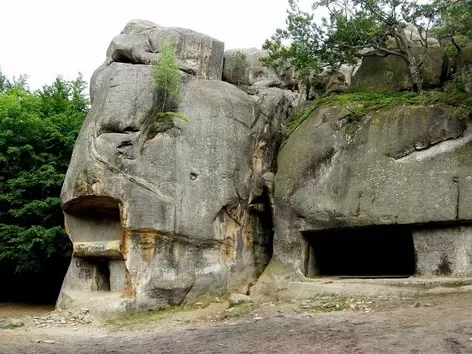
Dovbushs Felsen: Bist du bereit, den Schatz der Opryshky zu finden?
Das Gebiet Bubnyshche in der Region Ivano-Frankivsk beherbergt ein einzigartiges Natur-, Geschichts- und Mythologie-Denkmal - die Dovbush-Felsen. Benannt zu Ehren des ukrainischen Rebellenführers Oleksa Dovbush, halten die Wasserfälle noch viele Geheimnisse und Mysterien. Erfahre mehr über die Struktur und den Ursprung des Felsen- und Höhlenkomplexes, welche historischen Epochen er erinnert und welche Routen du nehmen kannst, um dorthin zu gelangen
Yuliia Dyka
09 Okt. 2024
More details3 min
Ukraine erkunden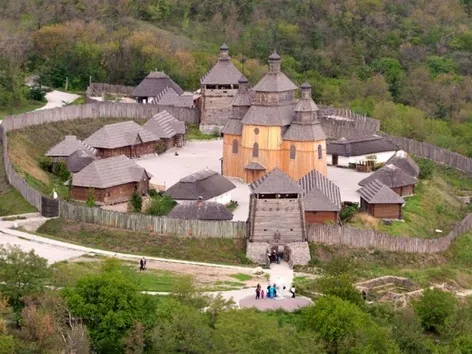
Die weltberühmte ukrainische Insel Khortytsia, auf der die erste Zaporizhzhya Sich gegründet wurde, zieht seit Jahrzehnten Touristen aus der ganzen Ukraine und der Welt an. Dieser einzigartige geografische und historische Ort hat die Traditionen von Tausenden von Generationen bewahrt. Finden Sie heraus, welche Geheimnisse Khortytsia verbirgt, welche historischen Ereignisse sie miterlebt hat und warum die Insel als Naturdenkmal bezeichnet wird, das keine Analogien hat
Yuliia Dyka
13 Okt. 2024
More details3 min
Ukraine erkunden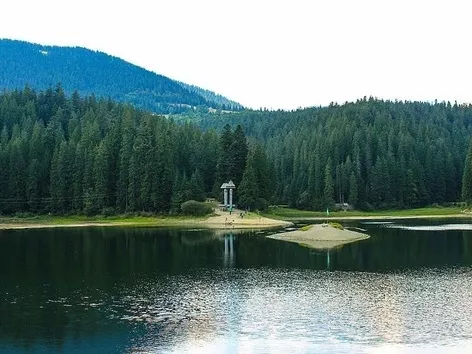
Einer der größten und geheimnisvollsten Seen in der Ukraine, Synevyr, liegt in den Karpaten. Seine einzigartige Struktur verlieh ihm den populären Namen des Meerauges. Die einzigartige Kombination aus Urnatur und menschengemachten Einrichtungen, die in Harmonie und Wechselwirkung stehen, hat diesen Ort für Hunderte von Touristen attraktiv gemacht. Erfahren Sie mehr über die Geschichte, Merkmale und Legenden des Synevyr-Sees, erstellen Sie Ihre eigenen Reiserouten
Yuliia Dyka
14 Okt. 2024
More details