


.gif)
Die Legende vom Gold des Polubotok: Ist es wahr, dass jeder Ukrainer 40 kg Gold erhalten sollte?

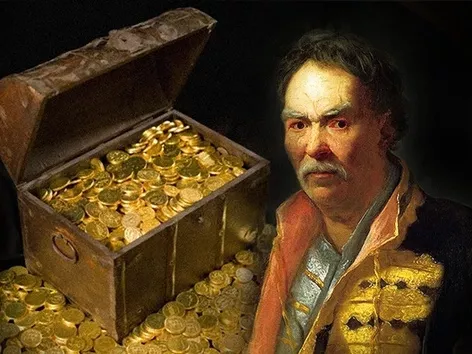
Vor 300 Jahren hinterlegte der ukrainische Hetman Pavlo Polubotok 200.000 Goldmünzen bei der Bank von England zu 7,5 % Zinsen, und in seinem Testament gab er an, dass 80 % des Goldes für die Zukunft der unabhängigen Ukraine bestimmt waren. Finden Sie heraus, warum diese Geschichte immer noch nachhallt und ob es eine Chance gibt, Gold zu bekommen.

Polubotok's gold is a confirmed legend according to some sources, which states that in 1723, Ukrainian Hetman Pavlo Polubotok allegedly left 200,000 gold coins at 7.5% interest in an English bank. According to legend, he did this shortly before his arrest, and in his will, the hetman stated that 80% of the gold should go to the future of independent Ukraine, and the rest to his successors.
We will find out whether Polubotok really left the gold in England, what versions exist, and why the story still resonates today.
Who was Pavlo Polubotok?
Pavlo Leontiiovych Polubotok was a Cossack, the son of a Pereiaslav colonel who lived in 1660-1724. He was well educated, built an amazing career, and had an incredible fortune, which included both gold and other unique relics: from jewelry and icons to weapons and utensils.
However, at a certain period of his life, Polubotok fell out with the hetman of the Zaporizhzhia army, Ivan Mazepa, and supported Peter the Great. At the same time, his policy was quite cunning: having gained power, he began diplomatic games with the russian tsar, trying to preserve the Hetmanate and obtain maximum state autonomy for Ukraine. Unfortunately, he failed to win this struggle. Thus, anticipating his arrest, he decided to transfer 200,000 gold coins to England for safekeeping so that they could be transferred to the future of an independent Ukraine. The gold was accompanied by clear instructions and a will.
In addition, it is rumored that the hetman hid the rest of his treasures in "safe places," some researchers say Lyubech, others say it was Hlukhiv.
Note that Polubotko was arrested not at home but during an official visit to the tsar. When the hetman was leaving for St. Petersburg, he already knew that he might not return. And in the russian empire, the Ukrainian Cossack was known as "one of the richest in little russia." So, obviously, if there was no deposit in an English bank, then somewhere there should be information about the transfer of a huge fortune or confiscation. However, there is not a single word about this anywhere.
If Polubotko's gold exists, how can we get it?
The story of Polubotko's gold has been mentioned in the media and among political circles many times, but the public has never received any explanation. But more on that later. Let's imagine that gold does exist, so how do we get it? After 300 years, the interest on the deposit has turned Polubotko's deposit into an invaluable treasure, right?
In June 1990, during the visit of British Prime Minister Margaret Thatcher to Ukraine, the poet Volodymyr Tsybulko announced that if the gold was returned, each of the 52 million citizens of independent Ukraine would have about 38 kg.
However, according to the conditions prescribed by Pavlo Polubotok, the hetman's inheritance can only be received if a person who can document that he is a direct descendant of Polubotok comes to claim it. Do these descendants exist?
In 1922, a man who came from Brazil and introduced himself as Ostap Polubotko, a direct descendant of one of the hetman's sons, approached the Ukrainian embassy in Vienna. He showed Ambassador Yurii Kotsiubynskyi a copy of Polubotko's deposit document, the original of which he allegedly kept in a safe place, and offered a deal: he would transfer the right to receive the money to the Ukrainian government, and in return for the original he would receive one percent of the accumulated amount. However, the attempt to negotiate with the Bank of England ended in nothing.
Later, during the Khrushchev era, there was another request from London about Polubotko's heirs, but the Injury Board replied without any investigation that none had been found. Leonid Kravchuk, the 1st President of Ukraine, reported on this to the Rada in 1991.
At the same time, some believe that even if there were direct heirs, Ukraine would not have been able to get the gold, as the Soviet Union had renounced any financial claims against the UK in 1986.
Visit Ukraine on social media: Telegram | YouTube | Instagram | Facebook | Twitter | TikTok
So is Polubotko's gold a legend or not?
The story first became widely known in 1907, when it was published in the russian magazine Novoe Vremya by Professor Alexander Rubts. The following year, the "russian Foreign Ministry" issued a warrant for an investigation, but no gold was found. This story has also been repeatedly covered in a number of popular science magazines and even in some books and films.
At the same time, some researchers believe that the communists were well aware of the existence of Polubotko's gold, and therefore began secret negotiations with Great Britain in the 1930s. However, at that time the amount of the deposit was so large that paying it would have brought England to the brink of bankruptcy, but at the same time, refusal to pay would have caused irreparable damage to the country's reputation.
However, it is known that the USSR did not receive any money before World War II, but during the war Britain became one of the main partners providing significant military assistance, which in terms of millions of pounds. It is believed that Polubotko's money became a bargaining chip in this aid. At the same time, there are still no documents or other evidence of agreements between the Soviet government and the United Kingdom.
At the same time, this case took a new resonant turn in 2014, when the Polish newspaper Kurier Poranny officially stated that during construction work on a pit for a future mosque in the prestigious West End of London, a dungeon was discovered on the site of a former bank vault that had been abandoned since the Great Fire of London.
It is noted that valuables that were previously considered lost were found in the cellars, namely 4 barrels of gold coins left by Hetman Pavlo Polubotko. These barrels contained books from Ukraine, more than 400 thousand gold ducats minted by the Berdychiv Mint, and a small number of other coins.
However, the examination revealed an interesting fact: only the surface layer of the coins was gold, and the bulk (over 90%) was made of rhodium. And rhodium is more than six times more expensive than gold of the same weight. At the same time, spectral and radiocarbon analysis showed that the rhodium was mined in a now-depleted copper mine near Hoverla in the Ukrainian Carpathians.
Some investigators insist that this treasure was the reason for the UK's exit from the EU. Otherwise, the country would have been entitled to only a small percentage of the gold found, and thus could have appropriated everything it found. However, there are still no new details of this investigation.
We remind you! Even the American billionaires Rockefellers could have envied the wealth of one of the Ukrainian princes. Read who is considered the richest Ukrainian in the history of Ukraine and what kind of wealth this person had in our previous article.
Want to know more? Read the latest news and useful materials about Ukraine and the world in the News section.
We recommend purchasing it for a safe and comfortable trip to Ukraine:
Visit Ukraine Insurance – safe travel in Ukraine (insurance covering military risks);
Visit Ukraine Legal advice – comprehensive legal support on entry to Ukraine;
Visit Ukraine Tickets – bus and train tickets to/from Ukraine;
Visit Ukraine Tours – the largest online database of tours to Ukraine for every taste;
Visit Ukraine Hotels – hotels for a comfortable stay in Ukraine;
Visit Ukraine Merch – patriotic clothing and accessories with worldwide delivery.
© 2018-2023, Visit Ukraine. Use, copying or reprinting of materials on this site is permitted only with a link (hyperlink for online publications) to Visit Ukraine.
All rights reserved.
Recommended articles
2 min
Krieg
Nach vier Monaten einer großangelegten Offensive konnte die russische Armee Avdiivka erobern. Dies wurde möglich, nachdem die ukrainischen Streitkräfte die Stadt verlassen hatten. Erfahren Sie, warum die ukrainischen Streitkräfte beschlossen haben, sich aus Avdiivka zurückzuziehen und was als Nächstes von der Offensive der Besatzer zu erwarten ist
Yuliia Dyka
19 Feb. 2024
More details2 min
Der Weg zum Sieg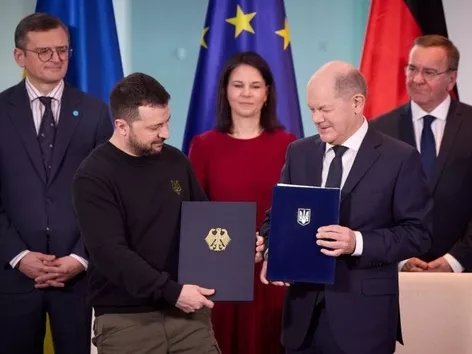
Sicherheitsvereinbarungen mit der Ukraine: Was versprechen Frankreich und Deutschland?
Die Ukraine hat bilaterale Sicherheitsvereinbarungen mit mehreren Ländern unterzeichnet und neue Sicherheitsgarantien von ihren Partnern erhalten. Erfahren Sie, warum die unterzeichneten Dokumente einen historischen Schritt darstellen und welche anderen Länder den Wunsch geäußert haben, die Ukraine zu unterstützen.
Yuliia Dyka
19 Feb. 2024
More details1 min
Ereignisse
Tag des Staatswappens der Ukraine: Geschichte, interessante Fakten und Bedeutung des Symbols
Heute feiern die Ukrainer den Tag des Nationalwappens. Der ukrainische Dreizack ist ein Symbol für Stärke, Unabhängigkeit und Durst nach Freiheit! Seine Geschichte reicht bis in die Antike zurück, und der Respekt dafür ist fest im Bewusstsein unseres Volkes verankert. Erfahren Sie mehr über die Geschichte des Feiertags und interessante Fakten über das Staatswappen der Ukraine
Yuliia Dyka
19 Feb. 2024
More details1 min
Ereignisse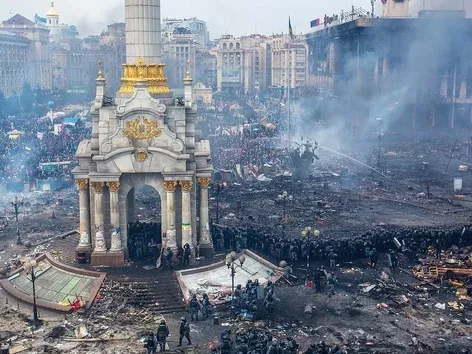
Die Himmlischen Hundert sind Menschen, die Heldentum, Willen zur Freiheit und Liebe zu ihrem Land gezeigt haben. Erfahren Sie mehr über das Heldentum und das Opfer derjenigen, die ein Symbol für den Kampf um Unabhängigkeit und Demokratie wurden
Yuliia Dyka
20 Feb. 2024
More details